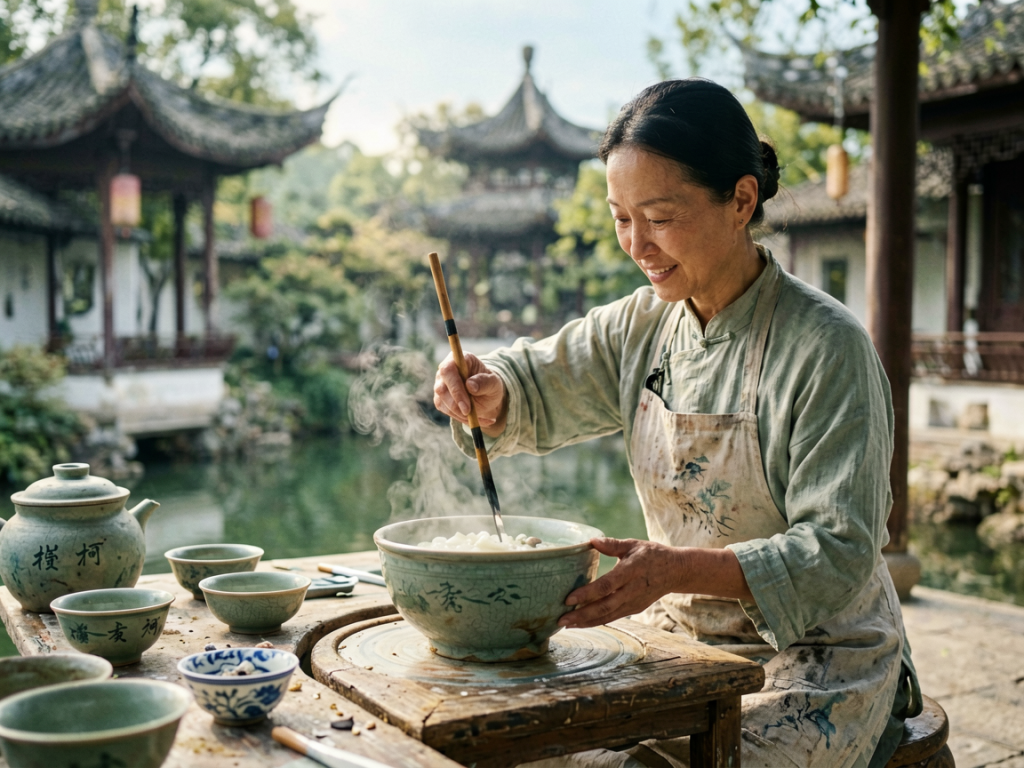
I’ll be honest. When I first heard about Jingdezhen, I pictured dusty museums and bored tour groups taking photos of ancient vases. Sound interesting? Not really. Then I stepped off a slow train into a city that smells like wet earth and wood smoke. The locals were already glazing plates on corner sidewalks. Kids were chasing each other past brick kilns. I knew right then this place wasn’t a relic. It was alive.
That’s exactly why I’m writing this. The visa rules have softened considerably over the last eighteen months. Direct flights from Southeast Asia hit the regional airport twice a week now. And the whole ceramic community has completely opened up to outsiders. You don’t need a local fixer anymore. You just need a backpack and a willingness to get your hands dirty.
A City Built on Fire and Patience
History books love to talk about Jingdezhen and the Porcelain Capital, but they rarely mention the sweat. For over seventeen centuries, artisans have been mixing kaolin clay with petuntse to create something nearly indestructible. I remember sitting in an old workshop near Lechang Road, watching a master potter pull a wall so thin it looked like paper. He didn’t even blink. To be fair, I was terrified he’d collapse it, but his hands just moved faster.
The real magic happened when we talked about temperature. Kilns here run hotter than almost any alternative I’ve seen in my eight years traveling Asia. They burn at one thousand three hundred degrees Celsius. I watched a batch of celadon glazes melt into this specific shade of winter sky. It’s not just craftsmanship. It’s alchemy.
You can actually rent a small electric kiln at several community centers if you’re staying longer. I tried firing a simple cup myself and learned quickly why professionals charge what they do. My first attempt cracked down the middle because I cooled it too fast. The instructor just smiled, handed me a fresh lump, and told me to start over. That’s the culture here. Mistakes aren’t failures. They’re tuition.
Why Outsiders Are Finally Showing Up
Look, I used to think visiting this part of Jiangxi province would mean spending three days just figuring out transportation. I could be wrong, but it definitely felt that way back in 2018. Things shifted fast once the high-speed rail connected it directly to Shanghai and Hangzhou. The journey took under four hours instead of a full day. That alone changed everything.
The foreign artist community exploded overnight. I walked through Taoxichuan one evening last spring and saw galleries popping up in repurposed factory dormitories. Young painters, potters, and designers were setting up shop next to noodle stalls. It’s easier than you’d expect to find English menus now, especially in the creative quarters. You’re not hunting for a translation app every five minutes.
Even the bureaucracy loosened up. Hotels started booking directly through international sites again. Many studios now accept WeChat Pay without requiring a Chinese bank account. Trust me, you’ll notice the difference when you arrive. The friction is gone. I pulled out my Apple Pay card at a boutique hostel near the central square and the receptionist just typed in my name without missing a beat.
Local dialects still dominate the older neighborhoods, but younger guides pick up English phrases quickly. I hired a university student to show me around the imperial kiln ruins, and we bonded over terrible English and excellent jokes. She taught me how to order duck blood soup without pointing at the menu. That kind of casual exchange happens constantly when you let yourself stay open.
Where to Actually Try Throwing a Bowl
Here’s the thing about pottery classes. Most tourist traps will hand you a lump of clay, spin the wheel for ten seconds, and call it a day. I refuse to recommend those places. If you want to learn the real process, head straight to Sanbao International Ceramics Village. I spent a whole afternoon there last October, and the instructor barely let me touch the water until the third hour.
The price runs about two hundred yuan for a half-day session. That covers your clay, your glaze, and the actual kiln firing. I know it sounds steep compared to weekend workshops back home, but you’re getting expert guidance and proper equipment. My favorite moment came when I finally pulled a decent rim. The instructor nodded once, handed me a cup of chrysanthemum tea, and told me I’d ruined three bowls before this one. I laughed until my arms hurt.
Don’t skip the glazing step. I tried rushing it during my second session and ended up with a crackled mess that looked like a dried riverbed. The pros teach you to dip fast and steady. It’s better than most alternatives because you actually learn the chemistry behind the colors. Cobalt oxide turns black in the fire until you hit exactly one thousand two hundred degrees. Sounds complicated? It is. But you’ll figure it out.
Most studios require you to leave your piece for at least seven days. I waited at a nearby guesthouse while the clay cured and the first glaze baked. When they called me, they’d placed my work in a display shelf alongside pieces from Germany, Brazil, and Kenya. Watching foreign hands mark my thumbprint next to their own felt weirdly profound. We were all just chasing the same flawed perfection.
Eating, Drinking, and Wandering After the Clay Dries
Once your piece comes back from the kiln a week later, you’ll need somewhere to pass the time. Jingdezhen doesn’t do fancy rooftop bars or overpriced cafes. Instead, it thrives on hole-in-the-wall spots that serve some of the best rice noodles in southern China. I found my go-to place tucked behind a brick wall on Zhushan Road. The broth simmers for twelve hours with dried tangerine peel and roasted pork bones.
You should definitely try the local tea, too. I used to drink bitter green stuff on my first trips, but the masters here showed me how to steep Gongfu properly. It takes practice. I bought a small Yixing teapot from a street vendor for fifty yuan and spent two weekends learning the pouring rhythm. The first batch tasted like grass clippings, but by the tenth session, I could taste the floral notes. It’s a slower pace, but it sticks with you.
Street markets come alive on weekends near the old porcelain exchange. I spent an entire Saturday haggling for a hand-painted tea set with a retired factory worker named Lao Chen. He spoke zero English, so we communicated entirely through gestures and broken Mandarin. We settled on three hundred yuan for a dozen cups and a matching pot. He winked when I left and tapped my chest twice. I’m pretty sure that meant I passed the test.
Evening walks along the Chang River never disappoint. The water reflects the orange glow of active kilns down the embankment. I sat on a concrete bench sharing skewers of cumin lamb with a group of ceramics students who’d been grinding pigments since morning. They showed me photos of their finished work online, and we argued passionately about whether matte finishes or glossy ones age better. It was the most natural conversation I’ve had in years.
I’ll be honest. I packed my bags expecting a quiet weekend trip and ended up staying for three extra days. The clay gets under your fingernails and stays there. You start noticing the way light hits a glazed surface at different times of day. You catch yourself looking at every mug in your apartment and wondering how it was made.
This city rewards patience more than speed. You won’t rush through it. You’ll sit by the river, watch apprentices practice, and realize that some things genuinely take time. If you ever get the chance to book a ticket here, grab it. The kilns are hot, the people are generous, and your first bowl might just change how you see everyday objects forever.