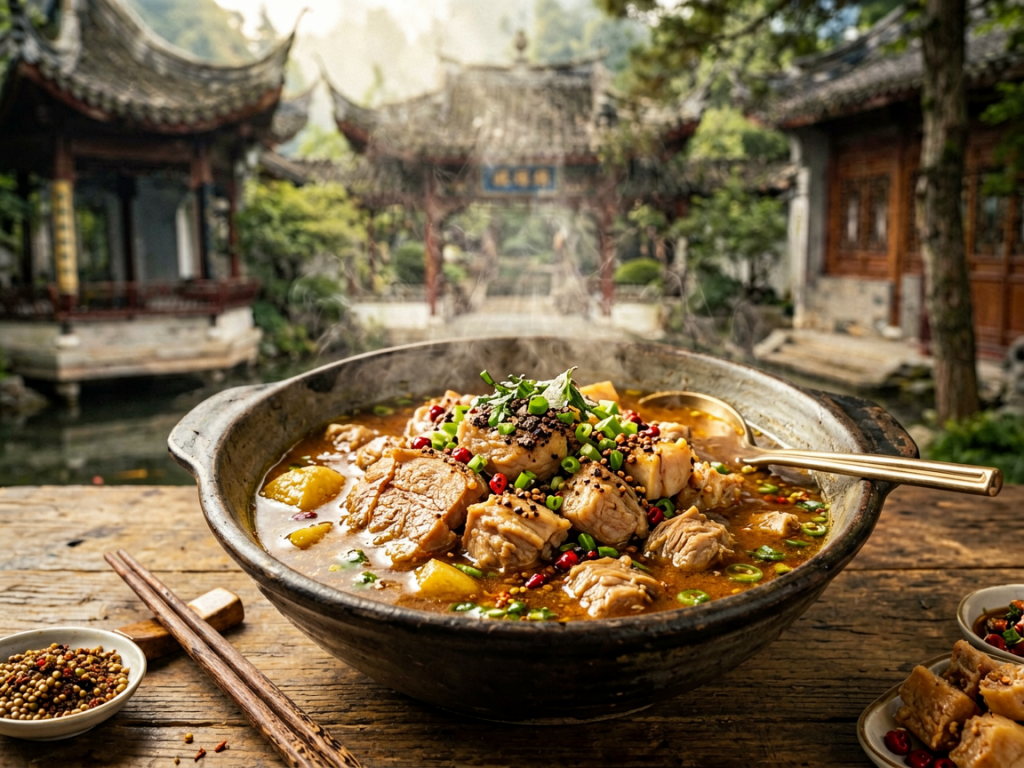
I ordered takeout once in Shenyang and received a sad plastic bag full of cold, greasy cubes. The delivery app promised a golden, crispy masterpiece that looked like it belonged in a magazine. Reality delivered something that tasted like pure regret. Trust me, that moment completely rewired how I approach food in China.
Dongbei cuisine doesn’t care about pretty presentation. It cares about survival. The region sits right where Siberian winds slam into the continent every November. You simply cannot cook delicate plates when the temperature plummets past minus twenty degrees.
The Illusion of the Takeout App
Chinese delivery platforms are incredibly slick. They promise restaurant-quality meals within twenty minutes of tapping your screen. I definitely fell for the glossy thumbnails more times than I care to admit during my first year living here.
Here’s the thing about Northeastern Chinese food. It actively refuses to translate well into small cardboard containers. Braised dishes need hours to simmer properly. Stews require constant bubbling to develop that deep, savory richness. Those heavy iron skillets just don’t fit inside portable packaging.
I remember asking a local chef in Harbin why his busy restaurant never listed its signature dishes on the delivery platforms. He laughed until his glasses completely fogged up. He told me you simply cannot photograph a live fire. That burning flame is the entire point of the dish.
Takeout photos usually show neat rows of sliced meat or perfectly folded dumplings arranged with surgical precision. Real Dongbei kitchens operate like controlled chaos. Chefs shout orders while managing three cast-iron skillets simultaneously. The food arrives loud, messy, and absolutely perfect.
We’ve lived in China long enough to know that convenience often sacrifices character. Delivery algorithms push dishes that survive transport well. That means bland broths and limp vegetables. You lose the texture that makes regional cooking unforgettable.
Sound interesting? It should be. You start noticing which restaurants actually host diners versus just packing boxes. The difference is night and day. One builds community. The other just fills bellies temporarily.
Winter Demanded Hearty Plates
Many outsiders assume all Chinese cooking leans toward lightness and freshness. That assumption shatters the moment you step outside in Liaoning during January. I spent eight winters watching neighbors stack cabbages and radishes against their apartment doors before December officially arrived.
You need serious calories when the wind chill makes your ears ache. Traditional farmers used to bury potatoes in deep storage pits beneath their heated brick beds. Modern city dwellers still rely on those same slow-roasting root vegetables today.
Those tubers soak up rich broth like hungry sponges. I’ve never heard a single person complain about overeating in a Dongbei restaurant. The portions aren’t greedy. They’re practical responses to harsh weather patterns.
Order one soup and two main dishes. You leave feeling like you just finished a marathon. The heaviness settles into your bones in the best possible way. You sleep like a rock afterward.
To be fair, not every dish screams comfort right away. Some visitors find the heavy use of dark soy sauce and sharp rice vinegar completely jarring at first. That bold saltiness cuts straight through winter fatigue though. It wakes up your entire palate.
Iron Pots, Massive Portions, and Zero Apologies
Tie guo dun translates directly to iron pot stew. The name explains everything about the experience. A massive cast-iron vessel sits directly on your table. Thick steam escapes from the rim while dough sticks to the inner walls.
I watched a seasoned waiter carry one of those scorching pots to our booth last March. His face turned bright red from the sheer weight. He set it down with a heavy thud that made my water glass jump. We spent the next hour carefully picking fish bones and tearing soft dough strips.
The ingredients always tell the honest story of the region. You’ll see wild river fish swimming in cloudy broth, thick slabs of pork belly, and whatever hardy greens survived the early frost. Everything cooks together until individual flavors merge into something deeply familiar yet completely unique.
Guobao rou sounds incredibly fancy on paper. It tastes like pure joy in reality. Thin slices of pork get lightly battered, fried twice until rigid, then tossed rapidly in a caramelized sugar and black vinegar glaze. The crunch lasts exactly four seconds before surrendering to tender meat.
Servings arrive on plates wide enough to play actual chess games. My friends and I once argued fiercely over whether one plate could possibly feed four people. It absolutely couldn’t. That single dish fed six hungry college students who completely skipped lunch.
La cai brings another dimension to the table. Fermented vegetables sit in jars everywhere you go. They add a bright crunch that balances heavy meats perfectly. I still keep a jar of my own in the fridge back home. Nothing else compares.
The Sauces That Define the Region
Northeastern cooking runs entirely on three core pillars. Soy sauce, vinegar, and raw garlic form the foundation. You’ll taste all three in almost every single bowl or plate. They aren’t just quick seasonings. They’re structural elements holding the meal together.
I tried making a basic mapo tofu recipe using standard southern spices once. The result tasted completely hollow compared to what locals eat daily. Dongbei flavor profiles prioritize balance over aggressive heat. They want you to taste the main ingredient first and foremost.
Suancai changes everything when added to a boiling pot. Households bury chopped cabbage in large ceramic crocks during autumn. The natural fermentation process turns crisp leaves remarkably tangy and wonderfully soft. Throw it into a slow-simmered bone broth and your entire apartment smells like childhood.
Hongshao rou might look like basic braised pork to untrained eyes. Northern chefs add star anise, dried chilies, and chunks of rock sugar alongside thick pork cuts. The resulting sauce sticks to your teeth and forces you to close your eyes.
Don’t ever skip the raw garlic sitting on every table. You bite into a whole clove after a heavy meal and feel your stomach settle instantly. It feels strange at first. You adapt within three visits.
Jiangdoujiao offers another classic combination. Steamed green beans mashed with garlic and sesame oil create a simple side that somehow elevates every main course. I’ve eaten it with plain white rice countless times. Still never gets old.
Lao bing zhan ji might seem like street food to outsiders. Those thick, pan-fried flatbreads soaked in rich chicken gravy taste like pure comfort. I bought one from a vendor near the train station for exactly five yuan. Best snack I’ve ever grabbed on the run.
Why You’ll Never Order Again
Delivery algorithms will always chase maximum convenience. Dongbei restaurants chase total satisfaction instead. I stopped ordering takeout from northern spots years ago. Walking into a cramped diner beats staring at a glowing screen any single day.
You step past industrial heaters blasting dry air and immediately hear the clinking of spoons against ceramic bowls. Older couples share narrow wooden stools near the frosted windows. Young professionals loudly argue over whose turn it is to swipe the card. Nobody rushes their food though.
I could be wrong about other provincial cuisines, but I’m pretty certain nobody cares about artistic plating here. A steaming bowl of handmade noodle soup doesn’t need gold leaf floating on top. It needs a thick layer of house-made chili oil and a generous handful of fresh cilantro.
The physical menu tells you exactly what to expect. You won’t find forty different options lining the pages. Maybe twelve dishes maximum. Pick three. Share everything at the center table. Leave with your belt completely unbuttoned and a strange sense of quiet gratitude.
Next time you scroll through food applications, ignore those perfectly lit promotional shots completely. Look for storefronts where actual customers sit down and chew slowly. Ask residents where they go before tourist groups flood the area. You’ll find those heavy pots and loud kitchens much sooner than expected.
I’m no professional food critic writing guidebooks. I’m just a guy who finally stopped pretending that flawless presentation equals superior food quality. Dongbei cuisine taught me that genuine warmth matters far more than decorative garnishes.
So go eat somewhere intentionally messy. Sit on a slightly wobbly stool. Let someone else handle the scorching iron pot. Your entire body will thank you by springtime.