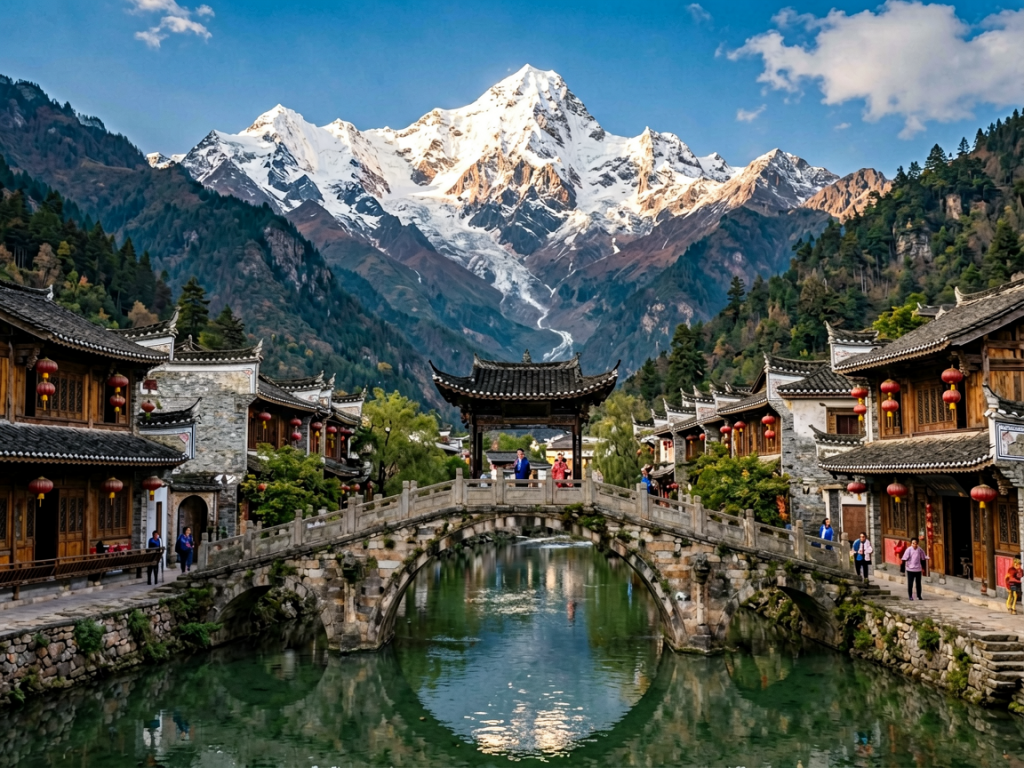
Honestly, I was skeptical when I booked my return trip to Yunnan. I’d been there a decade ago, back when the internet hadn’t quite reached the cobblestones. Back then, you could sit on a wooden balcony and hear nothing but wind and the distant bleating of yaks. Now? I expected to walk into a theme park. I expected to pay thirty yuan just to breathe the air.
But here’s the thing about Lijiang. It’s not the place it was, nor is it the cliché version you see on Instagram. It’s messy, loud, and undeniably alive. And after spending a few days navigating its winding alleys, crossing ancient stone bridges, and staring up at Yulong Snow Mountain, I’m convinced it’s worth the trip–if you know where to look.
Waking Up Before the Cruise Ships Arrive
You have to beat the crowd, or you’ll miss the soul of the place entirely. Most tourists arrive around ten in the morning, fresh off buses from Kunming or flying in from Dali. By noon, the main square of the Old Town, known as Dayan, is packed with selfie sticks and cheap plastic trinkets.
I learned this the hard way on my first visit. I wandered into Lion Hill expecting a quiet moment. Instead, I found myself shoulder-to-shoulder with tour groups shouting into microphones. I retreated to my guesthouse, frustrated. I almost cancelled the rest of the trip right there.
So, I changed tactics. I started waking up at six. Not because I’m an early riser–I’m definitely not–but because I wanted to see the town before it woke up. And let me tell you, the Naxi Old Town at dawn is a different entity. The mist hangs low over the grey slate roofs. The water channels, which run through almost every home, are the only sound. It’s peaceful, almost eerie.
Walking those empty cobblestones feels like trespassing in a living museum. You can actually see the craftsmanship. Look closely at the corners of the wooden houses. They’re joined without nails. The Naxi people, an ethnic minority with roots stretching back centuries, built this city to withstand earthquakes. The flexibility of the wood allows it to sway. It’s engineering that makes sense, unlike the concrete jungles we build down south.
By seven, the local vendors start setting up. I watched an old woman selling steaming buns filled with minced pork and chili. She didn’t speak English. I didn’t speak Mandarin. We communicated through the universal language of pointing and smiling. The bun cost maybe fifty cents. It was the best breakfast I’ve had in years.
The Bridge That Doesn’t Lead Anywhere (But Should)
If you want to escape the noise, head west toward the edge of the Old Town. This is where the Black Dragon Pool Park begins, but don’t just stay in the park. Cross the Sifang Street bridge if you must, but then keep going. Follow the water upstream.
You’ll eventually hit the Stone Bridge. Or rather, the ruins of it. The original wooden bridge collapsed years ago due to flooding and neglect. But the stone abutments remain, half-submerged in the clear, icy water of the Shuhe River. It’s a stark reminder that nature doesn’t care about your itinerary.
I sat on those stones for an hour. There were a few other people there, mostly locals walking their dogs or elderly couples holding hands. No one tried to sell me anything. No one asked for a photo. It felt real. It felt like a pause button in a high-speed world.
The area around here is quieter. It’s less polished than the central hub. You’ll find small cafes that aren’t chain stores. I stumbled upon one called “The Coffee Tree,” tucked behind a row of jasmine bushes. The owner, a young guy named Wei, had returned to Lijiang from Shanghai to open his shop. He told me he missed the smell of rain on hot earth. Can you imagine trading skyscrapers for this?
We talked for twenty minutes while he ground his beans. He showed me photos of his parents farming barley in the nearby villages. It’s that human connection that keeps me coming back. It’s not just about seeing sights; it’s about meeting the people who maintain them.
Yulong Snow Mountain: A Hike, Not a Chairlift
Now, let’s talk about the elephant in the room, or rather, the mountain above it. Yulong Snow Mountain rises dramatically to 5,596 meters. It’s sacred to the Naxi people. It’s also a commercial juggernaut.
The standard tourist experience involves taking a cable car up Glacier Park. You stand in line for two hours in thin air, pay nearly two hundred dollars for the privilege, and stand on a metal platform with a view of… more metal platforms. It’s cold, it’s crowded, and frankly, it’s boring.
I did the cable car once. I hated it. So, I went back with a local guide, a Naxi man named Tashi, who insisted I try the Jade Dragon Snow Mountain hiking trail instead. It’s harder. It takes more time. But it’s infinitely better.
We started early, around 5 AM, to beat both the heat and the crowds. The trail winds through alpine meadows and pine forests. The air gets thinner as we climbed, so we stopped often. Tashi pointed out medicinal herbs growing in the rocks. He showed me how to identify the blue poppy, the provincial flower of Yunnan, which blooms only at high altitudes.
About halfway up, we left the main path and took a narrower trail. It was rough. My lungs burned. But the views were staggering. I looked back down at the Old Town, a tiny speck of grey tiles below the cloud line. Then I looked up. The snow-capped peaks pierced the sky, white and blinding against the deep blue.
At 4,500 meters, we reached a small shrine. Tashi tied a white ribbon around a branch and whispered a prayer. I didn’t understand the words, but I understood the intent. It’s a place of reverence. It reminded me that this mountain isn’t a playground. It’s a deity. Treat it with respect, and it treats you well.
Getting down was easier, though my knees complained for days. But sitting back in my room that evening, legs propped up on the bed, I felt a sense of accomplishment that no chairlift ride could ever give me. I had earned that view. I had walked the earth under the mountain’s shadow.
Eating Like a Local, Not a Tourist
You can’t talk about Lijiang without talking about food. The Naxi cuisine is distinct from Han Chinese cooking. It’s hearty, savory, and often features wild mushrooms and yak meat.
Avoid the restaurants in the main square. They’re traps. Overpriced and underwhelming. Instead, venture into the residential neighborhoods. Look for places where the locals eat lunch. If you see an old man reading a newspaper at a table, sit down.
I found a small spot near the southern gate that served “Naxi Baicuo,” a dish made with sliced pork, rice noodles, and a rich broth. It wasn’t fancy. The plates were chipped. But the flavor exploded in my mouth. It was smoky, spicy, and comforting all at once.
Another must-try is the “Flying Chicken” or “Feiji.” Don’t let the name scare you. It’s a hotpot dish where you cook thinly sliced chicken in a boiling broth with vegetables. The trick is the dipping sauce. It’s usually a mix of garlic, chili oil, and cilantro. It cuts through the richness of the soup perfectly.
I also fell in love with “Rice Cake with Red Bean Paste.” It’s a simple street snack, but the texture is perfect–chewy on the outside, soft on the inside. I ate three in one afternoon. No regrets.
The Modern Tension
I should be honest. Lijiang is changing. Gentrification is creeping in. Property prices have skyrocketed. Many original residents have moved out to make room for boutique hotels and coffee shops. It’s a sad trend seen in many historic cities worldwide, from Venice to Kyoto.
Sometimes, I walk through the Old Town and feel a pang of loss. The shops selling handcrafted silverware and embroidery are still there, but they feel staged. The magic is fading into spectacle.
But then, something happens. Maybe I hear a group of schoolchildren singing traditional Naxi songs during a festival. Maybe I see a grandmother teaching her granddaughter how to weave on a loom in a courtyard. The culture isn’t dead. It’s adapting.
The UNESCO designation helped preserve the architecture, but it also brought money. Money brings change. It’s a double-edged sword. But I believe the core of Lijiang remains intact. The spirit of the place is resilient. It’s in the water channels that still flow. It’s in the mountains that still stand guard.
Why You Should Go Anyway
So, is it worth it? Yes. But go with eyes wide open. Don’t expect a fairy tale. Expect a real city with real problems and real beauty.
Bring comfortable shoes. The cobblestones are uneven and slippery when wet. Bring layers. The temperature swings wildly between day and night. Even in summer, it can get chilly at night. And bring curiosity. Talk to people. Ask questions. Be polite.
Don’t rush. Lijiang rewards slow travelers. Spend a week there, not three days. Take the train to Shuhe for a quieter vibe. Hike the trails. Eat the weird mushrooms. Get lost. Seriously, get lost. The best discoveries happen when you turn down a side street that doesn’t appear on any map.
I’m leaving Lijiang tomorrow. I’ll miss the silence of the mornings. I’ll miss the taste of that pork bun. I’ll miss the view of the snow peaks. But mostly, I’ll miss the feeling of being small in a big, beautiful place. It reminds me that there’s still a lot of the world left to explore. And that’s a feeling I never want to lose.