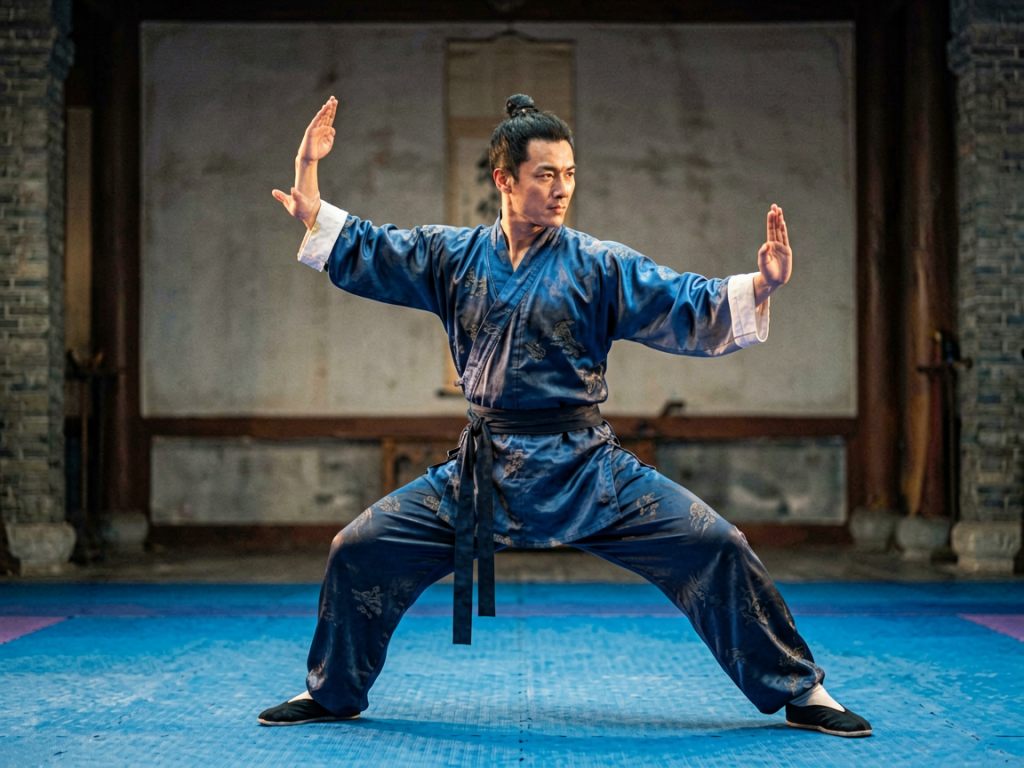
Chin Na: The Hidden Joint-Locking Art of Chinese Kung Fu
I remember standing in a dusty courtyard in Shaolin Temple back in 2016. It was humid, sticky, and smelled like old sweat and incense. I was watching a senior master demonstrate a simple arm grab against a student who came at him full speed.
The student expected a punch or a kick. He got neither. Instead, his arm twisted behind his back with a sickening *snap* sound. He dropped to his knees instantly. No drama. No shouting. Just physics and pain.
That moment changed how I saw Chinese martial arts forever. Before that, I thought Kung Fu was all about flashy kicks and powerful strikes. But deep inside those forms lies a quieter, darker, and far more practical art called Chin Na.
Chin Na translates roughly to “grasping and controlling.” It’s the art of joint locks, pressure points, and seizing limbs. It’s the part of Kung Fu that doesn’t get enough credit, mostly because it looks boring until it’s happening to you.
What Exactly Is Chin Na?
Let’s clear up a misconception right away. Chin Na isn’t just wrestling. It’s not Judo, and it’s not Brazilian Jiu-Jitsu, though it shares some DNA with them.
In Western grappling, you’re often looking to take someone down and pin them. Chin Na is about control. It’s about ending a confrontation before it really starts. You grab a wrist, twist an elbow, or press a nerve cluster, and suddenly your opponent’s body betrays them.
I’ve heard people call it “the evil side of Kung Fu.” To be fair, it can look pretty sinister. Think about movies where the hero twists the villain’s arm until they confess everything. That’s Chin Na. It’s intimate. It requires you to be close. Really close.
You have to touch someone to lock them. You can’t Chin Na someone from across the room. This makes it vulnerable, sure. But it also makes it incredibly effective in a confined space, like a crowded subway car or a narrow alley in Chengdu.
The beauty of Chin Na is its efficiency. It doesn’t rely on brute strength. A small person can control a large person if they understand leverage and anatomy. I’m no expert, but even I could see how a light touch to the right spot could shut down a much stronger attacker.
The Anatomy of a Lock
So, how does it actually work? It’s basically applied physics. Your joints are hinges. They only move in specific directions. Chin Na takes advantage of that limitation.
Take the elbow, for instance. It’s a hinge joint. It bends forward. If you push it backward, your body will scream in protest long before the bone breaks. Chin Na practitioners use this. They hyperextend the joint or lock it in a position where movement is impossible.
Then there are the fingers. I always found the finger locks the most unsettling. A human finger is surprisingly fragile. With just a little torque, you can disable someone’s ability to grip or strike.
I practiced this with a teacher named Master Liu in Hangzhou. He showed me how to secure a thumb. He didn’t even squeeze hard. He just positioned my hand so that any resistance would cause maximum discomfort.
“The body wants to protect itself,” he told me, sipping his tea. “You just show it the door it doesn’t want to go through.”
It’s psychological as much as physical. When you apply a lock, your opponent’s brain panics. They feel trapped. They want to escape the pain, so they comply. That’s the power of Chin Na. It controls the mind through the body.
Pressure Points and Nervous System Hacks
Now, let’s talk about the stuff that sounds like magic. Pressure points. Or *Xue Dao* in Chinese.
In Chin Na, you don’t just lock joints. You press into specific spots where nerves run close to the skin. Press here, and the arm goes numb. Press there, and the leg buckles.
I was skeptical at first. I mean, come on. It’s just poking. But then I tried it on myself. Master Liu pressed his thumb into the hollow between my index finger and thumb. Suddenly, my entire hand went weak. I couldn’t make a fist.
“Scared now?” he asked, smiling.
I wasn’t scared, but I was definitely surprised. It felt like someone flipped a switch in my nervous system. The connection between my brain and my muscles just… vanished.
This isn’t supernatural. It’s biology. Chin Na masters know exactly where the radial nerve, ulnar nerve, and median nerve exit the skeleton. They target these exit points to disrupt motor function.
It’s faster than a punch. It’s cleaner than a kick. And it leaves minimal bruising, which is probably why it was historically favored by assassins and spies. You don’t need to break bones to neutralize someone. You just need to turn off their muscles.
Why Chin Na Matters Today
You might be wondering, “Why should I care about ancient joint locks in 2024?”
Well, for one, it changes how you see conflict. Most people think self-defense is about hitting harder. But Chin Na teaches you to redirect energy. It’s about using your opponent’s force against them.
I’ve noticed this mindset spilling over into my daily life. When someone gets angry at me, I don’t get angry back. I try to understand the leverage of their emotion. It’s a different approach, but it works better.
Also, Chin Na is practical. You don’t need a gym membership. You don’t need gloves. You just need awareness. If you know how your joints work, you’re already safer.
Plus, it’s fascinating to watch. I’ve seen street performers in Beijing execute Chin Na moves that look like dance. They’ll catch a thrown object, twist it into a lock, and send it flying back. It’s mesmerizing.
But the real value is in the training. Learning Chin Na requires patience. You can’t rush it. You have to learn to feel the structure of another person’s body. It builds sensitivity.
I spent months just learning how to break someone’s posture without touching them. Just by changing my own stance, I could unbalance them. That’s advanced Chin Na. It’s subtle.
The Dark Side of Control
I’ll be honest, Chin Na has a dark side. It’s inherently coercive. You are forcing someone to submit to your will through pain or threat of injury.
In traditional Chinese culture, this was viewed with ambivalence. Martial artists were supposed to use force only as a last resort. Chin Na, with its precision, made it easier to use excessive force without leaving evidence.
That’s why many schools kept Chin Na secret. They didn’t teach it to beginners. You had to prove yourself first. You had to learn humility before you learned how to break arms.
I think that’s a shame today. We live in a world where people are quick to violence. Maybe understanding Chin Na would make people slower to fight. Knowing exactly how fragile we all are might encourage peace.
When you realize that a single twist can end a fight, you hesitate. You think twice. That hesitation saves lives.
Final Thoughts from a Foreigner
I’m still not a Chin Na master. I can’t lock anyone up, and I certainly can’t disable a nervous system with a poke.
But I appreciate the art now. I see it in the way my Chinese friends move. They’re grounded. They’re aware. They don’t waste energy.
Chin Na is more than a fighting technique. It’s a philosophy of control. It’s about understanding the connections between things. Between bodies. Between minds.
Next time you’re in a tense situation, maybe don’t throw a punch. Try to find the leverage. Find the joint. See if you can guide the outcome without breaking anything.
It’s a skill worth learning, even if you never use it. Just knowing how it works gives you a new perspective on human interaction.
And hey, if you ever visit China, ask to see a Chin Na demonstration. Just keep your arms tucked in close. You don’t want to be the test subject.
Trust me. You won’t like it.