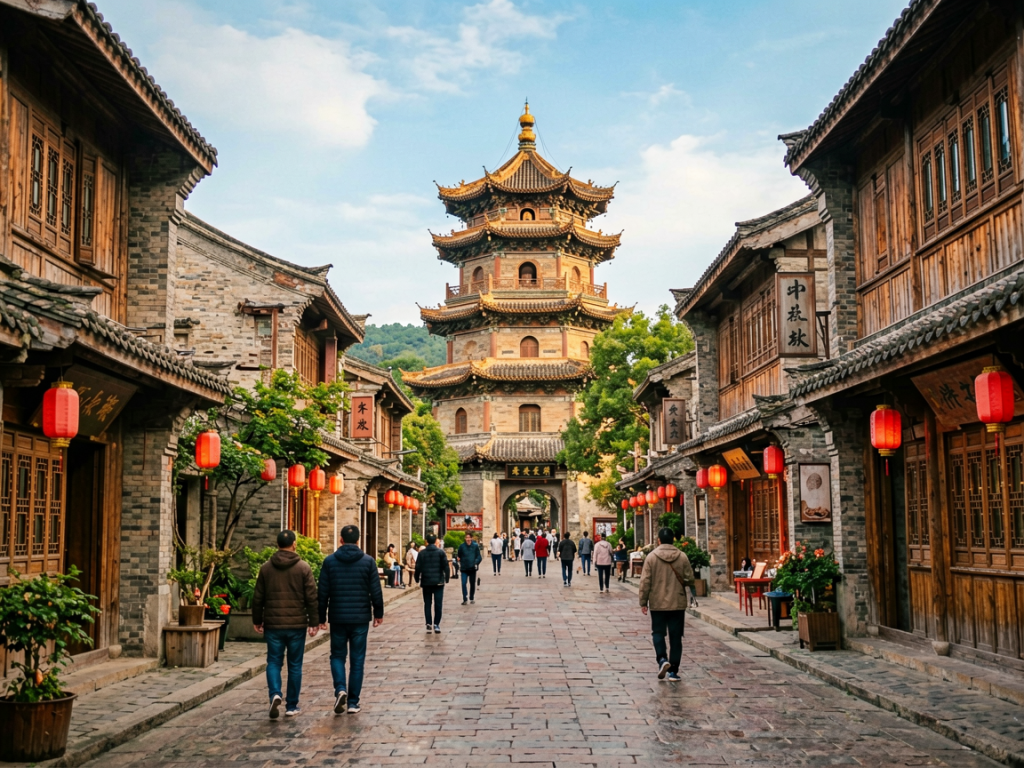
October in Qingdao doesn’t just feel like autumn. It feels like a exhale.
I’ve lived in China for eight years now. I’ve seen the humid, sticky summers in Shanghai and the dry, biting winters in Beijing. But there’s something specific about this coastal city in Shandong when the leaves turn gold that makes me want to stay put forever.
The air gets crisp. The crowds from the summer holiday rush thin out. And suddenly, the streets lined with colonial architecture start to glow in that soft, golden light that photographers worship.
But here’s the thing. It’s not just the scenery that keeps us expats coming back year after year. It’s the beer. Or rather, it’s the ritual of the beer.
In October, Qingdao transforms into a massive, open-air living room. You don’t need reservations. You don’t need fancy clothes. You just need an empty stomach and a tolerance for salty sea breeze mixed with roasted chestnuts.
The Beer Is Poured From Plastic Bags
Let’s address the elephant in the room immediately. If you haven’t seen someone carrying fresh Tsingtao draft beer in a plastic bag, you probably haven’t really experienced Qingdao.
I know what you’re thinking. It sounds unhygienic. It sounds chaotic. It sounds like something that would get you in trouble with health inspectors back home.
To be fair, my first time seeing it, I was hesitant. I stood there watching a vendor tap a keg directly into a clear polyethylene bag. He tied it shut with a piece of string, handed it to a tourist, and the tourist walked away drinking it like it was a martini.
Now? I’m the one doing it. There’s nothing quite like walking along Zhan Qiang (the Trestle Bridge) with two bags of ice-cold, foamy lager in hand. The taste is sharp, hoppy, and incredibly fresh because it hasn’t sat in a warehouse or traveled miles.
This tradition started decades ago, born out of practicality. People wanted cheap, cold beer right by the beach without the overhead of a bar. Today, it’s less about necessity and more about identity. It’s the soul of the city.
When you’re sitting on the benches near Badaguan, watching the sunset paint the German-style villas in shades of purple and orange, sipping beer from a plastic bag feels right. It’s democratic. It’s messy. It’s real.
German Ghosts and Colonial Streets
Qingdao wasn’t always a Chinese city in the way we think of it today. It was a German colony from 1898 to 1914. That half-century left scars, but mostly, it left style.
Walk through the Signal Hill area, and you’ll feel like you’ve been transported to Munich, if Munich had been built next to the Yellow Sea.
The red-tiled roofs are iconic. They contrast sharply against the deep blue of the ocean and the grey clouds that often roll in during autumn storms. I love those stormy days. There’s a cozy darkness to them.
One weekend last October, I spent four hours just getting lost in the backstreets of the old concession. I found small cafes tucked into former consulates. I saw heavy oak doors and intricate ironwork that had survived wars and revolutions.
It’s easy to visit Qingdao and only see the main tourist traps. But if you turn off the main roads, you find quiet courtyards where locals play mahjong and drink tea, completely ignoring the foreign tourists snapping photos of their architecture.
The blend is unique. You have the solemnity of European stone masonry meeting the vibrancy of modern Chinese street life. You’ll see a grand German bank building housing a bustling hotpot restaurant. It’s a juxtaposition that works surprisingly well.
And the trees! The plane trees lining the streets are massive. In October, they drop their leaves in a thick, crunchy carpet. Walking on them sounds like chewing gravel. It’s oddly satisfying.
Eating Your Way Through the Autumn Harvest
You can’t talk about Qingdao in October without talking about the food. Specifically, the seafood and the seasonal snacks.
Summer is great for swimming, but October is better for eating. The water temperature drops, which means the crabs and shellfish are plump, sweet, and full of flavor before they go dormant for winter.
I remember a dinner at a small, noisy place near the Railway Station. It was raining hard outside, wind howling through the bay. Inside, it was warm and smelled of garlic and chili.
We ordered *haidai* (kelp) and *laobing* (scallion pancakes). The kelp was tender, almost buttery. The pancakes were crispy on the outside, soft on the inside, and served with a dipping sauce that was spicy and vinegar-heavy. Perfect comfort food.
And then there are the roasted sweet potatoes and chestnuts. Every corner of every street in Qingdao seems to have a vendor selling these from large metal drums. The smell is intoxicating. It smells like fall.
I stopped buying them for the calories. I bought them for the ritual. Walking down Fushan Road, peeling the hot skin off a chestnut, blowing on it to cool it down, and taking that first bite while watching the trams rattle by–it’s a moment of pure peace.
Don’t sleep on the local noodles either. *Hai di lao mian* is a Qingdao staple. It’s chewier than typical wheat noodles, served in a broth that’s often made from clams or dried seafood. It’s simple, but it hits the spot every time.
The Expat Community and the Slow Life
There’s a reason so many foreigners return to Qingdao. In Beijing or Shanghai, the pace is relentless. You’re always running. Always working. Always trying to keep up.
In Qingdao, the pace slows down. It’s not lazy, exactly. It’s just… deliberate.
I’ve noticed that the expat community here is tighter-knit. Maybe it’s because it’s smaller. Maybe it’s because the weather forces you indoors more often in the winter, creating cozy social hubs.
But in October, everyone is outside. You see groups of friends laughing at sidewalk tables. You see couples holding hands on the beach. You see solo travelers sketching in notebooks.
Last year, I joined a casual hiking group that meets up on weekends. We hiked up Laoshan Mountain, one of the most famous peaks in the region. The views from the top are staggering. You can see the city sprawl below, the ocean stretching out to infinity, and the mist rolling over the mountain ridges.
We didn’t do it for fitness. We did it because it was a beautiful Saturday morning. We drank beer at the summit afterwards. Yes, even at the top of a mountain. The vendor there sells ice-cold Tsingtao from a cooler box. It’s absurd. It’s wonderful.
This attitude towards life resonates with me. It’s not about achieving the next milestone. It’s about enjoying the current moment. The beer is cold. The sun is shining. The friend beside you is laughing. That’s enough.
Why You Should Book Now
So, are you sold? You should be.
Qingdao in October offers a sweet spot in the tourism calendar. The summer heat is gone. The winter chill hasn’t set in yet. The prices for flights and hotels are reasonable compared to July.
But here’s the catch. It’s becoming popular. Word is getting out. The “Instagrammability” of the German architecture and the beer-in-bag phenomenon is spreading.
If you wait until November, you might miss the peak foliage. If you wait until December, it’ll be freezing and windy. October is the Goldilocks zone.
I recommend staying in the Shinan district if you want to be close to the action. The beaches are there. The beer halls are there. The history is there.
If you want something quieter, look at the Shibei district. It’s where the real locals live. You’ll find better breakfast spots and cheaper markets.
Whatever you do, don’t just sit in a hotel room. Go outside. Talk to the people buying vegetables in the wet markets. Ask the vendors how they make their beer bags. Sit at a table where you don’t understand the menu and point at what looks good.
That’s how you experience China. Not through a guidebook, but through curiosity and a willingness to embrace the chaos.
I’ll be honest, I’m already planning my trip back. I’ve got a mental list of restaurants I haven’t tried yet. I’ve got a vague idea of which hill I want to hike next. And I’ve definitely got a craving for that first plastic bag of draft beer as the sun goes down.
Qingdao isn’t just a city. It’s a mood. And in October, that mood is happy, relaxed, and slightly tipsy.
Come visit. Just leave your expectations at the airport, and bring a large appetite.