I still remember the first time I was invited to a Chinese wedding. I showed up in a nice suit, holding a flower box from the supermarket, completely clueless about what was coming next.
My host, Li, laughed until he cried. He told me I’d just survived round one. The real test was about to begin: the tea ceremony.
If you’re an expat in China, or just visiting, getting invited to a wedding is a huge honor. It means they see you as part of their inner circle. But the traditions can feel like a minefield if you don’t know the rules.
Don’t worry. I’ve been to enough weddings over the last eight years to have seen every possible mistake. From awkward bowing errors to handing over the wrong amount of money, I’ve got the stories.
Let’s walk through what actually happens. I’ll keep it simple, practical, and mostly free of the stuffy formalities that confuse foreigners.
The Tea Ceremony Is Not Just About Drinking
You might think the tea ceremony is just a polite way to serve drinks. It’s not. It’s a ritual of respect, hierarchy, and acceptance.
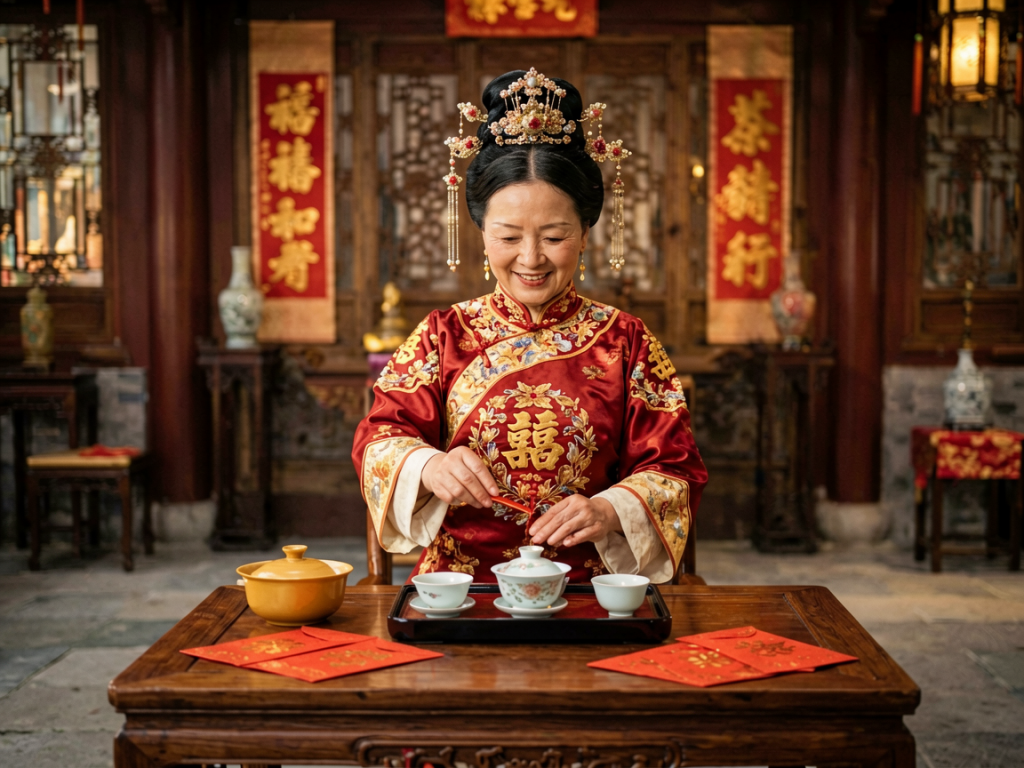
In traditional Chinese weddings, the couple kneels before the parents and elders. They offer tea in double cups. This symbolizes the union of two families, not just two people.
I learned early on that standing up during this part is a big no-no. Even if you’re just a guest, you need to show respect by staying seated or bowing slightly when they approach.
The bride and groom will usually come to your table after they’ve served the immediate family. If you’re an important guest, they might even skip straight to you.
Here’s the tricky part: you need to know how to receive the tea. Both hands should hold the cup. Why? Because using one hand looks dismissive or arrogant in Chinese culture.
When you drink, take a small sip. Don’t gulp it down like water. It’s a ceremonial gesture, not a hydration break. Put the cup back on the tray with both hands.
Some guests try to leave the tea untouched. That’s rude. It implies you don’t approve of the match or the family. Even if the tea is too sweet for your taste, drink some of it.
I once saw a tourist push the cup away gently. The parents looked horrified. The bride looked confused. It was awkward. Just drink the tea.
Red Envelopes: The Currency of Congratulations
Then there’s the red envelope, or *hongbao*. This is where most foreigners get nervous. How much do I give? What if it’s too little? Too much?
First, never give cash without a red envelope. Plain cash looks like a payment, not a gift. It’s insulting. Always buy the envelopes at the hotel front desk or a stationery shop nearby.
The color red is lucky. It represents joy and good fortune. Avoid white or black envelopes at all costs. Those are for funerals.
Now, for the amount. This varies wildly by region. In Shanghai, you might pay more than in Chengdu. But there are general rules of thumb.
I usually stick to numbers ending in even digits. Sixes and eights are great because they sound like “smooth sailing” and “wealth.” Avoid four, since it sounds like “death.”
A safe bet for a close friend is 500 or 600 RMB. For a casual coworker, 200 or 300 RMB is standard. If you’re really close, like best friends, you might go for 1000 RMB or more.
I remember giving 200 RMB to a distant acquaintance. He smiled politely, but I felt a sting of embarrassment later. I should have known better. I ended up buying him an expensive bottle of wine as a补救 (makeup).
Always check the inside of the envelope before you give it. Make sure the bills aren’t torn or wrinkled. Crisp new bills look respectful. Old, crumpled notes look like you don’t care.
And here’s a pro tip: write your name on the back of the envelope with a pen. Not everyone remembers who gave what, especially at large weddings. It helps them track it for future reciprocation.
Dressing the Part: Blending In Without Trying Too Hard
What should you wear? This depends on the venue and the formality. Most Chinese weddings are held in hotels with banquet halls. They’re usually quite fancy.
Men should wear a suit. Ties are optional but recommended. I’ve seen guys show up in jeans and t-shirts. It happens, but it stands out. And not in a good way.
For women, a cocktail dress or a nice blouse with slacks works. Avoid wearing all white. In Chinese culture, white can be associated with mourning. It’s safer to wear pastel colors, red, or gold.
Actually, wearing red is tricky. The bride wears red. If you wear a bright red dress, you might steal the spotlight. It’s better to choose burgundy, pink, or purple.
I once wore a light red scarf to a wedding. The mother-in-law pulled me aside and whispered, “Please take that off.” It was funny in hindsight, but stressful in the moment.
Comfortable shoes are a must. Weddings in China can last forever. There’s dancing, drinking, and lots of standing around. Save your heels or stiff dress shoes for another night.
Surviving the Banquet and the Games
The food at Chinese weddings is usually generous. You’ll get multiple courses, often starting with cold dishes and moving to hot mains like lobster, shark fin (unfortunately still common in some places), and fish.
Fish is crucial. It represents surplus. Leaving fish uneaten is bad luck. Try to eat everything on your plate, or at least appear to.
Drinking is part of the experience. Toasts happen frequently. If someone toasts you, drink. If you can’t drink alcohol, explain early. Many guests opt for juice or tea instead.
But watch out for the door games. Before the ceremony, the groom’s friends have to find the bride. They block the door and make him do challenges. These can be silly, embarrassing, or physically demanding.
I’ve seen grown men doing push-ups or eating spicy mustard chips to earn entry. It’s loud, chaotic, and hilarious. Feel free to join in the laughter, but stay out of the physical games unless invited.
After the ceremony, there’s often a toast round. The couple walks table to table, pouring tea or wine for each guest. This is your chance to congratulate them personally.
Say something simple. “Congratulations” (*xin hun kuai le*) is enough. Add “Wishing you happiness” if you want to sound warmer. Keep it short; there are dozens of tables to visit.
What Happens After the Wedding?
Most weddings end with a send-off. Friends might throw rice or confetti. In cities, it’s often just cheering and taking photos.
Don’t expect a late-night party that goes until dawn. Most guests leave by midnight. It’s polite to leave before the very last guest, showing you respect the couple’s fatigue.
I always make sure to thank my host again before leaving. A quick hug or handshake goes a long way. They’ll likely ask if you had a good time. Say yes, even if you were bored by the speeches.
Getting an invitation means you matter to them. Treat the event with respect, follow the basic etiquette, and you’ll be golden. The tea ceremony isn’t scary once you know the moves. The red envelope is just a gesture of goodwill.
China’s wedding culture is rich, loud, and incredibly warm. Once you get past the initial confusion, you’ll find it’s one of the most joyful experiences you can have as an outsider.
So, next time Li invites you to a wedding, don’t panic. Buy a red envelope, buy a new pair of shoes, and get ready to drink some sweet tea. It’ll be worth it.