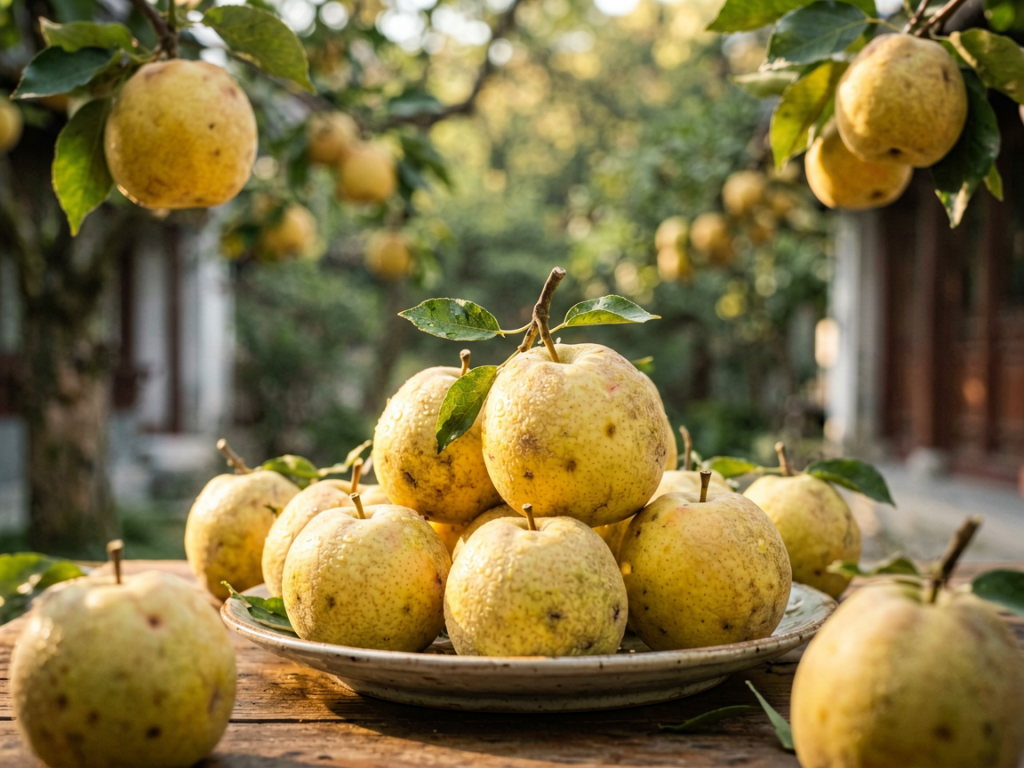
The Day I Learned About the Forbidden Fruit
I still remember the awkward silence that fell over the hospital room in Chengdu. I had just handed my friend Li a beautifully wrapped basket of fresh Asian pears, proud of my thoughtful gesture. She stared at them for a second, then gently pushed the basket back toward me with a tight, polite smile.
My heart sank. I didn’t know what I’d done wrong. Was it the brand? The color? I felt like an outsider who had just walked into a private ceremony without knowing the etiquette.
Li eventually explained it to me later over tea, laughing at my confusion. It wasn’t about the fruit quality. It was about the word. In Mandarin, pear is *li*. And it sounds exactly like the word for separation or parting.
That moment taught me more about Chinese culture than any textbook ever could. Language here isn’t just communication; it’s a magical force. Words have power. And some powers are too dangerous to invite into a sickroom.
Pun Culture and the Power of Sound
If you want to survive in China, you need to understand puns. They aren’t just jokes for comedians. They’re deeply embedded in daily life, especially during holidays and significant events.
We’ve got a saying in English: “See no evil, hear no evil.” In China, they say “Say no bad.” It’s all about homophones. If a word sounds like something negative, people avoid it completely. It’s superstition, sure, but it’s also respect.
Think about it. You’re visiting someone who is unwell. Their spirit is already fragile. You don’t want to add any accidental negativity to their day. Bringing a pear is like wishing them goodbye before they’ve even had a chance to get better.
I used to think this was silly. I’m an American, after all. I like fruit. But once I started listening closely to how people speak, I realized how much weight these sounds carry.
For example, giving a clock (*song zhong*) is a huge no-no because it sounds like attending a funeral. Giving an umbrella (*san*) sounds like scattering or separating. These aren’t minor quirks. They are social landmines.
Pro tip: Always check the pronunciation of your gift. It’s worth five minutes of Googling to avoid a major faux pas.
What You Should Bring Instead
So, you can’t bring pears. What do you do? You show up empty-handed? No way. That’s rude. You need a gift that symbolizes health, longevity, and good vibes.
Apples are the golden standard. An apple is *ping guo*. Ping means peace or calm. So, giving an apple is like saying, “I wish you peace and recovery.” It’s simple, effective, and universally accepted.
I always keep a bag of shiny red apples in my car for these situations. They’re crisp, sweet, and safe. You can buy them anywhere. You don’t need to go to a fancy market.
Bananas are another option. They’re soft, easy to eat, and don’t have any negative phonetic associations. Plus, they’re rich in potassium, which is actually good for sick people. I know, I’m thinking about nutrition now. But in China, the symbolism comes first.
Oranges are fantastic too. Orange is *ju zi*, which sounds like lucky treasure. Or maybe *cheng zi*, implying success. Either way, it’s positive. The bright orange color also looks festive and hopeful.
I remember visiting a colleague in Beijing who had surgery. I bought her a box of premium nectarines. They were expensive, sure, but the gesture mattered. She appreciated the sweetness and the effort. We didn’t talk about the pear incident from years ago. We talked about how much she missed hotpot.
The Logic Behind the Superstition
Some might argue that this is just old-fashioned superstition. And technically, yeah, it is. But dismissing it as “just a myth” misses the point of human connection.
When you visit someone who is sick, you are entering their vulnerable space. You are offering comfort. Gifts are physical manifestations of your care. If the gift carries a hidden meaning of “leaving” or “separating,” it undermines your entire intent.
Chinese culture places a huge emphasis on harmony (*he*). Keeping the energy positive is part of maintaining that harmony. By avoiding words that sound like separation, you are actively protecting the patient’s emotional state.
It’s not about being scared of magic. It’s about being considerate of feelings.
I’ve seen families go to great lengths to avoid these linguistic traps. At weddings, they avoid sharp objects. At birthdays, they avoid clocks. It’s a dance of language that requires constant awareness.
As an expat, learning this dance made me feel more included. It showed me that locals weren’t trying to exclude me; they were trying to teach me how to care for them properly.
Once you understand the *why*, the rules make sense. It’s not arbitrary. It’s empathetic.
Modern Exceptions and Regional Differences
Now, I should mention that not everyone follows these rules strictly. Younger generations in Shanghai or Shenzhen might laugh off the pear taboo. They’re more globalized. They might not care as much about the homophone.
But here’s the thing: why risk it? Even if your friend says, “Oh, I don’t believe in that stuff,” it’s better to err on the side of caution. Showing respect for their cultural background builds trust.
Also, regional differences exist. In some southern dialects, the pronunciation of pear might not sound quite as much like separation. But Mandarin is the standard. If you’re speaking Putonghua, the association is strong.
I’ve noticed that in very traditional households, the rule is absolute. My neighbor, an elderly woman in Hangzhou, would genuinely upset if you left a pear on her table. She’d insist you take it back or share it with someone else immediately.
It’s not a joke with her. It’s a boundary. Respecting that boundary shows you value her traditions.
On the flip side, if you’re visiting a university dorm, your professor might find the whole thing amusing. But again, bringing apples is never a bad move. It’s the safest bet.
Other Taboos to Watch Out For
Since you’re here, let’s talk about other gifts to avoid. It’s not just fruit.
Shoes are tricky. The word for shoe (*xie*) sounds like the word for sigh or complain. Some people think giving shoes invites complaints into their life. It’s subtle, but worth knowing.
White flowers are usually reserved for funerals. Red is the color of luck and joy. Stick to red packaging for any gift.
Even the number of items matters. Four (*si*) sounds like death. Avoid gifts in sets of four. Eight (*ba*) sounds like prosperity. Twelve is good for completeness.
I once bought a set of four tea cups for a friend. He thanked me politely, but I saw him put them in the cupboard quickly. He probably felt uneasy. Next time, I bought six. He loved them. Small changes, big impact.
Hats are also a no-no for birthdays. It sounds like mourning. Save the hats for winter visits, not celebrations.
These rules can seem overwhelming at first. But after a while, they become second nature. You start hearing the puns everywhere. It adds a layer of depth to the language that English just doesn’t have in the same way.
Building Bridges Through Thoughtfulness
Ultimately, this isn’t about the fruit. It’s about the relationship.
When you take the time to learn these nuances, you tell your Chinese friends: “I see you. I respect your culture. I care enough to get it right.”
That goes further than any expensive gift. A bag of apples from the local market, chosen with care, is worth more than a generic bouquet from a chain store.
I’ve made lifelong friends by remembering these small details. They appreciate the effort. It breaks down the barrier between “foreigner” and “friend.”
So, next time you head to a hospital or a friend’s house in China, check your basket. Make sure there are no pears.
Instead, pick something sweet, something safe, something that says “stay” and “health” and “good fortune.”
It’s a small thing. But in China, small things matter a lot.
And honestly? Apples taste pretty good too.