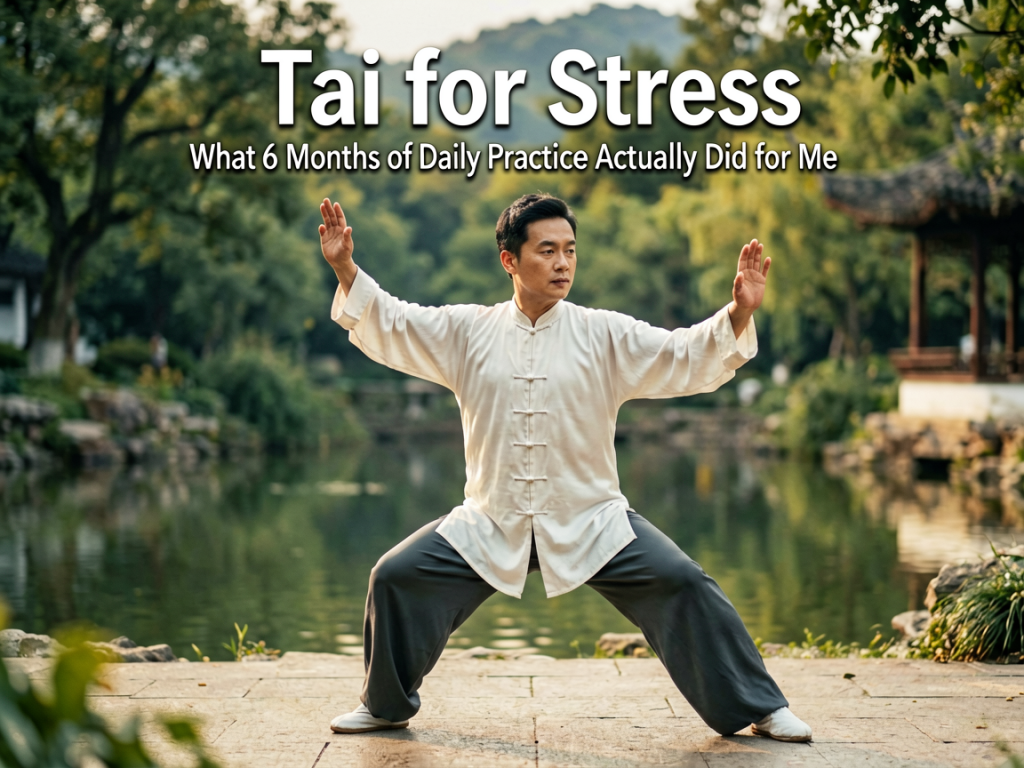
The Day Everything Got Too Loud
I’m sitting in a coffee shop in Shanghai’s Jing’an district. It’s 8 PM. The air outside is humid and heavy, smelling of rain and exhaust. Inside, it’s all white noise and clinking porcelain. I have a deadline tomorrow. My chest feels tight, like someone is slowly squeezing an orange inside my ribs.
This wasn’t new. I’d been living in China for three years by then, and the pace of life here is relentless. You move fast. You eat fast. You work fast. Even when you’re resting, your phone buzzes with group chats that never sleep. I was burning out, hard. My back hurt from sitting too long. My sleep was fragmented. I tried yoga once, but the class felt like a competition. I hated feeling like I wasn’t flexible enough.
Then, a colleague invited me to a park at dawn. She said, “Come with me. Just watch.” I didn’t think much of it. I figured I’d stand around in my sweaty gym clothes while old people did slow-motion pushups. But something about the look in her eyes made me say yes. That was six months ago.
Today, I don’t just practice. I live differently because of it. Here’s the truth about what happened when I stuck with Tai Chi for half a year.
Morning Mist and Slow Motion
The first thing you notice isn’t the movement. It’s the silence. Or rather, the quality of the silence. It’s not empty. It’s filled with bird calls, distant traffic, and the rustle of leaves. I started going to Fuxing Park near my apartment in Xuhui. It’s cheaper than any gym membership in the US and probably twice as effective for calming your nerves.
I joined a group of beginners. There were maybe ten of us. Most were Chinese retirees, but a few of us expats showed up, looking awkward and out of place. Our instructor, Master Li, doesn’t talk much. He just demonstrates. His movements are fluid, like water flowing over rocks. There’s no jerking, no sudden stops.
The first week was miserable. Literally. My legs shook from holding the simple horse stance. I thought, “Is this it? Is this the secret to peace?” I wanted to run back to my office and answer emails. But I kept showing up. I told myself I’d commit to just one month. Then I extended it.
You learn quickly that Tai Chi isn’t about strength. It’s about alignment. Master Li would walk up to you and adjust your shoulder by a millimeter. Suddenly, your balance felt solid. It was a physical revelation. I realized I had been holding tension in my trapezius muscles for years without knowing it. Letting go of that tension was the first step to letting go of the stress.
By week four, I stopped dreading the mornings. Waking up at 6 AM used to feel like punishment. Now, it felt like a reset button. The cool air hit my face, and I’d start the form. One movement after another. No thinking, just doing.
What Actually Changed in My Body
Let’s be honest. I expected to feel Zen. What I didn’t expect was the physical shift. I’m not a bodybuilder. I’m a writer who sits all day. My posture was terrible. I slouched like a question mark.
After two months, people started commenting on my standing. A friend asked if I had gotten taller. I hadn’t, but I had straightened up. Tai Chi teaches you to engage your core and sink your weight into your heels. It forces you to find your center of gravity. When your body is balanced, your mind tends to follow.
My chronic lower back pain, which I’d accepted as part of aging in my thirties, vanished. I attribute this to the gentle twisting motions in the forms. They massage the spine without impact. Unlike running, which pounds your joints, Tai Chi protects them. I’ve run marathons before, and I know the toll it takes. This was different. It was restorative.
Sleep improved drastically. I used to lie in bed staring at the ceiling, rehearsing conversations from the day. Now, I drift off within minutes. The practice acts as a moving meditation. By focusing on breath and movement, you shut down the chatter in your head. It’s harder to worry about your mortgage when you’re trying to remember if the left foot steps forward or back.
But the biggest change was subtle. I stopped clenching my jaw. I caught myself doing it during meetings. My hands, usually curled into tight fists under the desk, opened up. I became aware of my physical state throughout the day, not just in the morning. This awareness is the gift. It’s not just exercise; it’s a tool for emotional regulation.
The Mental Shift: From Reacting to Responding
Stress isn’t just physical. It’s mental. In China, the pressure to succeed is immense. Everyone is competing. The guangxi network, the guanxi connections, the endless WeChat messages. It’s overwhelming.
Tai Chi teaches you to yield. To use the opponent’s force against them. In the park, we practice pushing hands. It’s a contact drill where you try to unbalance your partner without hitting them. At first, I fought. I pushed back hard. I always lost. Master Li laughed and said, “You are stiff. Like wood. Break easily.”
He was right. I was rigid in my thinking too. When something went wrong at work, I reacted with panic or anger. I was fighting the current. Tai Chi taught me to flow with it. To absorb the shock and redirect the energy.
Last month, I had a major project fall apart. A vendor backed out two days before launch. Six months ago, I would have had a heart attack. I would have yelled, cried, or worked until 3 AM in a rage. Instead, I took a breath. I remembered the feeling of sinking my weight. I stepped back, assessed the situation, and found a new solution. Calmly. Efficiently.
My colleagues noticed. They asked if I was sick because I seemed so relaxed. I wasn’t sick. I was just practicing. The mental resilience built in the park transferred to the office. I became less reactive and more responsive. I realized that most stress comes from resisting reality. Tai Chi helps you accept what is, so you can handle it better.
This isn’t just philosophy. It’s practical psychology. When you slow down your body, you slow down your thoughts. You create space between stimulus and response. That space is where freedom lives. In that gap, you can choose how to act. For me, that choice has been nothing short of liberating.
Why You Should Try It (Even If You’re Skeptical)
I get it. Tai Chi looks weird. If you see a foreigner doing slow-motion kung fu in a public park, you might wonder what’s happening. I did too. I felt self-conscious. I thought people were judging me. But nobody cares. Everyone is focused on their own practice, their own health, their own quiet moment.
You don’t need special gear. Comfortable clothes and flat shoes are enough. You don’t need to be flexible. You don’t need to be fit. In fact, it’s easier than you’d expect if you’re already athletic. Athletes often struggle with it because they’re used to power. Tai Chi requires surrender. It’s humbling.
Start small. You don’t have to join a class immediately. There are tons of videos online. Find a simple 24-form sequence. Practice it in your living room for five minutes a day. See how it feels. Does it calm you? Does it make you feel grounded?
Consistency is key. Doing it once a week won’t do much. I practiced daily. Some days I only did ten minutes. That’s fine. The habit matters more than the duration. Over six months, those ten minutes added up. They rewired my nervous system. They taught my body to relax on command.
If you’re stressed, overwhelmed, or just feeling the weight of modern life, give it a shot. It’s not a cure-all. It won’t pay your bills or fix your relationship problems. But it will give you the tools to handle them with grace. And in a world that never stops spinning, that’s worth everything.
I still go to the park every morning. The mist is still there. The birds are still singing. And I’m still learning. There’s always more to discover in the slow movement. I’m no expert, but I am happier. And that’s enough for me.