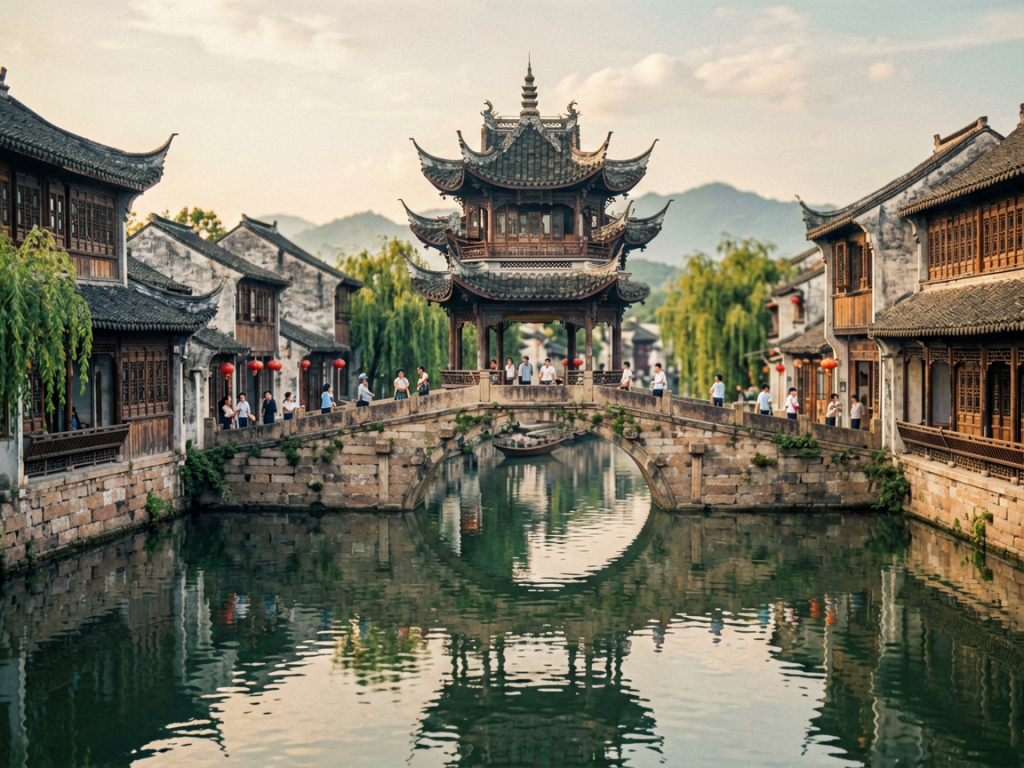
I still remember the exact moment I stopped checking my watch in China. It wasn’t in a remote Tibetan monastery or a quiet Yunnan village. It happened in Yangzhou, right after I’d eaten too many fried noodles and realized the sun hadn’t moved an inch in three hours.
Most people fly through Jiangsu province on their way to Suzhou or Nanjing. They treat Yangzhou like a layover. That’s a mistake. A big one.
This city is where time decided to take a nap. It’s the place where Chinese poets have been hiding for over a thousand years, trading hustle for harmony. And honestly? You should probably go hide there too.
The Poetry Wasn’t Just Words, It Was a Lifestyle
If you walk along the Slender West Lake at dawn, you’ll see old men practicing Tai Chi with the fluidity of water. But look closer. You’re walking in the footsteps of Li Bai.
I’ll be honest, I used to think of classical Chinese poetry as something dusty and academic. Then I stood by the Grand Canal, watching the mist roll off the water, and suddenly I got it. The poets didn’t just write about Yangzhou because it was pretty. They wrote about it because it was the only place where you could actually hear yourself think.
Li Bai famously said he loved this city so much he wanted to stay forever. Du Fu wrote about its beauty until his hands shook. These weren’t just casual tourists snapping photos. They were the rockstars of their era, and they chose Yangzhou as their sanctuary.
Why? Because the pace here forces you to slow down. In Beijing or Shenzhen, speed is currency. In Yangzhou, slowness is status. You don’t rush to eat. You don’t rush to talk. You sit. You watch. You exist.
I spent a whole afternoon just sitting in Geyuan Garden. Not seeing every pavilion. Not ticking boxes off a list. Just sitting under a plum tree while a local lady played the guqin nearby. It felt less like sightseeing and more like meditation. Sound interesting?
Breakfast Is a Serious Business Here
Let’s talk food, because you can’t understand Yangzhou without understanding its morning ritual. The locals call it *zaocha*, or morning tea. It’s not just a meal. It’s a social institution.
I arrived at a crowded teahouse near Daming Temple at 7 AM. The air smelled of steamed buns and strong jasmine tea. There were no menus. You just sat, and the waiters brought you trays of dumplings, buns, and noodles until you couldn’t move.
You have to try the *yangchun noodles*. It sounds simple–just noodles in broth–but the flavor profile is insane. The broth is made from pork bones and chicken, simmered for hours until it’s golden. The noodles are hand-pulled, springy, and coated in a tiny bit of lard and soy sauce. It’s comfort food at its absolute peak.
And then there’s the *steamed pork buns* (*baozi*). They’re huge. I’m talking fist-sized clouds of dough filled with savory, jelly-like meat. You bite into one, and hot juice explodes everywhere. Be careful. Trust me.
I watched a group of elderly gentlemen debating the merits of different tofu dishes for two hours. They weren’t angry. They were passionate. This is how relationships are built here. Over steam, over shared plates, over silence.
To be fair, I’ve had fancy Michelin-star meals in Shanghai. But nothing compares to the joy of eating a $2 bun in a noisy, steamy room with strangers who don’t care who you are. It’s humbling. It’s human.
Carving Into Wood, Carving Into Time
Yangzhou isn’t just known for eating. It’s famous for cutting. Specifically, knife carving.
I visited a traditional workshop in the old town, where artisans were shaping tofu into intricate shapes. I know, tofu sounds boring. Wait until you see it.
A master carver took a block of soft tofu and sliced it so thinly it looked like lace. He didn’t use a machine. He used a knife that looked like a letter opener and hands that moved faster than my eyes could track. He carved fish out of it. Actual swimming fish.
He told me, through a translator, that the knife work requires the same discipline as calligraphy. You have to breathe with the blade. One tense muscle, and you ruin the block.
I tried to cut a cucumber once. I destroyed it. It took me ten minutes to slice six uneven pieces. This guy did it in seconds with grace. I’m no expert, but I respect skill when I see it.
This attention to detail permeates everything in Yangzhou. From the garden rocks arranged to mimic mountains to the silk embroidery that hangs in hotel lobbies. Nothing is rushed. Everything is intentional.
Getting Lost Is the Best Part
Most travel guides will tell you to visit the Five Pavilion Bridge. And sure, it’s beautiful. But if you want to feel the soul of the city, turn left when you see the bridge.
I wandered into a neighborhood called Dongguan Street, but not the main tourist strip. I went down a side alley. The buildings were gray brick, weathered by centuries of rain. Vines climbed the walls like green fingers.
An old woman sat on a stool outside her door, peeling beans. She waved at me. I waved back. We didn’t speak the same language, but the gesture was universal. Welcome.
I bought some osmanthus cake from a street vendor. It was sticky, sweet, and smelled like autumn. I ate it while watching a dog chase a butterfly across a cobblestone path. Time really does stand still here.
Later, I found a small bookstore tucked behind a tea house. The owner was reading a poem by Su Shi. He looked up and smiled. “You’re lost,” he said in broken English. “Good,” he added. “Being lost is how you find things.”
I couldn’t argue with that logic. In cities like New York or London, getting lost is stressful. You check your GPS, you panic, you reroute. Here, getting lost is an invitation. It means you’re paying attention to your surroundings instead of a screen.
The River That Connects History to Now
Of course, we can’t talk about Yangzhou without mentioning the Grand Canal. It’s the longest man-made river in the world, and it runs right through the city.
In ancient times, this waterway was the highway of China. Grain, silk, and ideas flowed north and south on these boats. Today, it’s quieter. Much quieter.
I took a boat ride at sunset. The sky turned purple and orange, reflecting off the dark water. The boatmen sang folk songs as they rowed. Their voices echoed off the ancient stone bridges.
It’s easy to feel small standing next to history like that. These waters have carried empires up and down. They’ve seen dynasties rise and fall. And now, they carry tourists and locals alike, indifferent to politics and power.
Sometimes, I wish modern life felt this continuous. Like we’re part of a long thread, not isolated points on a map. Yangzhou gives you that sense of connection. You’re not just visiting a place; you’re stepping into a timeline.
Why You Should Go Before You Change Your Mind
I could be wrong, but I think Yangzhou is becoming more popular. The internet is catching on. More bloggers are posting about its gardens and its food.
But it hasn’t lost its charm yet. Not fully. You can still find corners of the city that feel untouched by mass tourism. The key is to go early, or go late. Avoid the midday tour buses if you want peace.
Pack comfortable shoes. The cobblestones are uneven. Bring an empty stomach. The food is too good to skip. And most importantly, bring an open mind.
Leave your expectations of efficiency at the airport. Embrace the delay. Enjoy the tea. Talk to the stranger next to you. Let the poets’ ghost guide you through the gardens.
Yangzhou isn’t just a destination. It’s a mood. It’s a reminder that life doesn’t have to be a sprint. It can be a stroll. A slow, deliberate, delicious stroll.
I’m already planning my return trip. Not to see new sights, but to sit in the same chair, drink the same tea, and watch the same mist rise off the lake. Sometimes, the best travel is the kind that doesn’t move you forward, but keeps you exactly where you need to be.
So, are you ready to slow down? Or are you still rushing to the next checkpoint? The choice is yours. But if you ask me, the poets would tell you to stay a while. They’ve been waiting for you.