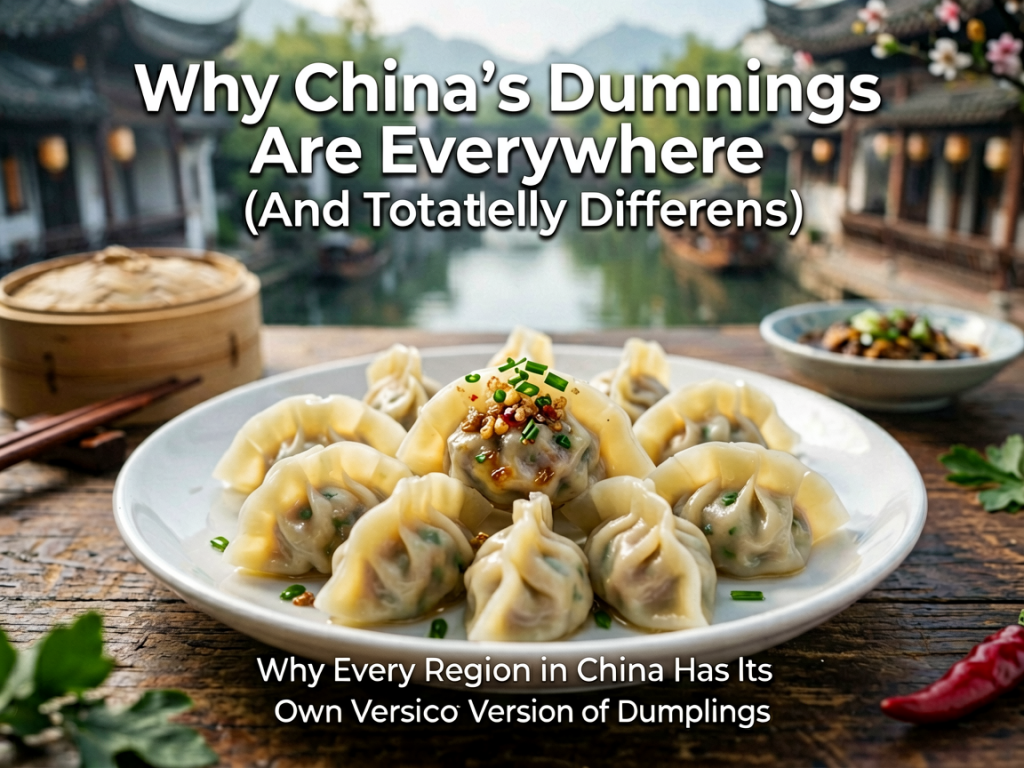
Here’s the thing about dumplings in China: they aren’t just food. They’re a geographical map you can eat. I’ve spent eight years moving across this country, and I’ve learned that saying “I want dumplings” is like walking into a bakery in Paris and asking for bread. Sure, you’ll get dough and filling, but the texture, the wrapper thickness, and the soul of the dish will depend entirely on which province you’re standing in.
I still remember my first time trying a *jiaozi* in Dalian. It was winter, the kind of cold that bites through your coat. I sat in a small, steamy shop, shivering, until the bowl arrived. The dumplings were huge, with thick, chewy wrappers that felt more like pasta than delicate paper. The filling was straight pork and chives, simple but packed with umami from the broth inside. It wasn’t just dinner; it was comfort in its purest form.
But if you take that same dumpling concept south to Sichuan, you’re in for a shock. Those big, boiled pockets? Forget it. In Chengdu, they’re talking about *shuijiao* dipped in chili oil so red it looks like lava. And if you head even further north to Xinjiang, you’re eating *mantou*, which is technically a steamed bun, but often stuffed and shaped like a dumpling, cooked in a clay oven until the crust cracks open. Sound interesting? It should be. Because China doesn’t really have one dumpling. It has hundreds.
The Great Northern Divide: Boiled vs. Steamed
Let’s start in the North, specifically around Beijing and Hebei province. This is the heartland of the traditional wheat dumpling, or *jiaozi*. Here, dumplings aren’t just a snack; they’re a ritual. During Spring Festival, families gather to fold them together. It’s messy, loud, and beautiful. The wrappers are hand-rolled, usually thin but with enough structure to hold the boiling water without falling apart.
I’ll be honest, I used to think all dumplings were the same until I tried the difference between Northern boiled *jiaozi* and Northern steamed *baozi* variants. Wait, no, stick to dumplings. The key distinction here is the cooking method and the wrapper ratio. In the North, we prefer a dough-to-filling ratio that feels substantial. You’re eating the flour as much as the meat.
Then there’s Shanxi. If you’ve never been, imagine a place where vinegar is more respected than soy sauce. The dumplings here, often called *huoshao*, might be pan-fried to a golden crisp. But their claim to fame is actually their noodles, which look like dumplings. Don’t let the shape fool you. The texture is different. It’s harder, chewier, designed to soak up that heavy black vinegar.
I once watched an elderly woman in Taiyuan fold these dough pieces with lightning speed. Her hands moved like a blur, pinching the edges shut with a flick of her thumb. I asked her how long it took. She laughed and said, “A lifetime.” That’s the level of skill involved. These aren’t factory-made pockets. They’re crafted with intent. The filling? Usually lamb and onion. Strong, gamey, and perfect for cutting through the rich starch of the wrapper.
The Southern Shift: Rice, Wonton, and Dim Sum
Cross the Yangtze River, and everything changes. Literally. The climate is wetter, warmer, and the agriculture shifts from hard wheat to soft rice. So, what happens to the dumpling? It evolves into something lighter, thinner, and often served as part of a larger meal called *dim sum* in the Cantonese tradition.
Take the *wonton*, for example. In Shanghai and Nanjing, these are ubiquitous. But here’s the kicker: a Shanghai wonton isn’t the same as a Sichuan wonton. In Shanghai, they serve them in a clear broth with minced pork and shrimp, topped with green onions. The wrapper is incredibly thin, almost translucent. You bite into it, and it melts. It’s elegant. It’s not about the chew; it’s about the delicacy of the filling.
I remember a morning in Suzhou when I sat by a canal, watching tourists rush past while I sipped tea and ate *suzhou-style* soup dumplings, or *xiaolongbao*. These are a different beast entirely. They’re steamed, yes, but they’re sealed tight to trap hot broth inside. Eating one requires a specific technique: bite a small hole, sip the soup, then eat the rest. If you rush, you burn your tongue. If you’re smart, you enjoy the heat.
The dough here is rolled to paper-thinness. It’s a technical feat that I’m sure took these chefs decades to master. And unlike the Northern dumpling, which is often a meal in itself, these are part of a spread. You order six types of dim sum. The dumplings are just one note in a symphony of textures.
The Ethnic Variations: Where Wheat Meets Rice and Meat
China is huge, and it’s home to fifty-six officially recognized ethnic groups. Each has its own version of the dumpling, and they’re fascinating because they break all the rules I just mentioned. Let’s talk about the Uyghurs in Xinjiang. They make *samsa* (or *bosha*), which are triangular or half-moon pastries baked in a tandoor oven. The filling is lamb, cumin, and onion. The crust is flaky, layered, and oily in the best way possible.
I ate these in a market in Kashgar. The smell of cumin hit me before I even saw the stall. The *samsa* was hot, the juice running down my hand, and the meat tender enough to fall apart. It wasn’t boiled or steamed. It was roasted. And it was incredible. It showed me that dumplings aren’t bound by water. They’re bound by the desire to wrap something delicious in something edible.
Then there’s the Tibetan influence in the west. *Momo* is the Tibetan dumpling, similar to Nepali dumplings but distinct in its own right. Often steamed, sometimes fried, filled with yak meat or potatoes. Yak meat is leaner than pork, with a slight gaminess that pairs well with spicy chili sauces. I tried a *momo* in Lhasa during a monsoon season. The air was thick, the temperatures dropped, and nothing warmed me up quite like that spicy, steaming pocket of yak meat.
Even the Miao people in Guizhou have their version. They often use glutinous rice or cornmeal for the wrapper, reflecting the local crops. The fillings might include pickled vegetables, adding a sour kick that cuts through the richness of the meat. It’s a flavor profile that’s unique to the region. You won’t find it in Beijing. You won’t find it in Shanghai. It’s strictly local, deeply rooted in the terroir.
Why This Diversity Matters
You might be wondering why I’m making such a big deal out of dough and meat. Isn’t it just food? To some, maybe. But to me, understanding these differences is the key to understanding China itself. The North is rugged, direct, and hearty. The dumplings reflect that. The South is complex, nuanced, and delicate. The dumplings mirror that too.
Traveling through China without appreciating these regional variations is like visiting Italy and only eating pizza. Sure, it’s good. But you’re missing the risotto in the north, the pasta in the south, the olive oil, the wine, the history. The dumpling is a vessel for culture. It carries the agricultural history of the region, the trade routes that brought spices like cumin or chili, and the family traditions that have been passed down for generations.
I’ve seen grandmothers in rural Henan teaching their grandchildren how to fold *jiaozi* with specific pleats. Each pleat represents a wish for prosperity. In Guangzhou, chefs in high-end hotels spend hours perfecting the seal on a *har gow* (shrimp dumpling). It’s not just about taste; it’s about craft. It’s about respect for the ingredient and the process.
How to Eat Like a Local
So, next time you’re in China and you see a dumpling shop, don’t just point to the picture on the wall. Ask questions. Ask what the filling is. Ask how it’s cooked. Ask if they make the wrappers by hand. Most owners will light up at these questions. It shows you care. It shows you’re not just a tourist passing through; you’re a participant in their culture.
And don’t be afraid to try the weird stuff. Try the lamb and cumin in the North. Try the shrimp and pork in the South. Try the fermented bean curd dipping sauce in Shanxi. It’s scary at first, but that’s where the best memories are made. I’ve burned my tongue on soup dumplings, spilled chili oil on my shirt, and gotten lost looking for a specific type of noodle dumpling. All worth it.
The beauty of Chinese dumplings is that there’s always something new to discover. Even after eight years, I’m still finding variations I didn’t know existed. A friend in Yunnan introduced me to a mushroom-filled dumpling wrapped in corn husks. It sounded strange, but it tasted like the forest floor. Earthy, rich, and complex.
We’ve covered a lot of ground, from the wheat belts of the North to the rice paddies of the South. But the story doesn’t end here. It continues every time you sit down with a bowl of hot, steaming dumplings. It’s a reminder that in China, food isn’t just fuel. It’s conversation. It’s history. It’s home.
I hope you’ll go out there and try them all. Not just the famous ones, but the obscure, local, handmade versions that tourists rarely find. That’s where the real magic lies. Trust me, your taste buds will thank you. And maybe, just maybe, you’ll understand a little bit more about this vast, complicated, wonderful country we call our second home.