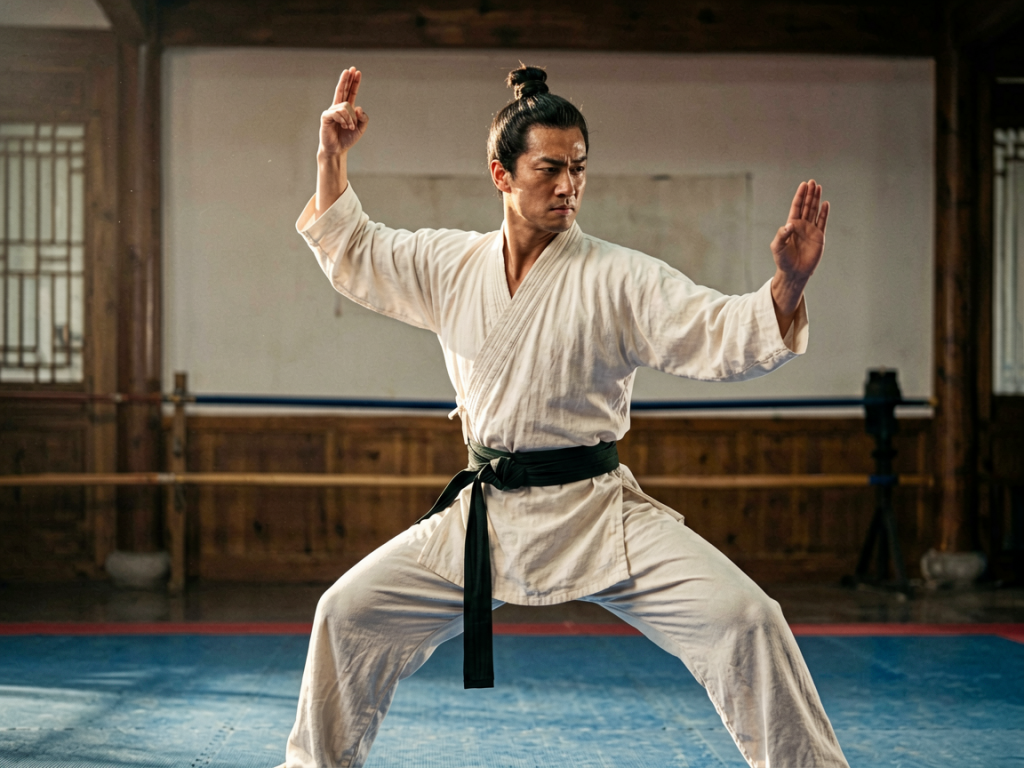
I remember the first time I hit the dirt in Beijing. It wasn’t graceful. It wasn’t cinematic. It was just a painful, dusty slap against the concrete pavement of a community park at 6 AM. I was thirty-two, stiff from sitting at a desk, and utterly convinced that my body would snap under the pressure of traditional martial arts.
That was three years ago. I’ve been training since then, but the real shift happened when I committed to doing it every single day for twelve months straight. No skipping leg day. No “I had a bad mood” excuses. Just show up, put on the loose cotton pants, and move.
If you’re thinking about starting a daily routine in a Chinese martial art, you need to know what actually happens to your physique. It’s not what you see in the movies. It’s messy. It’s slow. And it’s completely worth it.
The Stiffness Vanishes (But the Aches Stay)
Here’s the thing about aging in your thirties. Everything hurts. Your knees click. Your lower back screams when you sit too long. Your shoulders feel like they’re made of lead.
When I started practicing Xingyiquan and Baguazhang, I thought the goal was to fix these problems. Instead, I just found new ways to hurt. The first month was brutal. My hamstrings felt like tight rubber bands ready to snap. My ankles, usually neglected by city walking, became the center of my universe.
But around month three, something clicked. Literally and figuratively. That constant background hum of stiffness I’d accepted as normal just disappeared. I didn’t notice it going away because it was gradual. One morning, I woke up and realized I hadn’t stretched for ten minutes before getting out of bed.
Is it instant relief? No. You have to earn it. But after a year of daily deep stretching and stance work, my range of motion is better than it was at twenty-five. I can squat deeper. I can twist further. My spine feels lubricated, like a well-oiled hinge rather than a rusty gate.
I’m no physiotherapist, but my chiropractor was genuinely surprised during my last visit. He said my alignment was perfect. I told him it was mostly thanks to holding horse stances until my legs trembled uncontrollably. He didn’t laugh. He just nodded and said, “Keep doing that.”
You Don’t Look Like a Bodybuilder
This is where most people get confused. They imagine kung fu will give them the ripped, vascular look of a bodybuilder or a cross-fit athlete. Trust me, it won’t.
After a year of daily training, my body composition changed drastically, but not in the way Instagram fitness gurus would want you to believe. I lost about eight pounds of fat. I gained maybe two pounds of muscle. That sounds negligible, right?
But here’s the catch. The muscle I gained is dense. It’s not fluffy. It’s functional. My core is rock solid. Not because I do crunches, but because every movement in traditional Chinese martial arts requires you to engage your dantian–your lower abdomen–as the power source.
I remember watching my reflection in the gym mirror one day last winter. I looked smaller than I did a year ago. My clothes fit looser around the waist. But when I lifted weights or carried groceries up four flights of stairs, I felt heavier. Stronger. Grounded.
Your muscles change shape too. Your forearms get defined from gripping forms. Your calves turn into steel cables from the constant shifting and jumping. It’s not aesthetic muscle. It’s survival muscle. It’s the kind of strength that helps you push through a heavy door or stand firm against a strong wind.
To be fair, if you want to look big, go lift heavy iron. If you want to feel capable, practice kung fu. The difference is subtle, but once you feel it, you can’t unfeel it.
The Heart Works Differently Now
We talk a lot about cardio in the West. Running on a treadmill. Cycling. Jumping rope. Traditional kung fu training is different. It’s interval-based, but the intervals are internal.
Think about a form sequence. You move slowly, focusing on breath and alignment. Then, suddenly, you explode into a fast, powerful strike. Then you go back to slow, controlled movement. This is essentially high-intensity interval training, but it also requires intense mental focus.
After a year of this, my resting heart rate dropped. I used to check it randomly and wonder why it was hovering around 75 bpm. Now, it sits comfortably at 58. That’s a huge deal for someone who used to get winded climbing stairs.
But the real change is in how I recover. Before, if I went for a run or played basketball, I’d be exhausted for hours. Now, after a grueling two-hour session of stance holding and form drilling, I feel energized. My breathing is deeper. My recovery time is shorter.
I tried this during a weekend trip to Hangzhou last spring. We hiked up a mountain that looked easy on the map. By the time we reached the top, my hiking partners were panting. I felt fine. My lungs expanded fully. My legs held steady on the rocky path. It wasn’t magic. It was just a year of teaching my body to efficiency-use oxygen.
Sound interesting? It should. Because as we age, cardiovascular health becomes non-negotiable. Kung fu offers a sustainable way to maintain it without burning out.
Injuries Are Inevitable (But Manageable)
I’ll be honest. I got injured. A lot.
Daily training means daily repetition. Repetition breeds calluses, but it also breeds strain. I developed tendonitis in my left wrist from over-practicing the palm strikes. My knees ached from poor stance alignment in the early days. I even pulled a hamstring from trying to kick too high, too soon.
The mistake many beginners make is pushing through pain. In martial arts, there’s a big difference between discomfort and injury. Discomfort is the feeling of your muscles working. Injury is a sharp, stabbing sensation that doesn’t go away when you rest.
Learning to listen to my body was the hardest part of the year. There were days I wanted to skip because I was sore. But there were other days where ignoring a twinge led to weeks of sitting on the couch.
I learned to modify. If my knees hurt, I raised my stance. If my wrists hurt, I softened my strikes. I stopped trying to look cool in front of the other students and started focusing on longevity. That mindset shift saved me. By month six, the minor aches stopped accumulating. By month twelve, I was training pain-free for the first time.
It’s better than most alternatives because it teaches you respect for your own limits. You can’t cheat physics. You can’t force your tendons to become stronger overnight. Patience isn’t just a virtue in kung fu. It’s a requirement.
Mental Clarity Replaces Brain Fog
We haven’t really talked about the head yet, but this is where the biggest transformation happened. I live in a city that never sleeps. Notifications ping constantly. Emails demand immediate responses. It’s easy to feel scattered.
Kung fu demands presence. You can’t think about your email while you’re balancing on one leg in a crane stance. You have to be here. Now. In your body.
After a year of this daily meditation-in-motion, my ability to focus at work improved dramatically. I found myself less reactive. Less anxious. When stress hit, I had a physical outlet for it. Instead of pacing the office or snapping at colleagues, I’d visualize the movements. I’d breathe deeply. I’d center myself.
I remember a particularly stressful week last November. Deadlines were piling up. My boss was breathing down my neck. I went to the park at dawn anyway. I drilled the same form for an hour. Ten times. Twenty times. When I finally stepped off the mat, I felt light. The problems hadn’t changed, but my capacity to handle them had.
This isn’t some woo-woo spiritual claim. It’s neuroscience. Movement stimulates blood flow to the brain. Focus reduces cortisol. Combining them creates a clarity that coffee simply can’t match.
I’m no scientist, but I know what works. And what works is waking up at 6 AM, sweating in public, and feeling clearer than I have in decades.
The Verdict
So, what happens to your body after a year of daily kung fu training? You don’t look like Bruce Lee. You don’t run a marathon without training. You don’t become invincible.
What you do become is resilient. Your joints are healthier. Your heart is stronger. Your mind is quieter. You move with intention rather than habit.
It’s harder than you’d expect. There will be days you want to quit. There will be mornings when the bed is too comfortable and the cold air is too biting. But those moments pass.
What stays is the feeling of being alive in your own skin. I love this feeling. It’s grounded. It’s real. And it’s available to anyone willing to show up, even if they start by falling on their face.
If you’re on the fence, just try it. Give yourself thirty days. See how you feel. I bet you’ll be surprised.