Look, I’ve been eating in China for eight years now. I’ve eaten street noodles in Chengdu until my face burned. I’ve had dumplings in Beijing so good they made me cry. And I’ve stood in supermarket aisles in Shanghai staring at rows of brown bottles, feeling completely lost.
If you’re new to Chinese cooking, that confusion is totally normal. You pick up a bottle of soy sauce, thinking it’s just salt water for flavor. But then you try to make a stir-fry, and it comes out looking like mud and tasting like burnt sugar.
That’s because you used the wrong one. Or maybe you used both wrong. Here’s the thing: there isn’t just “soy sauce.” There are at least two distinct types that every home cook needs to understand. They aren’t interchangeable. They do different jobs.
The Salt vs. The Sweet
Let’s start with the basics. In the West, we usually just buy one bottle of Kikkoman or Lee Kum Kee and call it a day. That’s fine for sushi or dipping dumplings. But if you want to cook actual Chinese food, you need to separate your sauces by function.
I remember my first time trying to help my friend Lin make her braised pork belly. She handed me a bottle of “light” soy sauce. I poured it in. Then she stopped me dead. “No, no,” she said, grabbing a darker, thicker bottle from the shelf. “This is for color. This one is for taste.”
That was the moment everything clicked for me. Light soy sauce is primarily for salinity. It’s thin, watery, and salty. It gives your dish that deep umami punch without changing the visual appeal. Think of it as your basic seasoning salt, but liquid.
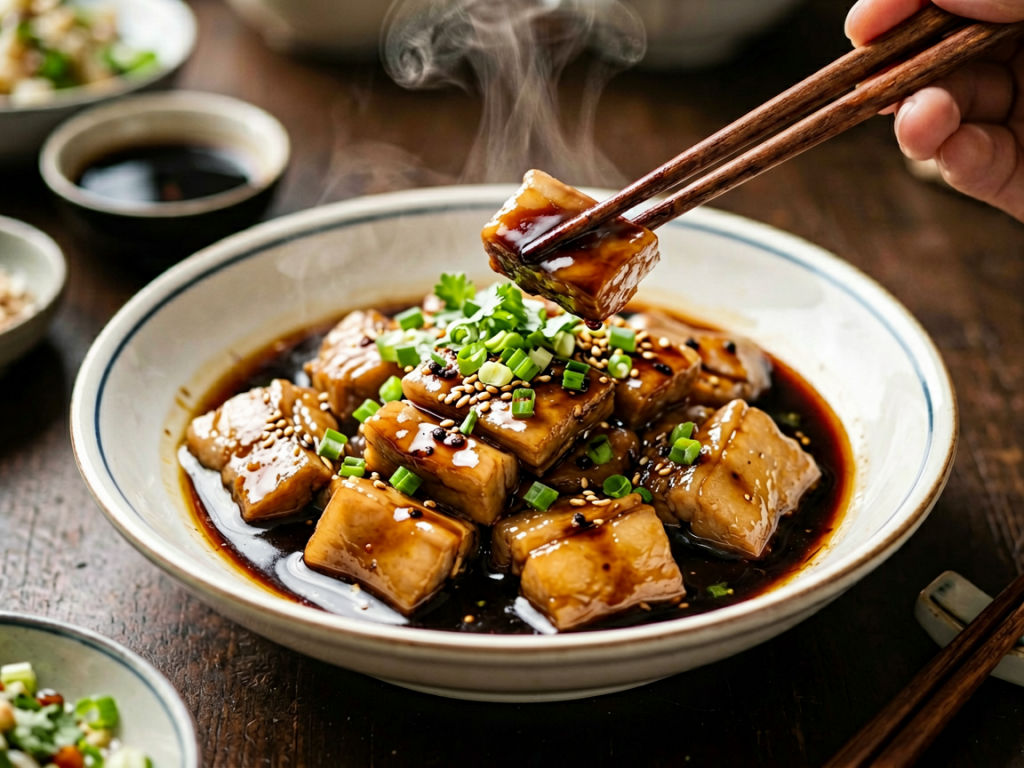
Dark soy sauce, on the other hand, is thick, slightly sweet, and syrupy. It’s aged longer and often has molasses or sugar added during the brewing process. Its main job isn’t to make the food salty. It’s to give it that gorgeous, glossy brown sheen. It’s the makeup of the Chinese kitchen.
So, if you only have light soy sauce, your food will taste right but look pale. If you only have dark, it will look great but taste weirdly sweet and cloying. You need both. Trust me on this.
Tasting the Difference
I actually did an experiment last week. I bought small bottles of both, sat on my balcony in Guangzhou, and just tasted them straight from the cap. It sounds weird, but you have to know your ingredients.
The light soy sauce hit my tongue immediately. It was sharp. Salty. Clean. It tasted like fermented beans. That’s it. No sweetness. No thickness. Just pure, concentrated saltiness and aroma.
The dark soy sauce was a different story. It coated my tongue. It was viscous. When I swished it around, I tasted caramel. I tasted a hint of licorice. It was definitely salty, but the salt was masked by that rich, sweet depth. It felt heavier, like drinking a syrup rather than water.
This texture difference matters a lot in cooking. Because dark soy sauce is thicker, it doesn’t distribute as easily as the watery light version. That’s why chefs often mix them together in a bowl before pouring them into the wok. It ensures even distribution.
If you pour dark soy sauce directly onto hot oil, it can sometimes burn quickly due to the sugar content. Light soy sauce is more forgiving. It’s designed to be added early in the cooking process to build the base flavor. Dark soy is often added towards the end, just to glaze the dish.
When to Use Which Bottle
Okay, so you’ve got your two bottles. How do you decide which one goes where? This is where most beginners mess up. They treat them like they’re the same ingredient with different colors.
Start with light soy sauce. Use it for almost everything that isn’t a braise or a stew. Stir-fries? Light soy sauce. Steamed fish? Light soy sauce. Dipping sauces for hot pot? Definitely light soy sauce, maybe mixed with some vinegar or chili oil.
I remember making Mapo Tofu for a dinner party. My American guests kept asking why I was adding so much liquid. I told them it’s all about the sauce balance. I used light soy sauce to season the tofu and the minced meat. If I had used dark soy sauce for the entire dish, it would have tasted bitter and looked like chocolate pudding.
Now, switch gears. Dark soy sauce shines in red-braised dishes. We call these “hong shao” dishes in Chinese. Think Hong Shao Rou (braised pork), Braised Chicken Feet, or even simple Braised Eggs.
These dishes rely on slow cooking to break down tough connective tissues and allow flavors to penetrate. The sugar in the dark soy sauce helps caramelize the exterior of the meat. It creates that sticky, glossy coating that makes people beg for seconds. I’ve had this dish at a roadside stall in Xi’an that cost less than two dollars. The sauce was so dark and shiny, it looked like lacquer. It was incredible.
You also use dark soy sauce when you want to add depth without adding more salt. If your dish is already salty from the light soy sauce or oyster sauce, a splash of dark adds complexity and color without over-salinating the meal.
The Mistake I Made Early On
Early in my time here, I tried to save money and effort. I didn’t want to carry two heavy bottles back from the airport. So, I bought just one bottle of “premium soy sauce” labeled for both purposes.
I thought, “Great, convenience!” I was wrong. That sauce was somewhere in the middle. It wasn’t salty enough for a stir-fry base, and it wasn’t dark enough for proper braising. My food lacked vibrancy. It tasted flat. It tasted like restaurant food that had been sitting under a heat lamp for too long.
My neighbor, Auntie Wang, saw me struggling with my stir-fry one night. She came over, shook her head, and walked me through her own pantry. She showed me the tiny bottle of light sauce she keeps near the stove. She showed me the large jar of dark sauce she keeps on the high shelf.
“Light for taste,” she said, tapping the small bottle. “Dark for beauty,” she said, pointing to the jar. She laughed when I asked if the dark one made it taste better. “No,” she said. “It makes it look better. The taste comes from the light one.” That lesson stuck with me.
Color is huge in Chinese cuisine. We eat with our eyes first. A pale chicken dish looks undercooked or boring. A golden-brown, glossy chicken dish looks rich and flavorful. The dark soy sauce provides that visual promise of depth.
Reading the Label
When you go shopping, pay attention to the characters on the bottle. This is easier than you think once you know what to look for, but hard if you don’t.
For light soy sauce, look for the word “Sheng Chou” (生抽). It literally translates to “raw sauce.” This indicates it’s the first pressing, the freshest, saltiest, and thinnest. It’s the standard workhorse.
For dark soy sauce, look for “Lao Chou” (老抽). “Lao” means old or aged. This tells you it’s been aged longer, often with added caramel or sugar. It’s thicker and darker. Some brands will also specify “First Grade” or “Premium,” which usually means higher quality fermentation and fewer additives.
Be careful with generic labels. Some bottles just say “Soy Sauce” with no distinction. Those are usually middle-of-the-road products. They’re okay for dipping, but not for serious cooking. Always check for those specific characters or the English descriptions “Light” and “Dark.”
Also, watch out for “Seasoned Soy Sauce for Seafood.” This is a third type, often sweetened and flavored with MSG and spices. It’s great for steaming fish, but don’t use it in your stir-fries unless you want a specific sweet profile. Stick to the basic light and dark for now.
Storing Your Sauces
One last practical tip. Unlike wine, soy sauce doesn’t get better with age in the bottle once you open it. Heat and light degrade the flavor. I keep my light soy sauce in the fridge. It lasts forever and stays fresh.
Your dark soy sauce can stay in the cupboard, but the fridge is safer if you live in a humid climate. I used to store mine on the counter in Guangzhou, where it’s hot. After six months, the flavor started turning weirdly metallic. Moving it to the fridge fixed that instantly.
Buy smaller bottles if you can’t finish them quickly. I’ve seen empty bottles of expensive premium soy sauce sitting in pantries for years, just collecting dust. It’s a waste. Freshness matters more than price.
Why It Matters
Learning this distinction changed how I cook. It didn’t just change the taste; it changed my confidence in the kitchen. Before, I was guessing. Now, I understand the chemistry.
Chinese cooking is all about balance. Salty, sweet, sour, spicy, bitter, and umami. Light soy sauce brings the salt and umami. Dark soy sauce brings the sweet and the visual appeal. Together, they create harmony. Alone, they leave you missing half the picture.
I’ll admit, I used to roll my eyes at Western recipes that demanded specific brands. But here, specificity is key. Using the right sauce is like using the right cheese. You wouldn’t put Parmesan on a delicate risotto if you needed Mozzarella. Same logic applies here.
So, next time you’re standing in the aisle, overwhelmed by the choices, just remember Lin’s advice. Pick up the light one for the taste. Pick up the dark one for the look. Mix them in your marinade. Glaze your meats with it. And watch your food transform from ordinary to extraordinary.
It’s not magic. It’s just knowing your tools. And honestly, once you get the hang of it, you’ll wonder how you ever cooked without them. Your family will thank you. Your stomach will definitely thank you.