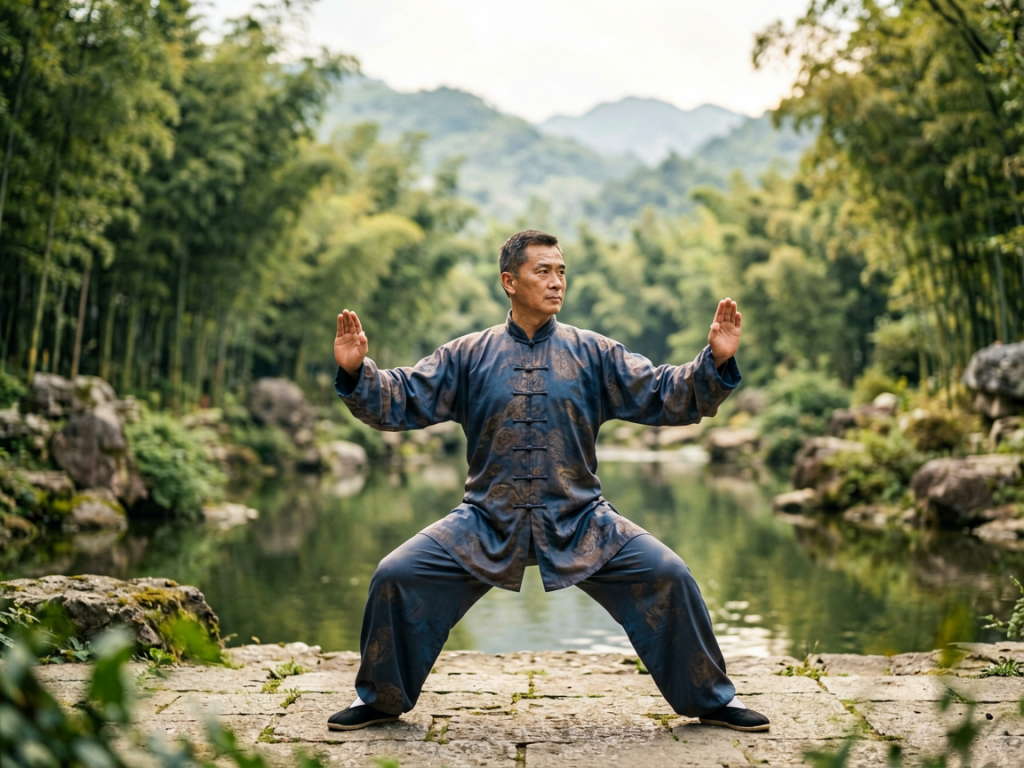
I remember the first time I stepped into a park in Chengdu at dawn. It was damp, the air thick with the smell of wet earth and steamed buns from a nearby vendor. Around me, hundreds of people moved in slow, deliberate arcs. They looked like they were swimming through honey. Most assumed this was just Tai Chi, the famous martial art turned exercise everyone associates with China.
I was wrong. And I had been wrong for years.
For a long time, I thought these terms were interchangeable. After all, both involve slow movement, deep breathing, and a focus on internal energy. I’d started practicing Tai Chi because I was burned out. My nerves were fried from seven years of living in Beijing, juggling deadlines and navigating a culture that never sleeps. I needed calm. I found it, but it wasn’t enough. I needed to fix my sleep. I needed to stop waking up at 3 AM with my heart hammering against my ribs.
That’s when a friend named Lao Li, a retired TCM practitioner with hands like velvet, told me I was doing it wrong. He said my Tai Chi was all form and no function. He handed me a book on Zhan Zhuang, or standing meditation, and told me to try Qigong for ninety days. He swore it would reset my autonomic nervous system in a way Tai Chi couldn’t touch.
I rolled my eyes, obviously. But desperation makes you try strange things. So, I did it. And honestly? It changed everything.
The Difference Is In The Stillness
You might be surprised to hear this, but Tai Chi is dynamic. It’s a moving meditation. You’re shifting weight, extending limbs, maintaining balance while in motion. It’s beautiful, sure. But it requires cognitive load. Your brain is busy tracking your posture, remembering the next move, and coordinating your muscles.
Qigong, particularly the kind I practiced, often starts with stillness. Specifically, the art of “standing like a tree.” This is Zhan Zhuang. You stand with knees slightly bent, arms held in front of you as if hugging a large balloon. You do nothing else. For ten minutes. For twenty. Maybe thirty if you’re brave.
At first, I hated it. My legs shook. My mind raced. I felt ridiculous standing there in the middle of a public square while tourists snapped photos. But here’s the thing about Qigong: it bypasses the motor cortex and goes straight for the deeper layers of your nervous system.
Tai Chi engages your sympathetic nervous system just enough to keep you alert. It’s active relaxation. Qigong, especially static forms, forces your parasympathetic nervous system–the “rest and digest” mode–to take over. It’s not about moving energy; it’s about stopping the leak. Think of your nerves like an old house with faulty wiring. Tai Chi helps you manage the sparks. Qigong turns off the breaker entirely so the wires can cool down.
Within the first week, I noticed a subtle shift. My resting heart rate dropped. Not dramatically, but noticeably. I stopped checking my phone the moment I woke up. Instead, I’d stand by the window, holding that imaginary balloon, feeling the weight of my body sink into my feet.
It sounded woo-woo at first. I’m a journalist, not a monk. But the physiology makes sense. When you hold a static posture, your small stabilizer muscles fire continuously. This creates a feedback loop to the brain signaling safety and stability. The fight-or-flight response dims. The noise quiets down.
Feeling The Currents Of Qi
One of the biggest misconceptions about Qigong is that it’s mystical magic. Let’s be clear: Qi isn’t some magical ghost energy. It’s attention combined with physiological awareness. When we talk about “moving Qi,” we’re really talking about sensory awareness of blood flow, fascial tension, and breath depth.
During my experiment, I focused on a technique called “Six Healing Sounds.” Each sound corresponds to an organ system. There’s a low hum for the liver, a sharp exhale for the lungs, a soft sigh for the heart. I practiced this in a small room above a tea shop in Wudaokou, surrounded by the smell of roasted oolong and dusty books.
The first time I did the lung sound, I felt a tingling sensation in my chest. It wasn’t pain. It was like ice water running through veins. Lao Li laughed when I described it. He said, “That’s just your diaphragm releasing tension. The lungs hate stress. They hold onto it tighter than anyone else.”
Tai Chi incorporates breath, yes. But it’s usually synchronized with movement. Inhale while expanding, exhale while contracting. It’s rhythmic and predictable. Qigong breathwork is more varied. Sometimes you breathe into the belly. Sometimes into the lower back. Sometimes you hold the breath for a count, then release it with a sound.
This variety shocks the nervous system out of its habitual patterns. It’s like taking a cold shower for your vagus nerve. After three weeks, I started noticing things I’d missed before. I could feel the difference between a shallow chest breath and a deep abdominal breath in real-time. In the past, I’d only notice when I was short of breath. Now, I could regulate my state on command.
Is it better than Tai Chi? That depends on your goal. If you want physical coordination, balance, and a comprehensive full-body workout, Tai Chi wins hands down. But if you want to heal chronic anxiety, improve sleep quality, and reconnect with your body’s internal signals, Qigong is the superior tool.
The 90-Day Reality Check
I tracked my progress in a simple notebook. No fancy apps. Just pen and paper. On day one, my average sleep duration was six hours and fifteen minutes. My stress levels, rated 1 to 10, hovered around a solid 8.
By day thirty, the change was subtle but undeniable. I stopped snapping at taxi drivers. I realized I wasn’t holding my shoulders up near my ears anymore. The constant low-level hum of anxiety in the back of my head had turned into a whisper.
Day forty-five was weird. I felt energetic, but calm. Not wired. I went for a run and didn’t need coffee beforehand. Usually, I’m a zombie until noon. This morning, I felt awake. I met Lao Li for breakfast. He didn’t say anything, just nodded at my posture. I stood taller, not because I was trying to, but because my spine finally felt aligned without effort.
The real test came at day sixty. I had a major deadline looming. A project for my magazine had gone sideways. In the past, I would have panicked. I would have skipped meals, worked through the night, and spiraled into insomnia. This time, I stood by the window. I did five minutes of standing meditation. I breathed into my dantian, that deep center below the navel.
I felt the panic rise, just like always. But this time, I didn’t feed it. I watched it float away. I handled the crisis with clarity. I solved the problem in an hour, not a week. The outcome was the same, but the cost to my nervous system was zero.
By day ninety, I was sleeping eight hours a night. Consistently. I woke up refreshed, not groggy. My digestion improved. I realize now how much my gut health was tied to my stress levels. The Vagus nerve connects them directly. By calming the nerve, I healed the gut. It’s not just theory. It happened to me.
Why Most People Quit Too Early
If Qigong is so great, why doesn’t everyone do it? Because it’s boring. Or so it seems.
Tai Chi looks impressive. You spin, you kick, you strike invisible opponents. It feels like martial arts. It feels powerful. Qigong looks like… standing there. Or swaying gently. It lacks the theatricality that draws beginners in.
I almost quit twice. The urge to “do something” is strong in us Westerners. We equate action with progress. If I’m not sweating, am I working out? If I’m not memorizing complex sequences, am I learning? But healing isn’t linear. It’s often quiet. It’s often still.
You have to trust the process. You have to believe that doing nothing is actually doing something profound. It took me two months to appreciate the stillness. Before that, I was just waiting for the clock to run out.
Another hurdle is finding good instruction. Qigong is often taught poorly in Western gyms. They turn it into gentle aerobics. While that’s fine for seniors, it misses the point. To get the nervous system benefits, you need the internal work. You need to learn how to relax deeply while maintaining structure. That’s why finding a teacher like Lao Li was crucial. He corrected my alignment constantly. He told me when I was forcing it. He taught me to yield.
The Verdict On My Nerves
So, what does Qigong do to your nerves that Tai Chi doesn’t? It offers a deeper level of deconstruction. Tai Chi builds resilience through movement. It teaches you to stay centered while changing shape. Qigong dismantles the tension itself. It strips away the layers of stored trauma and stress until you’re left with pure presence.
I’m not saying you should drop Tai Chi. I still practice it on weekends. I love the fluidity. I love the history. But for daily nervous system regulation, Qigong is my anchor.
If you’re living in China, or anywhere really, and you feel like your nerves are frayed wires, give Qigong a shot. Don’t look for the flashy moves. Look for the stillness. Find a park at dawn. Find a teacher who cares about your breath, not just your limbs. Stand still. Breathe deep. Let go.
It sounds simple. It is simple. And that’s exactly why it works.
I’ve seen many travelers come to China seeking spiritual enlightenment. They find it in temples, in mountains, in ancient texts. I found mine in a sweaty t-shirt in a public park, standing still while the world rushed by. There’s a power in that stillness that few people talk about. It’s not passive. It’s active surrender.
My advice? Stop trying to control your life. Start trying to regulate your state. The rest will follow.