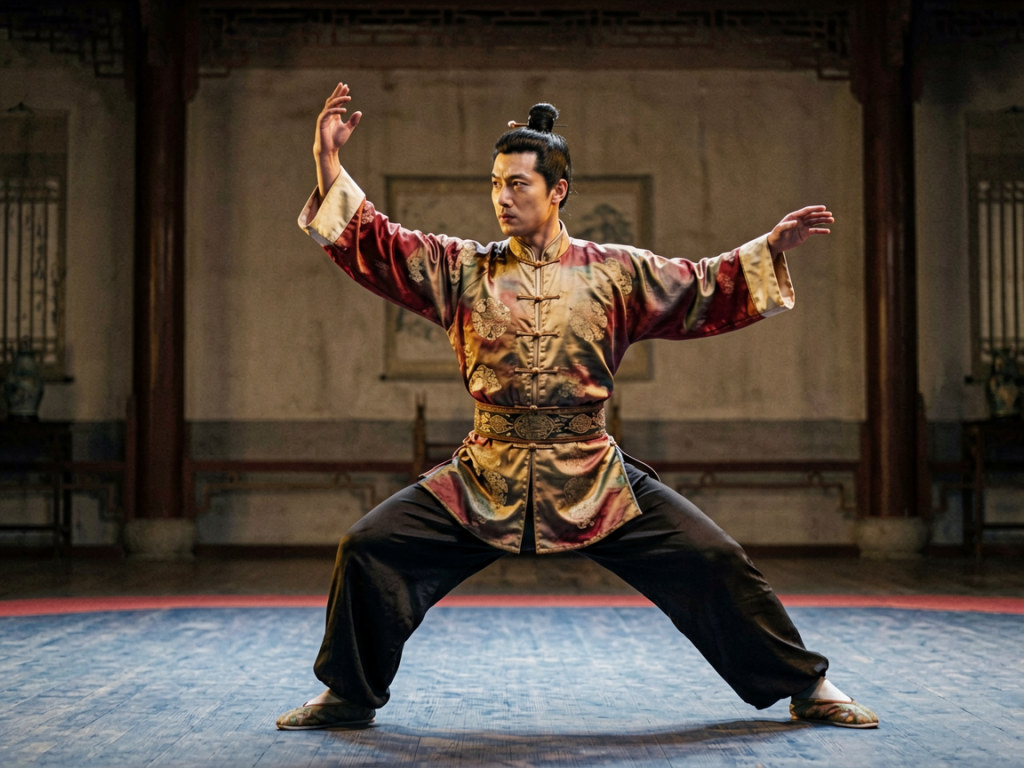
The first time I saw a competitive wushu routine, I thought I’d walked onto a gymnastics floor by mistake.
I was sitting in a cold arena in Beijing, shivering in my jacket while the rest of the crowd cheered like mad. The athlete flipped three times in the air, landed a backflip, and then spun into a pose so rigid it looked carved from stone.
The crowd went wild. The judges gave it a ten out of ten.
I clapped too. Honestly, it was impressive. But inside, I felt a strange disconnect. That wasn’t the kung fu I’d been promised by movies. That wasn’t the slow, flowing movements of Shaolin monks I’d seen in documentaries.
That was sport. Pure, high-octane sport.
For decades, the International Olympic Committee has tried to get wushu into the Games. They’ve failed. And every time they fail, people ask the same question: Why?
The answer isn’t simple. It’s not just about politics or judging criteria. It’s about two completely different philosophies of movement, history, and purpose.
If you think competitive wushu and traditional kung fu are the same thing, you’re missing half the story. Let me break it down for you.
When Tradition Met the Gymnastics Floor
To understand the divide, you have to look at where these styles come from.
Traditional kung fu, or gongfu, is thousands of years old. It was born in battlefields and temples. It was designed to kill or disable an opponent. Efficiency was everything. A move had to work when you were tired, scared, and bleeding.
Competitive wushu, on the other hand, was created in the 1950s.
The Chinese government wanted a standardized martial art for schools. They wanted something that looked good on TV and could be taught uniformly across the country. So, they took elements of traditional styles and mixed them with gymnastics and dance.
The goal changed. It wasn’t about combat effectiveness anymore. It was about aesthetics, difficulty, and precision.
I remember asking my teacher, Master Li, about this once. We were drinking tea in his small studio in Guangzhou, surrounded by wooden dummies and old swords.
“They call it wushu,” he said, pouring hot water over the leaves. “But it is not the same as gongfu.”
“What’s the difference?” I asked.
“Gongfu takes time. Any skill takes time. Wushu, the sport kind, is about showing off that time. But it doesn’t teach you how to use it.”
He wasn’t being mean. He was just stating facts. The flips are incredible. But if a guy with a knife came at you during those flips, you’d be dead before you hit the ground.
The Olympic Dream That Never Landed
So, why hasn’t wushu made it to the Olympics yet? It’s been pushing for inclusion since the 1990s.
The main issue is that it’s too easy to judge. Or rather, the judging is too subjective.
In gymnastics, the code of points is strict. You do a specific move, you get X points. In wushu, judges look for “artistic impression.” What does that even mean?
Does it mean the pose looks pretty? Does it mean the jump was high? Does it mean the performer looked happy?
I sat in on a national competition in Shanghai last year. The atmosphere was electric. But when I talked to some of the local fans afterwards, I realized how confusing the scoring can be.
“That guy did a simpler routine,” one fan told me, shaking his head. “But he looked more traditional. The judges loved it.”
“But his jump was lower,” I pointed out.
“Yeah, but it was cleaner,” she replied. “In wushu, clean lines matter more than height sometimes.”
This is the heart of the problem. The sport has moved away from the traditional roots to become its own entity. It’s like trying to put modern ballet into the Olympics alongside ice skating. Both are artistic, but they’re fundamentally different disciplines.
Plus, there’s the combat aspect. Traditional kung fu has sparring, but competitive wushu taolu (forms) doesn’t really test fighting ability. It tests performance.
When you strip away the fighting, what’s left is just acrobatics. And acrobatics already has its place in the Olympics.
What You’re Missing When You Watch the Forms
If you’ve never tried traditional training, you might think kung fu is all slow motion and talking to ghosts.
I used to think that too.
Then I spent six months training in a village near Shaolin Temple. My knees hurt every day. My shins bruised from kicking tree trunks. And I learned that “slow” is actually harder than “fast.”
In competitive wushu, the power comes from explosiveness. You coil your body like a spring and release all that energy in a split second.
In traditional kung fu, power comes from structure and intent. It’s about generating force from the ground up, through your hips, and out your hands. It’s not about looking flashy. It’s about being solid.
One thing that blows beginners’ minds is the conditioning.
I watched a senior student hit a heavy bag with his knuckles. The sound was like a gunshot. His hands were calloused and scarred. He didn’t do any flips. He just stood there, rooted to the spot, and punched.
“Watch this,” he said.
He pulled my arm. I went flying across the room. Not because he was strong, but because he knew exactly how to disrupt my balance. It was terrifying. And beautiful.
Competitive wushu rarely shows this side of things. The performers wear bright, colorful uniforms. They smile for the cameras. They land their jumps perfectly.
Traditional training is gritty. It’s sweaty. It’s often boring. You practice the same stance for hours until your legs shake. There are no points for beauty. There are only points for function.
Why Both Matter to Modern China
You might wonder why this distinction matters. Isn’t it all just kung fu?
To a tourist, maybe. But to someone living here, the difference is huge.
Competitive wushu has helped put Chinese martial arts on the global map. Without it, you wouldn’t see kids in London or New York learning to do backflips. It’s accessible. It’s safe. It’s visually spectacular.
I love seeing a wushu performance. I’ve bought tickets to see national champions. I cheer for them. Their discipline is real, even if their application is sport-based.
But traditional kung fu preserves the culture. It keeps the history alive. It teaches philosophy, ethics, and respect. It connects people to their ancestors.
When you walk into a traditional school, you’re not just learning to punch. You’re learning how to bow. How to hold a sword. How to meditate. How to treat others with kindness.
I have a friend named Wei who teaches tai chi in the park every morning. He’s not a competitor. He’s not going to the Olympics.
But when you watch him move, you see centuries of wisdom in every gesture. He moves like water. He’s calm. He’s centered.
That’s the other side of the coin. One side is fire and speed. The other is earth and patience.
The Verdict from the Trenches
I’m not here to tell you which one is better. That’s like asking if pizza is better than sushi. It depends on what you’re hungry for.
If you want to see human athleticism pushed to the absolute limit, watch competitive wushu. It’s jaw-dropping. The athletes are like superhuman beings. I’m in awe of their flexibility and strength.
If you want to understand the soul of Chinese culture, spend time with a traditional master. It’s slower. It’s less exciting. But it’s deeper.
The Olympics didn’t show you the full picture because they couldn’t fit it into a box. Kung fu isn’t just a sport. It’s a way of life. And that’s too complex for a medal ceremony.
Next time you see a video of a wushu routine online, enjoy it. Cheer for the flip. Admire the form.
But then, go find a local teacher. Ask them about the history. Try standing still for ten minutes. See how hard it is.
You might just find that the quietest movements have the most power.
And trust me, that’s a lesson worth learning.