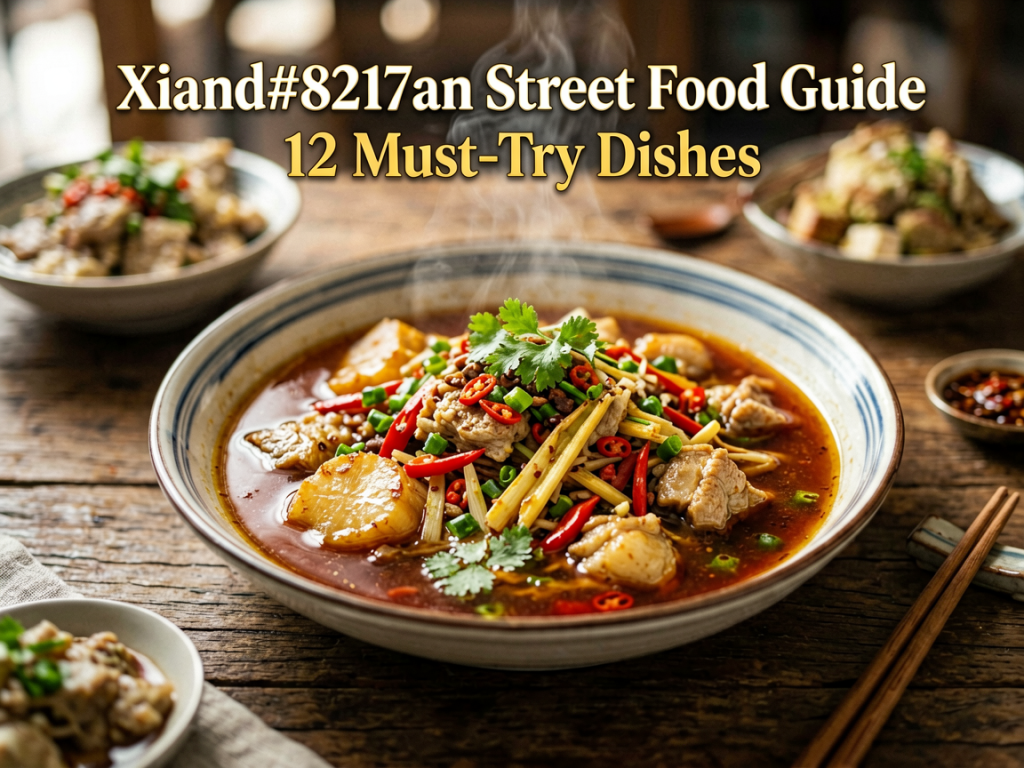
I still remember the first time I walked into the Muslim Quarter in Xi’an. The air hit me before I even saw the stalls. It was thick with cumin, chili oil, and something smoky that I couldn’t quite place. My stomach growled so loud my guide laughed. That moment changed everything for me. I stopped trying to eat like a polite American and started eating like a hungry local.
Xi’an isn’t just a city; it’s a carbohydrate coma waiting to happen. Located in the northwest, it’s the starting point of the Silk Road. The food here doesn’t play nice with delicate palates. It’s bold. It’s spicy. It’s heavy. And if you’ve ever wanted to understand the soul of Chinese cuisine, you come here. Forget Shanghai’s sweetness or Guangzhou’s dim sum. This is heartland China.
The Holy Trinity of Noodles
You can’t talk about Xi’an without talking about noodles. But these aren’t the thin, fragile strands you get in Beijing. These are wide, chewy, and defiant. I’m talking about Roujiamo and Yangrou Paomo, but let’s start with the noodles because they are the daily bread of this city.
First up is Biangbiang noodles. The name comes from the sound the dough makes when you slap it against the table. It’s rhythmic. It’s percussive. You’ll hear chefs shouting the name while pulling these massive ribbons of wheat. They’re wider than your thumb. You dip them in chili oil, vinegar, and garlic. I tried them my second week here. I looked like a mess. I didn’t care. The texture is incredible. It’s got this springy resistance that keeps you coming back.
Then there’s Youpo Mian, or oil-splashed noodles. The chef takes fresh noodles, puts spices on top–chili flakes, Sichuan peppercorns, garlic–and then ladles boiling hot oil over them. The sizzle is deafening. The smell is intoxicating. It’s simpler than Biangbiang, but the heat from the chili oil is sharp and immediate. I usually grab a bowl from a small shop near my apartment. It costs about fifteen yuan. That’s less than two bucks. For that price, you get a mountain of carbs that will keep you full until dinner.
Don’t sleep on Sanxi Mian either. This is the three-steam noodle. It sounds fancy, but it’s just steamed, fried, and then steamed again. The result is a noodle that’s soft on the inside but slightly crispy on the outside. It absorbs the sauce differently. I prefer this one in the winter. It feels warmer, heavier, more comforting.
Roujiamo: The Original Chinese Burger
Let’s be honest. Everyone loves a good burger. But Roujiamo is older, crunchier, and infinitely more satisfying. It’s essentially a meat sandwich baked inside a flatbread. The bread is called Mo. It’s unleavened, which gives it that distinctive chew. You bake it in an oven until the outside is golden and crisp.
The filling is the key. In Xi’an, we mostly eat beef or pork versions. I stick to the beef. The meat is braised for hours in a dark, aromatic broth with spices like star anise and cinnamon. When they chop it up and mix it with some of the juice, it’s pure umami. I’ve had it with green peppers too. The crunch of the pepper cuts through the fat. It’s a balance I never get tired of.
There’s a specific spot near the City Wall that’s always lined up. The owner, an old guy named Master Li, slaps the bread open with one hand and stuffs it with the other. He moves fast. If you blink, you miss your turn. I’ve waited twenty minutes in line just for one. Was it worth it? Absolutely. It tastes better than any artisanal sandwich I’ve had in New York or London. And it costs the same as a coffee.
Broth Soaks and Crispy Skins
If you want to understand the patience of Xi’an cooks, look at Paomo. It means “breaking bread.” You are given a round, dense bun. You have to tear it apart into tiny pieces yourself. I remember doing this at a restaurant with a group of friends. We spent ten minutes just tearing bread. It felt meditative. Then you hand the bowl to the chef.
He cooks the meat separately–usually lamb or beef–and adds your bread pieces to the pot. He tops it off with broth. The bread soaks up all that flavor. By the time it arrives, it’s a savory porridge with chunks of tender meat. It’s gentle on the stomach. Perfect for a rainy day or after a night of drinking.
But let’s talk about the street snack that scares tourists: Douzhi. Fermented mung bean milk. It smells like feet. I know, I said it. It has a sour, cheesy aroma that hits you from across the street. Locals drink it with jiaoquan, sesame twists. I tried it once. One sip. That was enough. The taste is bitter and earthy. I couldn’t finish it. But watching my friends guzzle it down made me respect their bravery. Maybe next time. Or maybe not.
Crispy, Spicy, and Unexpected
We need to talk about Huoshao. It’s similar to Roujiamo but the bread is different. It’s flaky, layered, and baked until it shatters. Some people eat it with just sugar. Others stuff it with minced meat. I prefer it with a side of stir-fried vegetables. The contrast between the dry, flaky bread and the wet veggies is weirdly perfect.
Then there’s Liangpi. Cold skin noodles. It’s made from rice flour, steamed into sheets, cut into strips, and chilled. This is the ultimate summer food. You toss it with vinegar, soy sauce, garlic water, and chili oil. It’s slippery and cool. I eat it almost every day in July. It’s refreshing. It cuts through the heat. Plus, it’s cheap. Five yuan a portion. You can get a huge bag.
Don’t forget the fried snacks. Zha Jiang Mian might be noodles, but Zhajiang (fried meat sauce) is everywhere. Actually, let’s talk about Jianbing. Wait, no, that’s northern Beijing. Here, it’s Guo Kui. Flatbreads baked with meat fillings. I’ve seen them cooked in clay ovens. The chef sticks the dough around the inside walls. It puffs up and crisps. I bought one on my way to work last week. It was still hot when I took a bite. Greasy, salty, delicious.
Sweet Endings and Savory Surprises
After all that spice and carb-loading, you need something sweet. Tanghulu is the obvious choice. Candied hawthorn berries on a stick. The shell is hard glass. The inside is tart. I buy these from street vendors in the evenings. They’re bright red and shiny. I love the crack when you bite into them. It’s nostalgic. It reminds me of being a kid, except here, it’s a serious culinary art form.
But try Bawang Buji. It’s a sticky rice cake filled with red bean paste. It’s fried until golden. The outside is crunchy. The inside is gooey and sweet. I had this at a small dessert shop in the back alleys. The lady who served it spoke no English. I pointed at the display case. She nodded and handed me a plate. It was the best dessert I’ve had in China. Simple. Effective. Unforgettable.
And finally, let’s mention the drinks. Sour plum juice. Suansuantang. It’s dark purple, cold, and served in plastic bags sometimes. You suck on a straw. It’s sweet and tart. It helps with the digestion. I drink it after every big meal. It’s part of the ritual now. Without it, the meal feels incomplete.
How to Eat Like a Local
Eating in Xi’an isn’t just about the food. It’s about the chaos. The markets are noisy. People are shouting orders. Chefs are yelling back. There’s no queue etiquette. You just push in. If you’re shy, you’ll starve. I learned to embrace the push. I learned to smile at the aunties serving me. I learned that eye contact is currency here.
Also, bring cash. Many of the best stalls don’t take WeChat Pay. They want yuan notes. I carry a small wallet with 1, 5, and 10 yuan bills. It makes buying snacks faster. No fumbling for cards. Just hand over the money, grab the food, and walk away.
Lastly, pace yourself. You can’t eat everything in one day. I made that mistake early on. I ate five different types of noodles in one hour. I ended up lying on a bench for an hour, staring at the sky, unable to move. Now I take it slow. I pick one spot. I order two dishes. I sit down. I watch the world go by. That’s the Xi’an way.
This city rewards curiosity. It punishes hesitation. So go out there. Find the stall with the longest line. Ask what’s spicy. Say yes. You won’t regret it. Your taste buds will thank you later. Or at least, they’ll remember it forever.