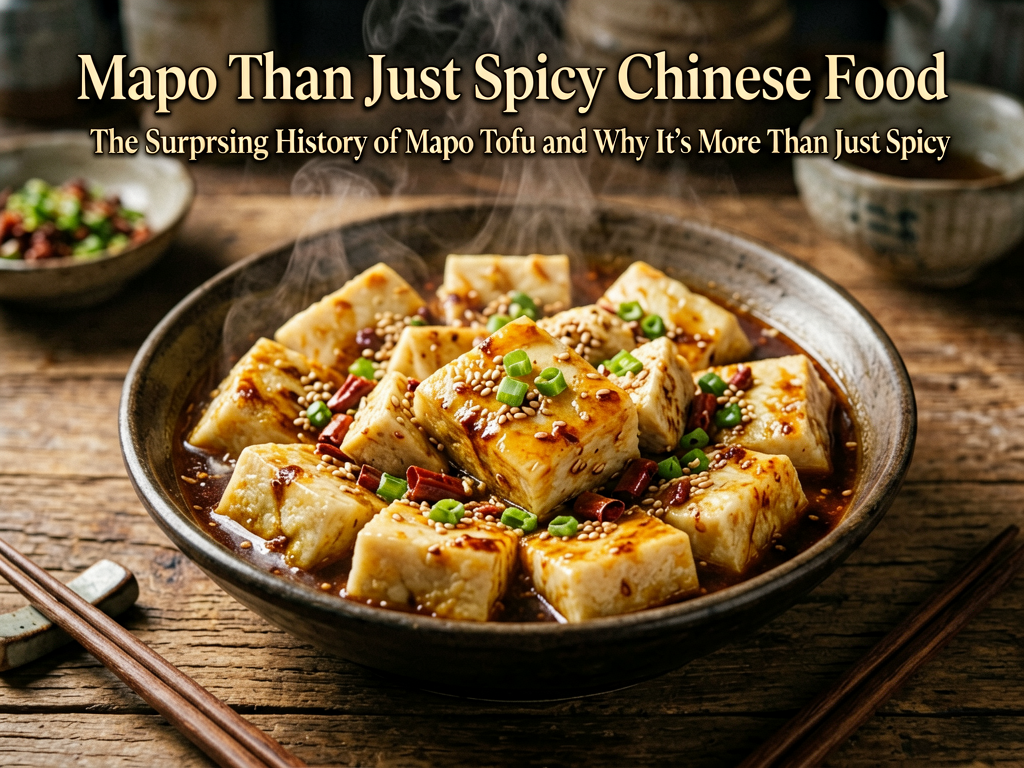
Discover the surprising origins of Mapo Tofu, from a 19th-century widow to Chengdu’s spicy soul. It’s way deeper than just heat.
CONTENT:
I still remember the first time I ordered Mapo Tofu in a tiny, smoke-filled eatery in Chengdu. I was twenty-two, fresh off the plane, and convinced that “spicy” meant “unpleasantly hot.” I sat there staring at that trembling, crimson lake of bean paste and minced beef, terrified that my mouth was about to go on strike. Then I took a bite. The soft tofu melted, the beef added texture, and the numbness from the Sichuan peppercorns made my lips tingle like static electricity. I didn’t just eat dinner; I experienced a cultural awakening.
Most people think Mapo Tofu is just another spicy tofu dish. They assume it’s a modern invention designed to burn tongues and clear sinuses. But the truth is way more interesting. The history of Mapo Tofu stretches back over a century, rooted in poverty, ingenuity, and a woman’s need to survive. It’s not just about heat. It’s about balance. And if you’ve never looked past the spice, you’re missing the whole story.
A Widow’s Hustle in Late Qing Dynasty
To understand this dish, you have to go back to 1862 in Chengdu. That’s during the late Qing Dynasty, a time when things were chaotic and food was scarce. Enter Chen Mapo, a young widow who ran a small tofu stall near the Changsheng Bridge. She wasn’t a chef in the traditional sense. She was a street vendor trying to put food on the table for her family.
Chef Chen, as locals started calling her, faced a common problem for street vendors: waste. Tofu goes bad quickly. If it sits too long, it turns sour and inedible. Instead of throwing away the aging tofu, she got creative. She boiled the slightly fermented blocks in a pot of broth to soften them further and mask any off-flavors. That’s the secret origin right there. Mapo Tofu was born out of necessity, not culinary flair.
But there was another ingredient that changed everything. Minced meat. Back then, meat was expensive. Most poor people ate tofu and vegetables. Chef Chen had access to some beef scraps–probably tough cuts that were hard to chew. She braised them until they were tender, then mixed them with the tofu. The result? A dish that was cheap, filling, and packed with flavor.
I often wonder what Chef Chen tasted like to the people walking by her stall. I imagine the smell hit them before they even saw the pot. The rich aroma of fermented bean paste, the heat of chilies, and the savory depth of slow-cooked beef. It wasn’t fancy. It was honest. And that’s why it stuck.
The Magic of Ma La: Numbness Over Heat
You’ve probably heard of Sichuan cuisine being “spicy.” That’s technically true, but it’s lazy. The real star of Mapo Tofu is *ma la*, which translates to “numbing and spicy.” The “la” is the chili heat, sure. But the “ma” comes from Sichuan peppercorns. These little red berries contain hydroxy-alpha-sanshool, a compound that triggers vibration receptors in your mouth. It doesn’t burn like fire; it buzzes like an electric current.
This combination is crucial. Without the peppercorns, you’d just have a hot soup. With them, the dish becomes an experience. The numbness actually dulls your pain receptors, allowing you to eat more of the spicy chili oil without feeling overwhelmed. It’s a clever biological hack that has been perfected over generations.
I spent a month in Chengdu last year just trying to find the perfect balance of *ma la*. Some restaurants go heavy on the chilies, turning the dish into a fiery mess. Others skimp on the peppercorns, leaving it flat. The best spots, though? They get it right. You take a bite, and suddenly your tongue feels like it’s dancing. You’re sweating, but you can’t stop eating.
This technique didn’t appear overnight. It evolved as trade routes opened up. Chili peppers weren’t native to China. They came from the Americas via Spanish and Portuguese traders in the 16th century. Before that, Chinese cooks used ginger and Sichuan pepper for heat. When chilies arrived, they revolutionized Sichuan cooking. Mapo Tofu adapted, merging the old numbing spices with the new fiery ones.
It’s funny how food travels. A plant from South America, processed by a widow in China, becomes a global icon. That’s the power of adaptation. Chef Chen didn’t invent the ingredients. She invented the harmony.
Why Tofu Texture Matters More Than You Think
If you’ve ever had Mapo Tofu made with hard, firm tofu, you haven’t really had the real deal. Authentic Mapo Tofu uses silken or soft tofu. It’s delicate. It breaks apart easily. That’s intentional.
The dish relies on contrast. You have the soft, yielding tofu against the crisp, savory minced beef. You have the cool temperature of the tofu against the hot oil. If the tofu is too firm, it fights back. It doesn’t absorb the sauce. It stays separate. Silken tofu acts like a sponge, soaking up the spicy bean paste and beef juices. Every spoonful is a mix of textures and temperatures.
I watched a local cook make this in a home kitchen in Pidu District. He didn’t chop the tofu. He scooped it out of the package in large, wobbly chunks. Then he gently slid them into the simmering sauce. He didn’t stir vigorously. He shook the pan. Stirring breaks the tofu. Shaking keeps it intact while coating it evenly. It’s a subtle move, but it makes all the difference.
This attention to texture is often overlooked by Westernized versions. Many restaurants abroad use firm tofu because it’s easier to handle. It holds its shape during transport and reheating. But it sacrifices soul. The dish becomes dry and bland inside. Real Mapo Tofu should be almost liquid. It should coat your lips and stick to your teeth. It’s messy. It’s imperfect. And that’s exactly why it’s beautiful.
From Street Stall to Star of the Menu
For decades, Mapo Tofu remained a local favorite. It was street food. It was for the working class. But after the founding of the People’s Republic of China, things changed. As Chengdu grew into a major city, so did its cuisine. Mapo Tofu gained fame beyond Sichuan. By the 1980s, it was considered one of the classic dishes of Sichuan cuisine, recognized nationwide.
The recipe standardized. Restaurants began adding specific techniques, like thickening the sauce with cornstarch slurry to create that glossy, clingy consistency. Some versions add garlic, ginger, and scallions at the end for freshness. Others stick to the minimalist approach. I prefer the minimalist version. Let the bean paste shine.
Today, you can find Mapo Tofu in almost every Chinese restaurant in the world. But quality varies wildly. In New York, I’ve had versions that tasted like ketchup and regret. In London, some places get it right, but often they lack the authentic *ma la* punch. It’s rare to find a place that truly respects the history and technique.
This globalization has led to variations. Vegan Mapo Tofu is popular now, using mushrooms instead of beef. Some chefs use pork. Others add shrimp. These are fine innovations, but they’re not traditional. Traditional Mapo Tofu uses beef mince. The fat content of beef pairs best with the richness of the fermented bean paste. Pork can work, but it’s lighter. Beef gives it weight.
I’m not a purist, but I do care about integrity. When I eat Mapo Tofu, I want to taste the history. I want to taste the widow’s hustle. I want to feel the numbness. If it’s just spicy sauce over rubbery tofu, I’d rather skip it.
How to Order It Like a Local
If you’re going to eat Mapo Tofu in China, don’t just point at the picture. Ask for *ma la* level. Most menus offer mild, medium, or extra spicy. In Chengdu, “medium” might kill a tourist. “Extra spicy” is a dare. I usually go for medium-hot. It’s enough to make you sweat, but not enough to blind you.
Also, look for the color. Real Mapo Tofu isn’t bright red. That’s artificial coloring. Authentic versions are a deep, rusty brown-red, coming from the Doubanjiang (fermented broad bean paste). The sauce should be oily, not watery. If it looks like tomato soup, run away.
Pair it with steamed rice. Lots of it. The tofu and sauce are too flavorful to eat alone. Rice acts as a neutral canvas, balancing the intensity. I’ve seen people try to eat it with noodles or bread. Don’t. Stick to rice. It’s the only way to fully appreciate the dish.
And here’s a tip: if you see minced beef on the menu, ask if they make it fresh. Some places use pre-cooked, frozen mince. Freshly ground beef makes a huge difference in texture and flavor. It’s worth asking. Locals notice. Chefs appreciate the interest.
Why This Dish Still Matters Today
We live in an era of fast food and instant gratification. Mapo Tofu reminds us that good food takes time. It takes patience. It takes understanding of ingredients. Chef Chen didn’t have a food science degree. She had hunger and creativity. She turned leftovers into a masterpiece.
This dish connects us to the past. Every time I eat Mapo Tofu, I think about that bridge in Chengdu. I think about the steam rising from her pot. I think about how food can tell a story without words. It’s not just calories. It’s culture. It’s survival. It’s joy.
So next time you order Mapo Tofu, don’t just brace for the heat. Taste the nuance. Feel the numbness. Appreciate the texture. And remember that beneath the spice lies a centuries-old tradition of making the best out of nothing. That’s the real surprise of Mapo Tofu. It’s not just a dish. It’s a lesson in resilience.
I still crave it. Even now, living in America, I drive hours to find a place that gets it right. And when I do, I sit down, order the extra spicy, and let the peppercorns tingle my lips. For a moment, I’m back on that bridge. And that’s enough.