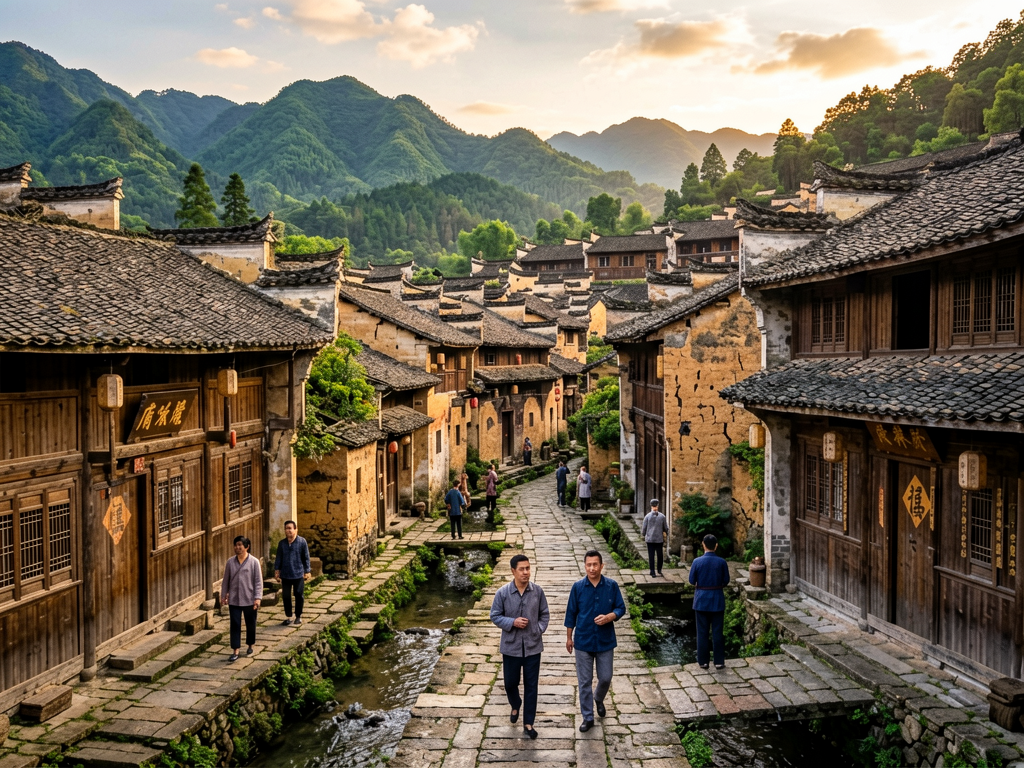
Look, I’ll be honest. When I first heard about Wuyuan, I thought it was just another tourist trap. You know the type. A place where they paint over the real history to make it look “authentic” for Instagram influencers. I was skeptical. I’ve seen enough of those places in China to know that the magic usually evaporates the moment the tour buses pull up.
But then I went. And it completely changed my mind about what a “village” could be. It wasn’t about the flowers, although those yellow rapeseed blooms are pretty crazy. It was about the silence. The way the light hits the white walls. The feeling that time actually stopped here.
If you’re looking for a place to breathe, to slow down, and to actually see what traditional Chinese architecture looks like when it’s not covered in scaffolding, you need to pack your bags for Wuyuan. It’s not just a destination. It’s a mood.
Why Wuyuan Isn’t Just Spring Flowers
Most people go to Wuyuan in March or April. They want the sea of yellow flowers. And sure, it’s beautiful. But going then is like going to Paris during Fashion Week if you hate crowds. You’ll spend more time dodging selfie sticks than admiring the architecture.
I went in late autumn. The weather was crisp, the skies were a piercing blue, and the red maple leaves were starting to turn. It was quieter, cooler, and honestly, way more atmospheric. The contrast of the red leaves against the white-walled, black-tiled roofs is something you have to see to believe.
But here’s the thing. The real magic of Wuyuan isn’t the seasonal color. It’s the Huizhou style architecture. If you don’t know what that is, picture tall white walls with black wooden beams. Think of it as the Chinese version of a Tuscan villa, but with more intricate carvings and a deeper philosophical root.
These villages were built by wealthy merchants centuries ago. They traveled far, made their money, and then sent it back home to build massive, impressive houses. It was a way to show off their success while staying close to their ancestors. It’s a very Confucian idea. Family first. Status second.
The result is a landscape that feels curated but natural. The houses are arranged around water systems, with stone bridges connecting different parts of the village. It’s functional beauty. Every detail has a purpose, from the drainage channels to the courtyard layouts.
Walking Through Hongchun
My favorite spot was Hongchun. It’s often called the most picturesque village in the area, and for good reason. The layout is almost perfect. There’s a moon-shaped pond in the center, and the houses circle around it like they’re guarding a secret.
I spent an entire afternoon there, just walking. No map. No plan. I followed a narrow alleyway that led me away from the main tourist path. Suddenly, I was in a courtyard with an old man playing chess. He didn’t speak English. I didn’t speak Chinese. But we smiled at each other over the board.
That’s the vibe. People are still living here. It’s not a museum. It’s a community. You’ll see women hanging dried vegetables on balconies. You’ll see kids riding bikes down the stone paths. You’ll smell the scent of cured meat hanging in the air.
The architecture here is intricate. Look up. The wooden eaves are carved with stories from classic Chinese operas. Look at the doors. They’re made of dark, polished wood that feels cool to the touch. It’s detailed work that took generations to perfect.
I tried buying some local tea from a small shop near the pond. The owner, an elderly woman with kind eyes, poured me a cup of yellow tea. It tasted earthy and sweet. She didn’t try to upsell me. She just wanted someone to appreciate the brew. It was a small moment, but it stuck with me.
The Magic of Xian Village
If Hongchun is the picture-perfect postcard, Xian Village is the soul. It’s a bit further out, which keeps the big tour groups away. That’s exactly why I liked it.
Xian means “immortal.” And walking through it feels like stepping into a painting. The village is built around a central lake, and the houses are reflected in the water like a mirror image. It’s symmetrical in a way that feels intentional, not accidental.
I went there at dawn. The mist was still hanging low over the water. The silence was absolute. I could hear a rooster crowing in the distance, but it didn’t break the quiet; it added to it. It made the stillness feel deeper.
The architecture here is older than Hongchun. Some of the houses date back to the Ming Dynasty. The wood is dark, almost black, with intricate lattice windows. The stone walls are worn smooth by centuries of rain and wind.
There’s a temple in the center called the Zongci Temple. It’s massive. The carvings on the pillars are so detailed you could spend hours just looking at one. I’m no art historian, but even I could tell this was made by masters.
I met a local guide there, a young guy named Wei. He told me that his family has lived in Xian for eight generations. He showed me a hidden courtyard that most tourists miss. It was small, with a single plum tree in the center. He said his great-grandfather planted that tree. It’s still alive.
That connection to the past is what makes these places special. It’s not just old buildings. It’s living history. You can feel the weight of the years in the stones. It’s humbling.
Why You Should Skip the Big Names
Everyone talks about Jingde and Likun. They’re nice. But they’re also the most commercialized. You’ll find more souvenir shops than actual villagers. If you want to see the real Wuyuan, skip the big names.
Instead, head to Chai Feng or Li Wei. These are smaller. Quieter. They haven’t been fully “developed” yet. The roads are narrower. The lights are dimmer. But the atmosphere is richer.
I spent a day in Chai Feng just sitting on a stone bench by the river. I watched the locals wash clothes in the water. I watched fishermen cast their nets. It was mundane, but it was real. It wasn’t staged for tourists.
These smaller villages offer a different kind of beauty. It’s raw. It’s unpolished. And it’s honest. You don’t feel like a customer here. You feel like a guest.
Transportation can be a bit tricky in these smaller spots. Buses are infrequent. But that’s part of the charm. You’re forced to slow down. You’re forced to ask for directions. And you end up talking to people you never would have met otherwise.
I asked a farmer for directions to a nearby trail. He didn’t just point. He walked me there. Then he invited me to sit on his porch and drink tea. We talked for an hour. I couldn’t understand much of what he said, but I understood the hospitality. It’s universal.
The Food Is Actually Good
Let’s talk about food for a second. Chinese food outside of major cities can be hit or miss. But in Wuyuan, it’s consistently good. The ingredients are fresh. The cooking is traditional.
You have to try the steamed buns with preserved vegetables. They’re simple, but the flavor is intense. The vegetables are fermented, so they have a sour, salty kick that cuts through the soft dough. It’s addictive.
Also, try the local tofu. It’s different from the silken tofu you get in restaurants. It’s firmer, with a nutty taste. They often fry it with garlic and chili. It’s simple, but it’s perfect.
I found a small noodle shop in Likun that served a broth that tasted like it had been simmering for days. It was rich and savory. I ate three bowls. The owner just shook his head and smiled. He didn’t care that I was finishing his stock. He just wanted me to be full.
The prices are reasonable, too. A full meal with a few dishes costs about 30 to 50 yuan. That’s less than a coffee in Shanghai. You get more food, better quality, and more heart for the price.
How to Actually Enjoy It
Here’s my advice. Don’t rush. You can’t rush Wuyuan. If you try to see all the villages in two days, you’ll miss the point. You’ll just be checking boxes.
Stay for at least three days. Pick one or two villages and stay in a guesthouse there. Wake up early. Walk around before the tourists arrive. Have breakfast with the locals. Then spend the day doing nothing.
Just sit. Watch the light change. Listen to the water. Let the stress of your life fall away. That’s what you’re paying for. Not the entrance ticket. The peace.
Also, bring a good camera. But don’t just take photos of the buildings. Take photos of the details. The moss on the stone. The hands of the old man. The steam from the tea. Those are the memories you’ll keep.
And leave some room for spontaneity. The best moments in Wuyuan weren’t planned. They were the random encounters, the unexpected views, the quiet mornings. Trust me, you’ll find them if you slow down.
Wuyuan isn’t perfect. It can get muddy in the rain. The Wi-Fi is spotty in the smaller villages. But those aren’t flaws. They’re features. They force you to be present. They force you to disconnect.
In a world that’s always online, always loud, always moving fast, Wuyuan is a sanctuary. It’s a reminder that life can be slow. That beauty can be quiet. That history is still alive.
I’m still thinking about those misty mornings in Xian. I’m still tasting that tofu. I’m still smiling at that old man in Hongchun. It’s not just a trip. It’s a piece of my heart now.
If you’re looking for a place to reset, to reflect, to just be, go to Wuyuan. Not for the flowers. For the silence. For the magic. For the quiet.