Forget the Wide and Narrow Alleys
I’ll be honest. I used to take every first-time visitor to Jinli or Kuanzhai Xiangzi. I felt like a traitor every time I did. Those places are pretty, sure. The architecture is Instagram-ready. But the food? It’s a hollow shell of what Chengdu actually offers.
You walk in, and it’s just expensive snacks designed for photos. The tea houses charge premium prices for average leaves. The stinky tofu is generic. It’s all very polished and completely soulless.
If you want to taste the real heart of Chengdu, you have to get lost. Specifically, you have to get lost in the older residential neighborhoods. I’m talking about the areas where the trees hang so low they touch the roofs. Where the air smells like chili oil and damp concrete.
That’s where the magic happens. That’s where the locals eat. And that’s what I want to talk about today. I’ve lived here for eight years. I’ve eaten my way through every district. I’m going to show you the spots that don’t make it into the Lonely Planet guides.
Here’s the thing about Chengdu’s food scene. It’s not about the restaurant with the red lanterns. It’s about the plastic stools on the sidewalk. It’s about the auntie who knows your order before you speak. It’s about chaos. Beautiful, spicy, oily chaos.
The Early Morning Ritual
Most tourists sleep in. They think Chengdu is a city of night owls. And it is. But the real day starts at 6 AM. That’s when the breakfast culture kicks in.
You need to find a place that sells *mian* (noodles). But not just any noodles. I’m talking about *dan dan mian* or *zhua sha mian*. But here’s the secret: the best bowls aren’t in the big shops. They’re in tiny alleyways with no signboards.
I have a favorite spot in the Wuhou District. It’s tucked behind a barbershop. You can’t miss it if you follow the smell of peanut butter and chili. There are maybe six tables. Two are plastic. Four are metal.
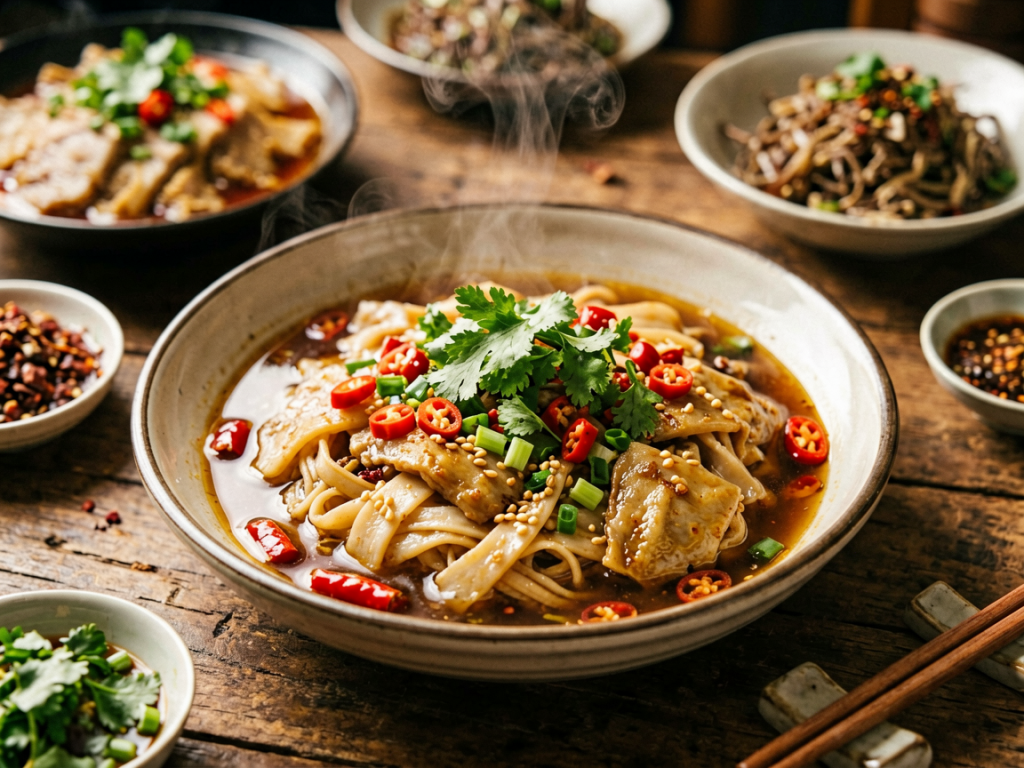
The owner, Auntie Li, doesn’t speak a word of English. She doesn’t care. She just points to the menu with the pictures. I usually go for the spicy beef noodle soup. The broth is rich. It’s got that numbing *mala* kick that tingles your lips. The noodles are hand-pulled. They’re chewy. Perfect.
It costs about 15 RMB. That’s less than two dollars. You won’t find that price in the tourist zones. You won’t find that flavor either.
Sound interesting? It should. This is how the locals start their day. Not with a latte. With fire and flavor.
Late Night Stalls and Secret Menus
When the sun goes down, Chengdu wakes up again. The night markets are legendary. But again, skip the main squares. Go to the side streets.
I remember a night in the summer of 2019. I was hungry. Really hungry. I wandered into a small lane near Sichuan University. It was packed with students. The air was thick with smoke and laughter.
I saw a stall with a simple wooden sign. It said *Chuan Chuan* on it. Just that. No English. No fancy graphics. I sat down on a tiny stool. The table was wobbly. I didn’t care.
The owner handed me a long stick. I picked skewers. Beef. Tripe. Enoki mushrooms. Potato slices. Everything was cheap. Like, ridiculously cheap. I piled my stick high. The owner took it to the kitchen. Five minutes later, she brought back a bowl of boiling broth.
I dipped it in a sauce of garlic, cilantro, and chili oil. The first bite blew me away. The meat was tender. The spices were complex. It wasn’t just hot. It was aromatic.
I stayed there for two hours. I talked to the guy next to me. We didn’t speak the same language. We communicated with gestures and shared laughs. That’s the beauty of street food. It breaks barriers.
Trust me, you’ll feel the same. It’s not just about eating. It’s about being part of the rhythm of the city.
The Hidden Bubble Tea and Dessert Spots
Everyone knows about milk tea in China. But most people go to the big chains. Heytea, Nayuki, the usual suspects. They’re good. But they’re expensive. And they’re everywhere.
I want to show you the local spots. The ones that have been around for decades. Places that don’t care about branding. They care about taste.
There’s a small shop in Qingyang District that sells traditional herbal jelly. It’s called *Liangfen*. It’s made from mung bean starch. It’s served cold. With vinegar, chili oil, and sesame paste.
It sounds weird if you’re used to sweet desserts. But it’s amazing. The texture is silky. The flavor is tangy and spicy. It’s perfect for cooling down after a heavy meal.
I went there with a friend last week. She was skeptical. She said, “Sweet or salty? Not both.” I told her to trust me. She took one bite. Her eyes widened. She ordered three more bowls.
That’s the Chengdu way. We mix flavors. We mix traditions. We don’t follow rules. We follow our taste buds.
Surprised? You shouldn’t be. This is China. Everything is a balance. Hot and cold. Sweet and sour. Spicy and sweet. It’s all connected.
Where to Find the Real Stuff
So, how do you find these places? You can’t search for them on Dianping and expect the best results. The algorithm pushes the popular spots. The ones with paid reviews. The ones that are tourist traps.
You have to explore. Walk down the small streets. Look for the crowds. If there are locals sitting outside, eating from plastic bags, go there.
Look for the old buildings. The ones with peeling paint. The ones that look like they’ve seen better days. Inside, you’ll find freshness. You’ll find soul.
I also recommend talking to people. Ask your taxi driver. Ask your colleague. Ask the person at your hotel. Say, “Where do you eat?” Not “Where is the best restaurant?” But “Where do you eat?”
They’ll tell you. They’ll be proud to share their secret spots. Chinese people love sharing their culture. Especially through food. It’s a point of pride.
To be fair, it’s not always easy. The signs are in Chinese. The menus might be handwritten. But that’s part of the adventure. It forces you to slow down. It forces you to pay attention.
A Final Thought on Eating Slow
Chengdu is known for its slow pace of life. People drink tea. They play mahjong. They gossip. They eat.
Street food is a big part of that. It’s not fast food in the American sense. It’s not something you eat while walking to work. It’s something you sit down and enjoy. It’s something you share.
When I think about Chengdu, I don’t think about the pandas. Or the Jinli Street. I think about the smell of chili oil in the morning air. I think about the sound of chopsticks clicking on ceramic bowls. I think about the laughter of strangers becoming friends.
You won’t find that in a guidebook. You have to live it. You have to taste it.
So, next time you’re in Chengdu, skip the tourist traps. Get lost. Find a plastic stool. Order something spicy. And let the city surprise you.
I promise you, you won’t regret it. Your taste buds will thank you. And your soul? Well, that’ll feel a little more alive. That’s the Chengdu way.