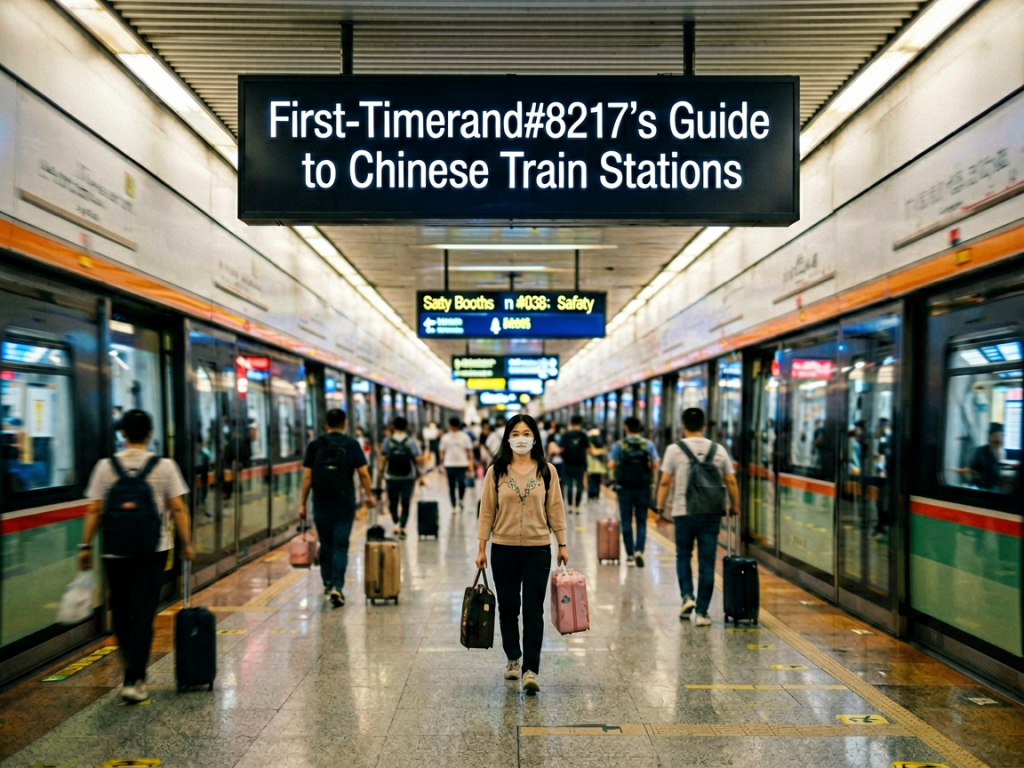
Standing in the center of Shanghai Hongqiao Station for the first time, I felt like I’d been dropped into the middle of a sci-fi movie. The ceiling arched high above me, disappearing into a haze of LED lights and announcements that sounded like they were being played backward. Thousands of people moved in a synchronized dance, some sprinting, some standing still, all glued to their phones.
I was holding a printed paper ticket in one hand and a passport in the other, looking completely lost. A local guy walked past me, glanced at my confused expression, and didn’t even break stride. I felt small. I felt overwhelmed. But that’s exactly why I need to tell you this story.
If you’re planning to ride the high-speed rail in China, you’re in for a treat. The trains are faster than flying for short distances, the seats are spacious, and the views are spectacular. But the infrastructure? It’s a beast. It’s massive, digital, and utterly indifferent to your confusion. So, let’s walk through it together. I’ve done this enough times to know where the traps are and where the magic happens.
Forget the Paper Ticket, Embrace the QR Code
Here’s the thing about Chinese train stations: they’ve moved fast. Too fast for some of us. If you’re expecting to hand a paper ticket to a conductor like you might on a European train, you’re in for a rude awakening. The paper tickets you pick up at the machine? They’re just receipts. They’re proof you paid. They are not your boarding pass.
Your actual boarding pass is a digital QR code on your phone. Or, if you’re like me and panic when your battery dies, you can still use your passport. But you need to know which gate to go to. And that’s where the screens come in.
I remember my second trip, heading from Beijing to Xi’an. I walked into the station, found the giant departures board, and stared. It was a wall of text. Characters in red, white, and yellow. I couldn’t read a single one. I felt that familiar spike of anxiety. But then I noticed something. The trains are labeled by numbers. G-series, D-series, C-series. The most common high-speed trains start with G.
So, I scanned the board for a G-number. I found mine. It said G192. Next to it was the platform number and the departure time. Simple, right? But here’s the catch. The gate number is often listed separately, or sometimes it’s not on the big screen at all. You have to check your phone app. The 12306 app is the official railway app. It’s clunky, sure, but it’s reliable. It tells you exactly which gate you need to go to, usually an hour or so before departure.
Pro tip: arrive early. Like, two hours early. The station is huge. Finding your gate can take twenty minutes of walking. And once you find it, you’ll see a wall of turnstiles. Don’t just pick one. Look for the sign that says “Foreign Passport” or “Manual Channel.”
The Ticket Booths: A Nod to the Analog World
Even though everything is digital now, the old-school ticket booths still exist. And honestly? I love them. There’s something comforting about standing in front of a glass window and talking to a real human being. It’s rare these days.
I used these booths when I first arrived and didn’t have a smartphone app set up. I walked up to the window, handed over my passport, and told the staff member I wanted to buy a ticket to Chengdu. She typed something into her computer, asked me for my phone number, and printed out a piece of paper. That paper wasn’t my ticket. It was a confirmation slip. I had to go to a self-service machine to actually get my boarding pass.
Wait, I hear you thinking. That sounds like extra work. It is. But it’s useful. If you’re traveling with a group, or if your phone glitches, or if you just want to be sure, the booth is your friend. The staff there are generally helpful, though English skills vary. In major hubs like Shanghai or Beijing, you might get someone who can speak basic English. In smaller stations? Good luck.
But don’t dismiss the booths entirely. They’re great for fixing problems. I once had an issue where my QR code wouldn’t scan at the gate. I stood there, sweating, as the line behind me grew longer. A station attendant waved me over to a small office nearby. She fixed it in ten seconds. If I’d been trying to do it online, I’d have been stuck for hours.
So, use the booths for support, not just for buying. Think of them as your safety net. And while you’re there, ask about the luggage restrictions. They’re strict. Liquids, knives, and even certain types of batteries can get you in trouble. Better to find out before you reach security.
Navigating the Sea of Screens
Let’s talk about those giant screens again. They’re intimidating, I know. But they’re also your best friend. Once you learn to read them, they make perfect sense.
The screen is divided into columns. The first column is the train number. The second is the destination. The third is the departure time. The fourth is the platform. And the fifth? That’s the gate. But here’s the trick: the gate number changes. Often.
I’ve seen trains move gates multiple times before boarding. The big screens update in real-time, but the small signs at the gates might lag. So, keep your eyes on the big board. If your gate changes, you’ll see it. And if you’re unsure, look for the staff members standing near the gates. They’re there to direct traffic. A simple nod or point can save you a lot of stress.
One thing that confused me at first was the color coding. Red usually means delayed or canceled. Green means on time. But sometimes, the colors change based on the station’s specific system. So, don’t rely solely on color. Read the text. Look for the characters for “Delayed” or “Cancelled.”
And don’t forget the audio announcements. They’re in Mandarin, obviously. But if you listen closely, you’ll catch the train numbers. G192. G192. G192. It’s like a lullaby for train nerds. I started humming it to myself. It helped calm my nerves.
Security Checks and The Great Queue
Before you can even think about finding your gate, you have to get through security. And let me tell you, the security lines in China are no joke. They’re thorough. They’re efficient, but they’re long.
You’ll need to take off your laptop, your power bank, and any liquids. Everything goes into a plastic bin. You walk through a metal detector. If it beeps, they’ll pat you down. It’s invasive, sure, but it’s fast. Usually, it takes less than ten minutes.
But here’s the thing: the lines move in waves. If you arrive right before a departure, you’ll wait. If you arrive two hours early, you’ll wander. I’ve learned to bring a book or download a podcast. Sitting on the floor of a Chinese train station isn’t as glamorous as it sounds. The chairs are hard, and the people are tired.
Also, watch your bags. Security is tight, but pickpockets are smart. They know that when you’re taking off your laptop, your mind is elsewhere. Keep your wallet in your front pocket. Keep your phone in your hand. Don’t leave your bag unattended for a second.
Pickpockets and Petty Theft: Stay Sharp
I’ll be honest: I was worried about pickpockets. Everyone warns you about them. And they’re real. But they’re not like the pickpockets in Rome or Barcelona. They’re more opportunistic. They rely on confusion.
The best place for them to strike is at the ticket gates. When you’re fumbling for your QR code, or when you’re trying to fit your passport into the scanner, that’s when they strike. So, have your phone ready before you get to the gate. Don’t wait until you’re in the scanner to realize your battery is dead.
Another hotspot is the waiting area. When everyone is rushing to board, people get careless. I’ve seen tourists leave their bags on the seat while they go to the bathroom. Don’t do that. Keep your bag on your lap. Or better yet, wear it in front of you.
I once watched a guy pick a pocket right in front of me. He didn’t even try to hide it. He just brushed past a tourist, grabbed the wallet from the back pocket, and kept walking. The tourist didn’t notice until he was on the train. It was chilling. So, stay alert. Trust your instincts. If someone bumps into you, check your pockets.
And if you do get pickpocketed? Don’t panic. The police are everywhere. There are police booths in most major stations. They’re helpful. They’ll help you report the theft and maybe even track the guy down. It’s not like in some countries where you’re told to buy a new passport and move on.
The Boarding Process: A Controlled Chaos
Finally, let’s talk about boarding. It’s a two-stage process. First, you scan your code at the gate. Then, you wait in a holding area. You don’t walk straight onto the train. You wait for a call.
This is where the screens come in handy again. They’ll announce which group is boarding. Group A, Group B, Group C. It’s like an airline, but more organized. And more crowded. Everyone pushes. It’s intense. But it works.
Once you’re on the train, find your seat. The seats are numbered. Row 1, Seat 1A. Row 1, Seat 1F. It’s easy to find. And once you’re settled, you can relax. The train is clean, quiet, and comfortable. The Wi-Fi is spotty, but the journey is worth it.
I’ve taken trains that lasted four hours. I’ve taken trains that lasted ten. I’ve seen mountains, rivers, and cities. And every time, the station experience is a bit different. But the basics remain the same. Arrive early. Have your code ready. Watch your bag. And enjoy the ride.
Final Thoughts: It’s All About the Journey
Chinese train stations are overwhelming, yes. But they’re also incredible. They’re a testament to China’s speed and scale. They’re efficient, modern, and surprisingly human. Despite the thousands of people, there’s a sense of order. A sense of purpose.
Don’t let the fear of the unknown stop you from exploring. The high-speed rail network is one of the best ways to see China. It’s fast, it’s cheap, and it’s scenic. The stations are just the gateway. Don’t let them scare you off.
So, next time you’re in a Chinese train station, take a deep breath. Look at the screens. Find your gate. Scan your code. And get on that train. You’ll be glad you did. Trust me. I’ve been there. And I’m still amazed every time.