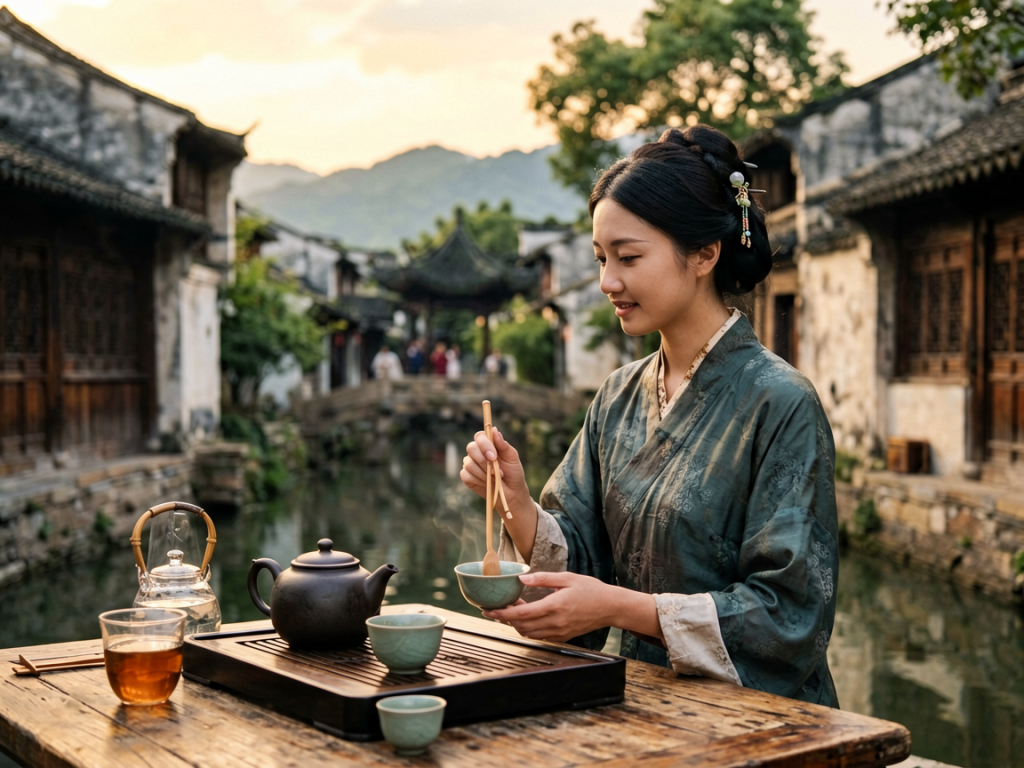
I walked into that little shop in Chengdu expecting the usual tourist trap. You know the one. Overpriced matcha lattes, Instagrammable pastries, and a vibe that screams “corporate startup.” Instead, I found an old man in a faded singlet, a cracked ceramic pot, and the smell of roasted oolong hitting me like a warm hug.
That was ten years ago. I’ve been living in China ever since. And honestly? I still haven’t found a better way to understand the local soul than sitting in a traditional Chinese tea house.
But here’s the thing. Most foreigners don’t know where to look. They end up in fancy chains that charge fifty bucks for a single leaf. It’s a tragedy, really. Because the real tea houses aren’t about showing off. They’re about slowing down. They’re about community. And they’re vanishing faster than you’d think.
If you want to see the real China, you need to leave the mall behind. You need to find the back alleys. You need to learn how to sit, sip, and say nothing at all.
The Morning Ritual Is Non-Negotiable
I’ll never forget my first morning in a Chengdu park. I was jet-lagged, confused, and holding a map I didn’t understand. I stumbled into a corner of Huaxi Park where the air was thick with humidity and the sound of mahjong tiles clicking together.
There were rows of bamboo chairs. Hundreds of them. Old men were everywhere. Some were fanning themselves. Others were just staring at the sky. But every single one had a thermos or a small teapot.
I sat down next to a guy named Uncle Li. He didn’t speak a word of English. I didn’t speak a word of Sichuanese. But he looked at my empty hands, laughed, and pushed a small cup toward me. It was filled with jasmine green tea. Sweet. Floral. Hot enough to burn my tongue, but good enough that I drank it all.
That’s the first rule of Chinese tea houses: you don’t go alone. Well, you can, but you’re missing the point. These places are social hubs. They’re where deals are made, where gossip is exchanged, and where loneliness goes to die.
In the West, coffee is often a fuel. You drink it to get to work. In China, tea is an anchor. You drink it to stay. The ritual of brewing, pouring, and serving is a language of its own. If you watch closely, you’ll see the subtle gestures. The two-finger tap on the table when someone refills your cup. It’s a silent “thank you” that takes years to master but seconds to learn.
I spent three weeks just trying to figure out why people were tapping their fingers. I thought I was being rude. Turns out, I was being polite. But I was doing it wrong. The locals were amused. That’s usually a good sign.
Gongfu Tea vs. The Big Pot Chaos
You’ve probably heard of Gongfu tea. It’s the fancy stuff. Small pots, tiny cups, multiple steepings. It’s beautiful to watch. It’s also incredibly expensive and intimidating if you don’t know the rules.
But don’t let that scare you. The real heart of Chinese tea culture isn’t in the high-end galleries in Shanghai. It’s in the neighborhood spots with plastic stools and sticky tables.
Take the big pot style, for instance. In many parts of the south, you walk in, order a type of tea, and they bring you a large thermos or a ceramic pot. You keep pouring and pouring until the leaves are tired. Then they bring more hot water. It’s endless. It’s cheap. It’s perfect.
I remember sitting in a tea house in Guangzhou with a group of friends. We ordered a mix of oolong and pu’er. The pot sat in the center of the table like a campfire. We talked for four hours. We talked about everything. Politics, family, the price of pork.
The tea changed flavor with every pour. The first cup was bright and sharp. By the fifth cup, it was mellow and deep. By the tenth, it was barely there, but we kept drinking anyway. Not because we were thirsty, but because we were together.
This is the part that gets lost in translation. We think tea is about the taste. For many Chinese locals, the taste is secondary. The tea is just the excuse to hang out. It’s the prop in the play of daily life.
If you go to a fancy tea house in Beijing, you’ll be expected to know which leaf comes from which mountain. You’ll be judged on your pouring technique. It’s exhausting. It’s also not representative of the vast majority of tea drinking in China.
Don’t stress about the terminology. Just find a local spot. Ask for “da bei cha” (big pot tea) if you can. If not, just point at the menu. Most places have pictures. Pick the one that looks familiar.
Food, Snacks, and The Unexpected Pairings
You can’t talk about tea houses without talking about the food. In Guangdong, it’s dim sum. You’ve heard of it. Steamed buns, shrimp dumplings, chicken feet. It’s delicious. But it’s also messy. And that’s the point.
I remember eating chicken feet in a tea house in Shenzhen. I was terrified. My friends were laughing. They kept telling me to try it. “It’s crunchy,” one said. “It’s like cartilage,” said another.
I took a bite. It was weird. But it was also addictive. The texture was unlike anything I’d ever had. And paired with a cup of aged pu’er? It cut through the richness perfectly. The tea cleanses the palate. The food makes the tea taste better. It’s a loop. A delicious, sticky loop.
But it’s not just dim sum. In Beijing, you might get sunflower seeds and melon seeds. Lots of them. You crack them open, spit the shells into a bowl, and keep drinking. The shells pile up. The conversation flows. It’s a symphony of cracking and sipping.
In Xi’an, you might get spiced beef and noodles on the side. The tea helps digest the heavy, oily meat. It’s practical. It’s functional. But it’s also deeply comforting.
Look, I’m no food critic. I’m just a guy who likes to eat. But I’ll tell you this: the food in a traditional tea house is often better than the food in the restaurant next door. Why? Because it’s casual. It’s not pretentious. It’s food made for people who are in no rush.
And that’s the key. You are not in a rush. If you are, don’t go to a tea house. Go to a cafe. But if you have time, if you want to slow down, the tea house is your best friend.
How to Not Look Like a Total Tourist
I’ve made plenty of mistakes. I’ve poured tea too fast. I’ve tapped my fingers wrong. I’ve tried to use a spoon in a tea cup. (Don’t do that. It’s rude. And weird.)
But here’s the secret: nobody cares. Not really. Chinese people are generally very welcoming to foreigners. If you show interest, if you try, you’ll be fine. In fact, you’ll probably get upgraded to a better seat.
Here are a few tips I’ve picked up over eight years. First, accept the cup with two hands. It’s a small gesture, but it shows respect. Second, don’t finish the tea in one gulp. Sip it. Let it cool. Enjoy it. Third, if someone refills your cup, tap two fingers on the table. Just two. It’s the universal sign of thanks.
And please, don’t try to order “green tea” and expect to get what you think is green tea. In the West, green tea is grassy and light. In China, it can be roasted, pan-fired, or steamed. It can be bitter. It can be sweet. It depends on the region. Ask the owner what’s good. They will tell you. They’re proud of their tea.
I once asked for “strong tea” in a village in Yunnan. The owner brought me a pot of tea that tasted like dirt and wood. I drank three cups. It was the best tea I’ve ever had. Why? Because it was honest. It wasn’t trying to be anything other than what it was.
The Vanishing Act
Here’s the hard truth. These places are disappearing. Gentrification is sweeping through China’s cities. Old neighborhoods are being torn down. Replaced by glass towers and coffee chains.
I saw a tea house in Hangzhou close down last year. It was there for thirty years. The owner was retiring. He told me he was tired. Tired of the noise, the heat, the constant haggling.
It broke my heart. Not because of the tea. But because of the people. That tea house was a landmark. It was where neighbors met. It was where disputes were settled. It was a piece of the city’s soul.
When those places go, something essential is lost. We can’t replicate that community vibe in a Starbucks. We can’t replicate it in a digital chat room.
But there are still thousands of them left. Hidden in alleys. Tucked away in parks. Sitting quietly on street corners. Waiting for you to walk in.
You don’t need to speak Chinese. You don’t need to know the history of tea. You just need to be curious. Be willing to sit. Be willing to listen. Be willing to drink something that might taste like leaves and water.
I promise you, it will taste like life.
So, next time you’re in China, skip the mall. Find a back alley. Follow the smell of roasting leaves. Sit down. Order a pot. Tap your fingers. And just be.
You might just find yourself staying for hours. And you won’t even notice the time passing. That’s the magic. That’s the lost art. And it’s waiting for you.
I’ll be honest, I’m skeptical of most travel advice. It’s usually fluffy and useless. But this? This is real. Try it. Let me know how it goes. Or don’t. Just drink the tea. It’s good for you anyway.