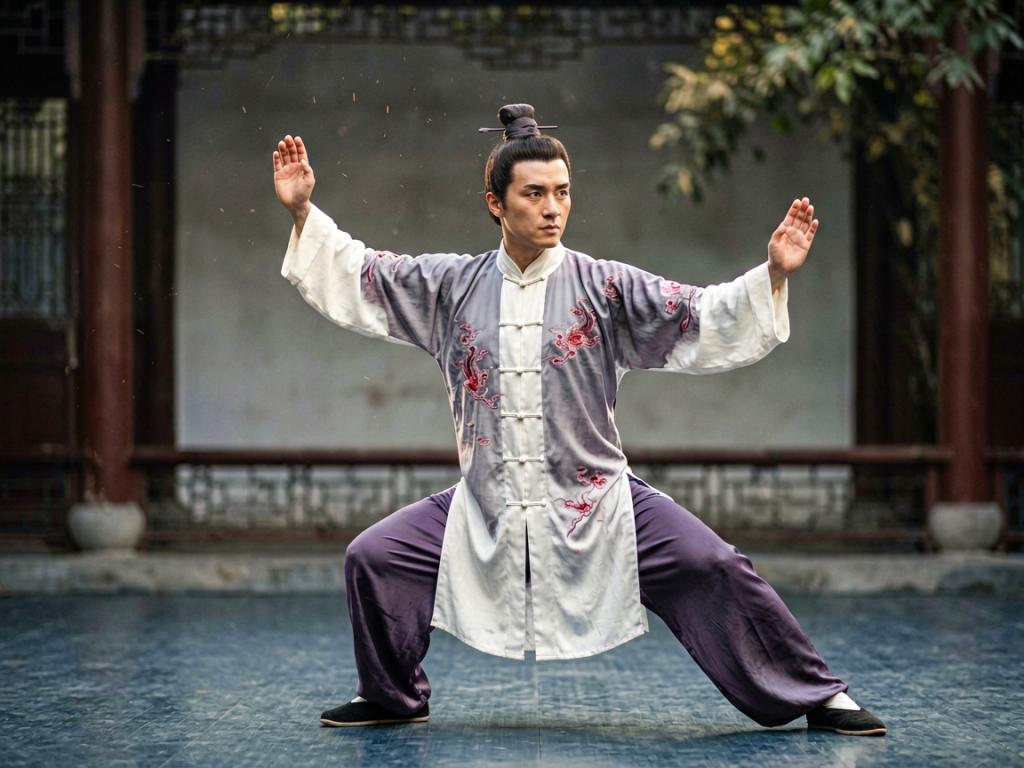
I remember the first time I actually tried Tai Chi. I was in a park in Chengdu, early enough that the mist was still clinging to the bamboo. Most people were doing their morning routines–some playing instruments, others jogging, and then there was the slow-motion crowd. They moved like they were underwater. Fluid, deliberate, almost hypnotic.
I’m no martial arts expert. I couldn’t even kick a soccer ball straight if my life depended on it. But I watched a guy who looked like he was made of old paper and wire, move with a grace that made my own limbs feel clumsy. I signed up for a beginner class a week later. I was skeptical. I thought it was just fancy stretching.
I was wrong. So wrong.
For years, Tai Chi has been dismissed by the Western medical community as nothing more than a gentle walk for retirees. We’ve seen the stereotypes: old men in parks, moving slowly, maybe doing it for the social hour. But recent science is flipping the script. It turns out, this ancient practice is doing some heavy lifting for your biology, even if it doesn’t look like it.
The Balance Breaker
Let’s start with the most tangible benefit: balance. Seriously, it’s a game-changer for older adults, but it’s useful for anyone who trips over their own feet. I’ve noticed that after six months of practice, I’m not just standing still; I’m rooted.
A study published in the Journal of Aging Research looked at older adults who practiced Tai Chi for just 12 weeks. The results were stark. The group that practiced Tai Chi had a significantly lower rate of falls compared to the stretching group. It wasn’t just luck. It was proprioception.
Proprioception is basically your body’s GPS. It’s knowing where your limbs are in space without looking. Tai Chi forces you to shift your weight slowly and deliberately. You lift one leg, hold it, and find stability on the other. It sounds easy. Try it while standing on one leg with your eyes closed. It’s harder than it looks.
I remember my instructor, Master Li, yelling at me (gently, but firmly) to stop looking at my feet. “Feel the ground,” he’d say. “Don’t look. Feel.” At first, I felt nothing but anxiety. But gradually, I started to sense the pressure in my soles. I could feel the micro-adjustments in my ankles. That’s the magic. You’re training your nervous system to correct balance before you even realize you’re tipping.
This isn’t just anecdotal. MRI scans show changes in the brain’s gray matter in areas responsible for spatial orientation. The science backs up what the masters have been saying for centuries: slow movement builds faster reflexes. It’s counterintuitive, but true.
Heart Health and Blood Pressure
If you’re worried about your heart, Tai Chi might be the pill you don’t have to swallow. I used to hate cardio. Running made me feel like I was dying. Swimming was too much effort. But Tai Chi? It’s cardiovascular exercise disguised as a meditation.
A meta-analysis in the Journal of the American Geriatrics Society found that Tai Chi lowers blood pressure just as effectively as brisk walking. But here’s the kicker: people stick with it. Walking is boring. Tai Chi is complex. You have to remember the sequence, the breathing, the weight shift. It keeps your brain engaged while your heart races.
I tracked my blood pressure for three months while practicing daily. It dropped. Not dramatically, but consistently. My resting heart rate went down. I felt calmer during stressful days at the office. It’s not a cure-all, obviously. I still eat too much spicy hotpot and drink too much bubble tea. But the data is clear: moderate-intensity Tai Chi improves vascular function.
The mechanism is interesting. It involves the endothelium, the lining of your blood vessels. Slow, rhythmic movements seem to improve nitric oxide production, which helps vessels relax and widen. It’s like opening the floodgates for blood flow. I don’t fully understand the biochemistry, but I feel the difference. My hands don’t get cold as easily in the winter.
The Brain on Slow Motion
Here’s where it gets really interesting. Tai Chi isn’t just good for your body; it’s good for your mind. In China, we talk a lot about *jing* (stillness) and *dong* (movement). But modern neuroscience calls it something else: cognitive load.
When you do Tai Chi, you’re doing a lot at once. You’re balancing. You’re breathing. You’re remembering choreography. You’re managing your emotions. This multi-tasking requirement stimulates the hippocampus, the part of the brain responsible for memory. A study from UCLA showed that Tai Chi improved memory function in older adults more than simple stretching or resistance training.
I love this part. It’s not just about not falling over. It’s about staying sharp. I’ve met plenty of Chinese elders in the parks who are sharp as tacks. They debate philosophy, discuss politics, and remember every detail of your last visit. Tai Chi might be part of that mental agility.
There’s also the stress reduction aspect. We’ve all heard of cortisol. That stress hormone that keeps you up at night and makes you eat sugar. Tai Chi lowers cortisol levels. It activates the parasympathetic nervous system–the “rest and digest” mode. It’s the opposite of the “fight or flight” response that modern life keeps triggering.
I remember a particularly stressful week at work. My deadline was looming, my Wi-Fi was down, and I was irritable. Instead of hitting the gym and lifting heavy weights, I went to the park. I did the “Grasp the Bird’s Tail” sequence ten times. Just ten. By the time I finished, my shoulders were down, my jaw was unclenched, and I could think clearly. It’s like a hard reset for your brain.
It’s Not Just for Grandmas (and Grandpas)
I know what you’re thinking. “This sounds like something for people my age.” Trust me, it’s not. I’ve seen young athletes incorporate Tai Chi into their training. Boxers use it for footwork. Martial artists use it for power generation. Even NBA players have cited similar principles for balance and core strength.
The key is that Tai Chi is low impact. It doesn’t wreck your joints. You can do it for decades without wearing down your knees. Compared to running on concrete, which shatters your shins, or heavy weightlifting, which strains your tendons, Tai Chi is sustainable. It’s a practice for life, not just for fitness.
I’ve also noticed a shift in the culture. Younger Chinese people are finally rediscovering these parks. It’s not just about tradition anymore. It’s about wellness. It’s about mindfulness in a hyper-connected world. You see students in hoodies doing the forms next to grandmas in floral jackets. They’re all looking for the same thing: a moment of peace.
The Verdict
So, does modern science support Tai Chi? Absolutely. The evidence is robust. It improves balance, lowers blood pressure, boosts cognitive function, and reduces stress. It’s not magic. It’s biology.
But here’s the thing that numbers can’t capture. The feeling of connection. When you’re in the park, surrounded by hundreds of people moving in unison, you feel part of something bigger. It’s communal. It’s shared. It’s a reminder that we’re all just trying to find our balance.
I’m no scientist. I’m just a guy who loves China and its culture. But after years of watching, practicing, and sweating (yes, you do sweat, even if it’s slow), I can tell you this: it works. It’s not a quick fix. You won’t see abs in two weeks. But if you stick with it, if you show up every morning and move like the water, you’ll change.
You’ll stand taller. You’ll think clearer. You’ll fall less. And you’ll probably make some new friends in the park. That’s worth more than any statistic.
Go find a park. Find a group. Try it for a month. If it doesn’t work for you, you’ve lost nothing but some time. But if it does, you might just find your balance.