I still remember the first time I realized I wasn’t in charge. I was standing in a tiny kitchen in Chengdu, holding a spatula, trying to make a simple stir-fry. My wife’s mother, Nai Nai, stood beside me. She didn’t say a word. She just watched. Her eyes were sharp, missing nothing. When I reached for the salt, she gently moved my hand. Then she picked up the spoon, added a pinch of sugar instead, and adjusted the heat. That was it. I was just the helper. She was the boss.
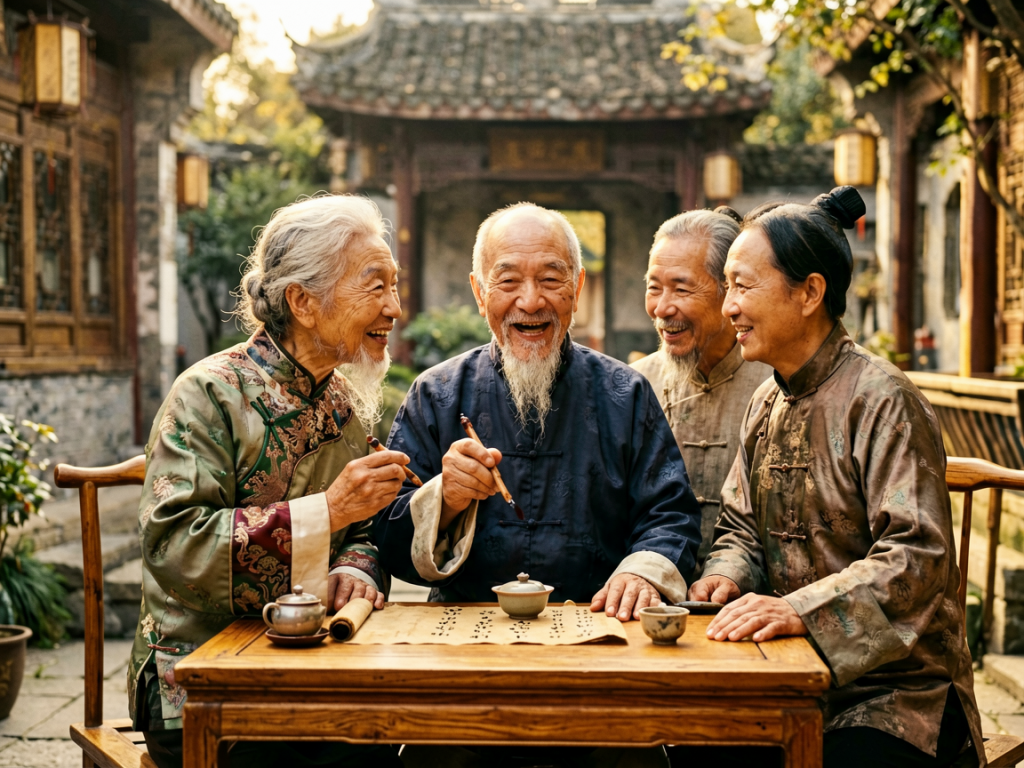
It’s a humbling experience for any Westerner used to independence. We think of family structures as hierarchical in a linear way. Parents lead. Children follow. But in China, the dynamic shifts the moment grandparents enter the picture. They aren’t just respected elders. They are the operational managers of the household. They hold the emotional, financial, and logistical reins. If you want to understand China, you have to understand the grandmother.
I’ve lived here for eight years now. I’ve seen it in Beijing apartments, Shanghai condos, and rural villages. The pattern is everywhere. The grandparents don’t just visit. They move in. Or at least, they are there every single day. They run the show. And honestly? I’m glad they do.
The Invisible Infrastructure of Care
Here’s the thing about modern Chinese life. It’s fast. It’s competitive. It’s exhausting. Both parents in a typical urban couple work long hours. The “996” work culture–nine to nine, six days a week–isn’t just a meme. It’s a reality for many. So who watches the kids?
It’s not nannies. It’s not daycare centers. It’s the grandparents.
When my daughter was born, I expected to hire help. Instead, my parents-in-law flew in from the north. They stayed for six months. They cooked. They cleaned. They bathed the baby. They even taught my wife how to make dumplings by hand because the store-bought ones “taste like cardboard.” I felt useless. I wanted to contribute, but my Chinese wasn’t good enough to argue, and my cooking skills were barely adequate.
This isn’t a burden. It’s a service. And it’s a service that keeps the entire economic engine running. Without this invisible infrastructure of care, the workforce would collapse. The government talks about support systems, but the real support system is familial. It’s the grandparents who absorb the shock of modern life.
I’ve seen friends in Beijing quit their jobs because their parents couldn’t handle the childcare logistics anymore. I’ve seen others stay in toxic marriages because their parents provided the stability needed to raise children. It’s complicated. It’s messy. But it works. The grandparents are the shock absorbers. They take the hits so the nuclear family can keep moving forward.
The Power of the Wallet
You think they only control the kitchen? Think again. In many families, the grandparents hold the purse strings. Or at least, they contribute significantly to the financial stability of the household.
Property prices in cities like Shenzhen or Hangzhou are insane. A young couple might struggle to make the down payment on their first home. But guess who pays? Often, it’s the grandparents. They’ve saved for decades. They’ve lived frugally. They want their children to have a better life.
I remember a conversation with a friend named Li. He bought an apartment with his wife. The mortgage was steep. His parents helped cover the initial payments. In return, they didn’t ask for rent. They didn’t ask for interest. They asked for respect. And access. They wanted to be involved in the decision-making process regarding the property, the children, and even the furniture.
This creates a dynamic where the grandparents have a say. They aren’t just guests. They are stakeholders. If the family moves, the grandparents often decide where. If the family spends money on education, the grandparents often approve the budget. It’s a form of soft power. It’s not dictatorial. It’s collaborative. But the weight of their contribution gives them leverage.
To be fair, this isn’t always smooth sailing. There are tensions. Young couples want autonomy. Grandparents want involvement. But the financial reality keeps them together. And in China, family is more important than individual preference. It’s a collective effort. The grandparents provide the foundation. The parents build the house. The children live in it.
Food as Love and Control
If you want to win the hearts of Chinese grandparents, learn to eat. Really eat. I’m talking about consuming vast quantities of food, even when you’re full. Because food is their language of love. And it’s also their tool of control.
Let me tell you about Auntie Wang. She’s my neighbor. She’s small, quiet, and terrifying. When I visit for dinner, she doesn’t ask what I want. She brings out plates. Pork belly. Steamed fish. Braised eggplants. It’s a lot. I try to politely decline. She interprets this as a lack of appreciation. She serves more. If I leave hungry, I’ve insulted her. If I eat too much, I’m being greedy. The only winning move is to eat everything, smile, and compliment the chef.
This isn’t just about feeding people. It’s about nurturing. In Chinese culture, health is paramount. And health comes from food. Grandparents believe they know what’s best for your body. They’ve lived through famine. They’ve seen poverty. They know that a full stomach is a safe stomach. So they push. They monitor. They judge your diet.
I remember complaining about eating too much sugar. My mother-in-law looked at me like I was crazy. “You’re thin,” she said. “You need calories.” She started packing my lunch box with extra snacks. I couldn’t say no. It would have been rude. It would have been ungrateful. So I ate the snacks. And I gained five pounds. But I also gained her approval. And in this context, approval is worth more than a flat stomach.
The Philosophical Underpinning
Why does this work? Why don’t the grandparents just step aside? It comes down to Confucian values, but also to a deeper, more practical understanding of time and legacy.
In the West, we value youth. We look to the future. In China, there is a profound respect for the past. The grandparents are the link to that past. They carry the stories, the traditions, the wisdom. They are the anchors. When the world changes too fast, they provide stability.
I’ve seen this in the parks. Every morning, you’ll see groups of elderly people practicing Tai Chi. They move slowly, deliberately. They are connected to their bodies, their history. They are at peace. Meanwhile, the young people rush by, glued to their phones, stressed about deadlines. The grandparents watch them. They don’t judge. They just observe. And then they call their children home for dinner.
This isn’t outdated. It’s adaptive. The grandparents have adapted to modern life. They use WeChat. They shop online. They travel. But they retain their core role. They are the keepers of the flame. They ensure that the family doesn’t fracture under the pressure of modernity.
There’s a concept called *filial piety*. It’s often misunderstood as blind obedience. But it’s really about reciprocity. The parents cared for you when you were small. You care for them when they are old. And the grandparents care for the grandchildren in the middle. It’s a cycle. It’s a chain. And if one link breaks, the whole thing falls apart.
A Personal Revelation
I’ll be honest. I was skeptical at first. I liked my independence. I liked making my own choices. I didn’t want someone telling me how to raise my kids or what to eat. But living in China changed me.
I saw the exhaustion of young parents. I saw the joy in the grandparents’ eyes when their grandchildren smiled. I saw the strength of the family unit. It’s not perfect. There are arguments. There are misunderstandings. But there is also deep love. Unconditional, fierce, protective love.
Last year, my father-in-law had a minor heart scare. The family mobilized instantly. My wife took time off work. I handled the logistics. His brothers, sisters, and cousins all visited. They brought food. They brought gifts. They brought comfort. The grandparents who had cared for us for years were now cared for by the family they helped build.
It was beautiful. It was chaotic. It was very Chinese. And it was necessary. We couldn’t have done it without them. And they wouldn’t have let us try alone.
The Future of the Family
Some people say this system is dying. They point to rising divorce rates, smaller families, and individualism. They’re right, in part. The structure is changing. But the core remains. The grandparents are still central. They are still the heads of the family, even if they don’t wear the crown.
They adapt. They learn. They love. And they hold the family together. As China continues to modernize, the role of the grandparents will likely evolve. They might live further away. They might use technology more. But their influence will remain. Because the need for connection, for care, for stability, is timeless.
So, the next time you’re in China, don’t ignore the elderly couple sitting on the bench. Don’t brush off the grandmother insisting you eat one more bite. Listen to them. Learn from them. Respect them. Because they are the real heads of the family. And they’ve been running the show all along.
I’m no expert on Chinese philosophy. I’m just a guy who likes dumplings and good company. But I know this: if you want to understand China, sit down with its grandparents. Ask them about their lives. Listen to their stories. And then, go home and call your own parents. You might just realize they’re the real bosses too.