The Myth of the Takeout Life
Most people think living in China means eating at restaurants three times a day. They imagine endless trays of Kung Pao chicken and piles of steamed buns. I’ll be honest, that sounds amazing at first. But after eight years here, I’ve learned that the real flavor of this country isn’t in the tourist traps. It’s in the tiny, steam-fogged kitchens of ordinary apartments.
I used to think I needed to learn complex techniques to cook like a local. I was wrong. The secret isn’t technique. It’s ingredients and speed. When you eat at home in China, it’s fast. It’s messy. And it’s infinitely better than anything you can order for delivery.
This week, I decided to stop ordering out. I wanted to show you what a real, unglamorous week of eating looks like for a foreigner who has finally stopped being afraid of the chili oil. I’m not a chef. I’m just a guy who loves to eat and has learned to listen to the market vendors.
Monday: The Power of Congee and Pickles
Monday mornings in China are quiet. The streets are empty until the sun hits the pavement. My routine starts before 7 AM. I don’t have time for elaborate breakfasts. I need something warm that settles my stomach after a late night.
I make salted egg congee. It’s simple. You take leftover rice, which I always have in the fridge. You add water, a knob of ginger, and a pinch of salt. You let it simmer until the grains burst open and the texture turns into a thick, creamy porridge. It takes twenty minutes, but you can prep it the night before.
The magic happens in the toppings. This is where the culture really shines. I don’t just eat plain rice mush. I top it with century egg, which has a funky, sulfurous smell that I’ve grown to love. The yolk is dark and creamy, like blue cheese. I also add a spoonful of preserved vegetables. These are fermented mustard greens that are crunchy, salty, and slightly sweet.
I bought my preserved vegetables from a small shop near my apartment in Chengdu. The owner, Auntie Li, always wraps them in newspaper. She told me her grandmother made them during the war when food was scarce. Now, it’s just a comfort food.
I sat on my balcony, watching the mist roll off the mountains. I ate that bowl of congee slowly. It wasn’t fancy. But it was perfect. It taught me that breakfast in China isn’t about fuel. It’s about warmth.
Tuesday: The Stir-Fry That Changes Everything
Lunch is usually the hardest meal to plan when you’re working from home. I want something substantial but not heavy. On Tuesday, I went to the wet market instead of the supermarket. The wet markets are chaotic. There are live chickens hanging from hooks. There are piles of green vegetables that look like they just came out of the ground. And there’s the smell. It’s earthy, raw, and alive.
I bought two things: pork belly and bitter melon. I know what you’re thinking. Bitter melon? Yes. It’s an acquired taste. It looks like a wrinkled green cucumber. When you bite into it, it tastes like the earth itself. But when you cook it right, the bitterness fades into a fresh, clean finish.
I sliced the pork belly thin. I sliced the bitter melon thin. I soaked the melon in salt water for ten minutes to draw out some of the bite. Then I heated my wok. I didn’t use a fancy pan. I used a carbon steel wok that I’ve seasoned for three years. It’s black and shiny and has a memory of a thousand meals.
I threw in some garlic and dried chilies. The oil sizzled. I added the pork. It turned golden brown in seconds. Then the melon. I added a splash of Shaoxing wine. The steam rose up, carrying the scent of alcohol and meat. I tossed it all together for three minutes. That’s it. Three minutes.
I served it over jasmine rice. The bitterness of the melon cut through the richness of the pork. It’s a balance that Western cooking often misses. We tend to go for sweet or salty. Here, it’s about contrast.
I remember my first time eating bitter melon in a restaurant in Guangzhou. I gagged. My friend laughed and told me to keep eating. By the end of the week, I was craving it. That’s the beauty of Chinese cuisine. It challenges you. It doesn’t just try to please your palate; it tries to expand it.
Wednesday: Noodles from the Street
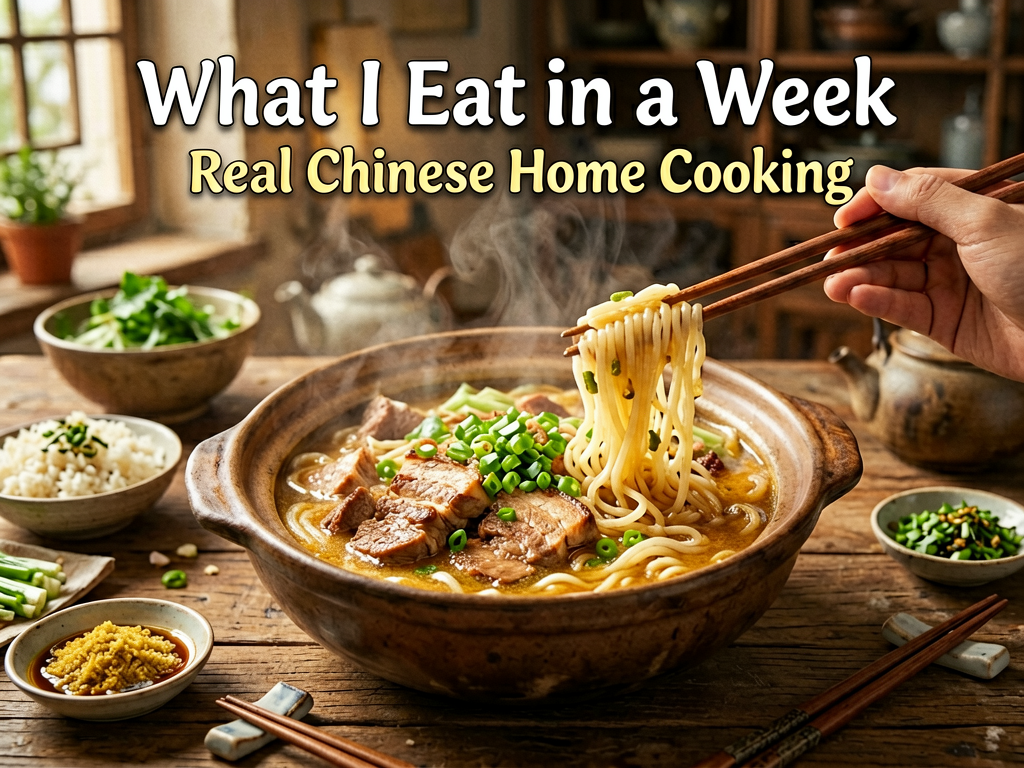
Wednesday is market day. Or rather, noodle day. I don’t cook noodles at home often because the process is too long. Chopping vegetables, making the broth, rolling the dough. It’s a project. So, I go to the street.
There’s a vendor near my office who makes hand-pulled beef noodles. He calls himself Old Chen. He’s been pulling noodles for forty years. His arms are thick with muscle. He watches you eat. If you eat too slowly, he taps the counter. He wants you to finish before the noodles get soggy.
The broth is clear but deeply flavorful. It’s been simmering since dawn. You can taste the star anise and the cinnamon. But the real star is the beef. He slices it thin. It’s tender. It melts in your mouth.
I eat this standing up. I don’t sit down. It’s part of the ritual. You slurp the noodles loudly. It’s polite. It shows the cook that you’re enjoying the meal. If you eat silently, it’s rude. I used to be shy about slurping. Now, I slurp with the best of them.
The price is cheap. Maybe five or six yuan. That’s less than a dollar. You get a huge bowl of noodles and a side of chili oil. The chili oil is not just hot. It’s fragrant. It’s made with rapeseed oil and a mix of peppers. It has a nutty depth that standard red pepper flakes can’t match.
This meal reminded me why I moved here. It’s the accessibility of good food. You don’t need a reservation. You don’t need to dress up. You just need to be hungry and willing to join the line.
Thursday: The Leftover Lottery
Thursday is when I get creative with leftovers. In China, wasting food is frowned upon. We don’t order extra food at home. We eat what we have. This means Thursday dinners are often a mystery.
I had some tofu left from Monday. I had some spinach that was starting to wilt. I had some rice. I decided to make a hot pot at home. But not the fancy kind with dozens of raw ingredients. The simple kind.
I put a pot of water on the stove. I added a block of beef bone broth base. It’s a cube you buy in any supermarket. It dissolves quickly. The smell filled the apartment. My neighbors probably knocked on my door to ask what I was cooking.
I chopped the tofu into cubes. I washed the spinach. I sliced some mushrooms I found in the back of my fridge. I dropped everything into the boiling broth. I didn’t add any seasoning. The broth was strong enough.
I dipped the cooked vegetables in a sauce made of soy sauce, sesame oil, and chopped green onions. It was simple. But it was comforting. Hot pot is about the process, not just the food. It’s about sitting around the pot, talking, and watching the food cook.
I realized that this is how most Chinese families eat on weekdays. It’s not about presentation. It’s about efficiency and warmth. You throw everything in the pot. You eat quickly. You’re full. You move on with your day.
Friday: The Treat
Friday is the only day I allow myself a real treat. I don’t cook a big meal. I order dumplings. But not from a chain. From a small shop that makes them by hand.
I went to a place in the old quarter. The owner is a woman who makes every single dumpling herself. She folds them with a speed that’s hypnotizing. She presses the edge with her thumb. The pleats are uniform. They’re tiny works of art.
I ordered a plate of pork and chive dumplings. They were steamed. The skin was thin but chewy. The filling was juicy. When I bit into one, the broth inside squirted out. It was hot. It was delicious.
I ate them with vinegar and chili oil. I watched the other customers. There were students. There were elderly couples. There were businessmen in suits. Everyone was eating the same dumplings. It’s a great equalizer.
I think about this meal often. It represents the heart of Chinese food culture. It’s communal. It’s handmade. It’s affordable. And it’s delicious.
Weekend: The Slow Cooking
Weekends are for slow cooking. I have time. I have patience. I want to make something that simmers for hours. I usually make a soup.
On Saturday, I made a chicken soup with mushrooms and goji berries. I bought a whole chicken from the market. I cleaned it myself. It takes a while to gut a chicken, but it’s worth it.
I put the chicken in a large pot. I added water. I added ginger slices and green onion knots. I let it boil, then skimmed the foam. The foam is impurities. You want it gone.
I lowered the heat. I added dried shiitake mushrooms. I added goji berries. I let it simmer for three hours. The kitchen smelled like heaven. It smelled like home.
When it was done, the meat fell off the bone. The broth was golden and clear. I added a little salt and white pepper. That’s it. No herbs. No spices. Just the pure taste of chicken and earth.
I ate it with a bowl of rice. I felt warm. I felt satisfied. I felt like I belonged.
The Takeaway
Looking back at this week, I realize that eating in China is about more than just food. It’s about rhythm. It’s about seasons. It’s about community.
You don’t need to know how to cook every dish. You don’t need to speak perfect Mandarin. You just need to be open. Try the strange things. Eat at the small places. Talk to the vendors.
I’m no expert. I still burn things. I still add too much salt. But I’m learning. And every meal is a lesson.
If you’re visiting China, don’t just stick to the safe options. Get lost in the alleys. Find the stall with the longest line. Order something you can’t pronounce. You might be surprised by what you find.
Trust me. It’s better than any restaurant in your home country. It’s real. It’s alive. And it’s waiting for you to taste it.