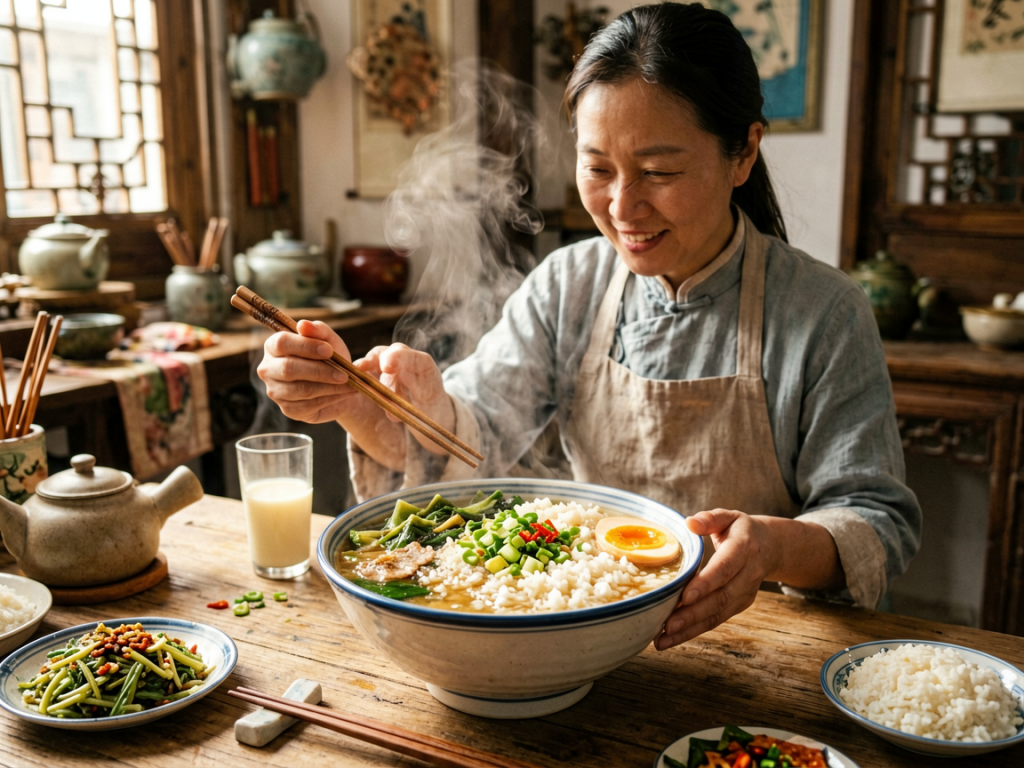
The Great Misunderstanding of Morning Food
I still remember the first time I ordered breakfast in Beijing. I walked into a small shop near my apartment, sat down, and confidently asked for “eggs and toast.” The owner looked at me like I’d just asked for a plate of raw dog food. He shook his head slowly and pointed to the menu board behind him.
It was covered in characters I couldn’t read, but the steam rising from the metal containers told the real story. There were no plates. No forks. No coffee makers humming in the corner. Just piles of white buns, bowls of dark soup, and glasses of thick, warm soy milk.
I was confused. I was hungry. And I was about to learn that my entire understanding of what constitutes a “meal” in the morning was completely wrong.
Here’s the thing. In the West, breakfast is often a quiet affair. It’s solitary. It’s calculated. You might eat an omelet while scrolling through emails. You might grab a granola bar on the run. It’s functional. It’s fuel. But in China, breakfast is a loud, communal, chaotic celebration of heat and texture. It’s not just about waking up. It’s about starting the day with a bang.
If you’ve ever tried to find a western-style cafe in a tier-two city in China, you know the struggle. You might find a Starbucks, sure. But those places are full of tourists and young professionals pretending to work remotely. They aren’t the heart of Chinese morning culture. That heart beats in the small street-side stalls, the family-run noodle shops, and the bustling morning markets.
Steam Is the New Coffee
Let’s talk about temperature. This is probably the biggest shock for Westerners. We drink our coffee black and scalding hot. But we eat our food cold or room temperature. Think about it. A yogurt parfait? Cold. A piece of toast? Cool. A hard-boiled egg? Room temp.
Chinese breakfast is almost exclusively served hot. And I mean piping hot. The air in these restaurants is thick with steam. It fogs up your glasses. It warms your face. It makes you sweat before you’ve even taken a bite. And it feels incredible.
I remember one morning in Xi’an. I stumbled into a narrow alleyway at 7 AM because I smelled something amazing. It was a small stall selling *you tiao* (fried dough sticks) and *dou jiang* (soy milk). The vendor was pulling long strands of dough and dropping them into bubbling oil. The sound was like crackling fire.
I sat on a tiny plastic stool. My neighbor, an older man in a tracksuit, was already eating a bowl of spicy rice noodles. He didn’t speak a word of English, but he nodded at my steamy bowl of soy milk. I dipped the crispy, oily dough into the warm, slightly sweet liquid. The contrast was insane. Hot and cold. Crispy and smooth. Sweet and savory.
It’s a flavor profile that doesn’t exist in most Western breakfasts. We don’t usually mix sweet soy milk with fried dough. But it works. It works so well that I now seek it out every single morning.
This emphasis on hot food isn’t just about taste. It’s about health. Traditional Chinese medicine believes that cold foods shock the digestive system. After a night of sleep, your body is warm and internal. Dumping cold cereal into it feels wrong. But a bowl of hot congee? That soothes. That heals. That wakes up your gut.
The Bread Isn’t What You Think
If you’re a Westerner, you probably imagine bread as something baked in an oven. Sourdough. Baguette. Croissant. Flaky, dry, crumbly.
Chinese breakfast bread is different. It’s steamed.
*Baozi* are the kings of the Chinese morning. They are fluffy, white, steamed buns filled with everything from sweet red bean paste to savory pork and chives. I’ve eaten them in Shanghai, Beijing, Chengdu, and Guangzhou. The dough is soft, slightly chewy, and absorbs the juices from the filling.
I used to think steamed buns were just for dim sum. I was wrong. In many parts of China, especially in the north, steamed buns are the standard breakfast item. You walk in, point at the display case, and hand over your cash. The worker grabs a steamer basket, dumps three buns onto a plate, and slides it to you. It takes thirty seconds.
The variety is staggering. In Beijing, you get *jianbing*, a savory crepe filled with crispy crackers, eggs, and cilantro. It’s handheld. It’s messy. You eat it standing up on the sidewalk. In the south, you might get *shaomai*, dumpling-like parcels wrapped in thin dough, filled with shrimp and pork.
And let’s not forget the noodles. In Wuhan, breakfast is literally called “Guo Zao,” which means “passing the morning.” It’s a ritual. And the main event is hot dry noodles (*regan mian*). These aren’t soupy noodles. They are tossed in sesame paste, chili oil, and soy sauce. They are sticky, spicy, and incredibly filling.
I tried hot dry noodles for the first time in a cramped shop in Wuhan. There were no tables. People stood around, slurping noodles from styrofoam bowls. The owner yelled orders. The sound was deafening. I was terrified I’d mess up the etiquette. But nobody cared. They were just hungry. And the noodles were addictive. The sesame paste coated every strand, creating a rich, nutty sauce that clung to the wheat. It was heavy. It was perfect.
This variety shows that Chinese breakfast isn’t a monolith. It’s a landscape. It changes with every province, every city, and sometimes every street. What’s normal in the north might be exotic in the south. But the common thread is always freshness. Always heat. Always flavor.
Speed, Chaos, and Community
There’s another element to Chinese breakfast that feels distinctly un-Western. It’s the pace.
In the West, we value privacy. We want our quiet morning coffee. We want to read our news. We want to be left alone.
Chinese breakfast is public. It’s loud. It’s fast.
I’ve sat in restaurants where five families are eating at one table. Kids are running around. Old men are playing cards on the side while they sip tea. The clatter of bowls is constant. The chatter is non-stop. It’s a symphony of urban life.
And it’s fast. Life in China moves quickly. People don’t have time to spend an hour on breakfast. They need energy. They need efficiency. So the food is designed for speed. Handheld items. Bowls that can be eaten in ten minutes. Service that’s instant.
I once watched a woman order, pay, eat, and leave in under five minutes. She didn’t even sit down. She stood by the counter, holding her bowl of noodles, and ate while checking her phone. It looked efficient. It looked modern. It looked like a different way of living.
But there’s also a community aspect. You see neighbors greeting each other. You see regulars chatting with the owners. It’s a social hub. It’s where people connect before the workday begins. It’s less about solitude and more about shared experience.
This communal vibe makes it easier for travelers to integrate. You’re not hiding in a corner. You’re part of the flow. You’re eating the same food as the locals. You’re experiencing the same rush. It breaks down barriers. It makes you feel like you belong, even if you don’t speak the language.
Why You Should Embrace the Steam
So, why does this matter? Why should you care about the differences in breakfast culture?
Because food is culture. It’s history. It’s geography. It’s how people see the world.
When you eat a western breakfast, you’re eating a culture that values efficiency, individualism, and cold preservation. When you eat a Chinese breakfast, you’re eating a culture that values warmth, community, and freshness.
I’m not saying one is better than the other. I’m saying they’re different. And as a traveler, you miss out if you stick to what’s familiar.
If you go to China and order a croissant, you’re getting a globalized product. It’s fine. But it’s not the story of China. The story of China is in the steaming buns. It’s in the spicy noodles. It’s in the sweet soy milk. It’s in the chaotic, noisy, delicious morning markets.
I’ve spent eight years here. I’ve tried everything from five-star hotel buffets to street-side noodle carts. And I still prefer the street carts. They’re cheaper. They’re tastier. And they’re more honest.
Don’t be afraid of the steam. Don’t be afraid of the unfamiliar ingredients. Don’t be afraid of eating with your hands or standing up. Embrace it.
Your palate will thank you. Your soul will thank you. And you’ll come home with stories that are actually worth telling.
Trust me. Skip the hotel buffet. Go out. Find the steam. And start your day the Chinese way.