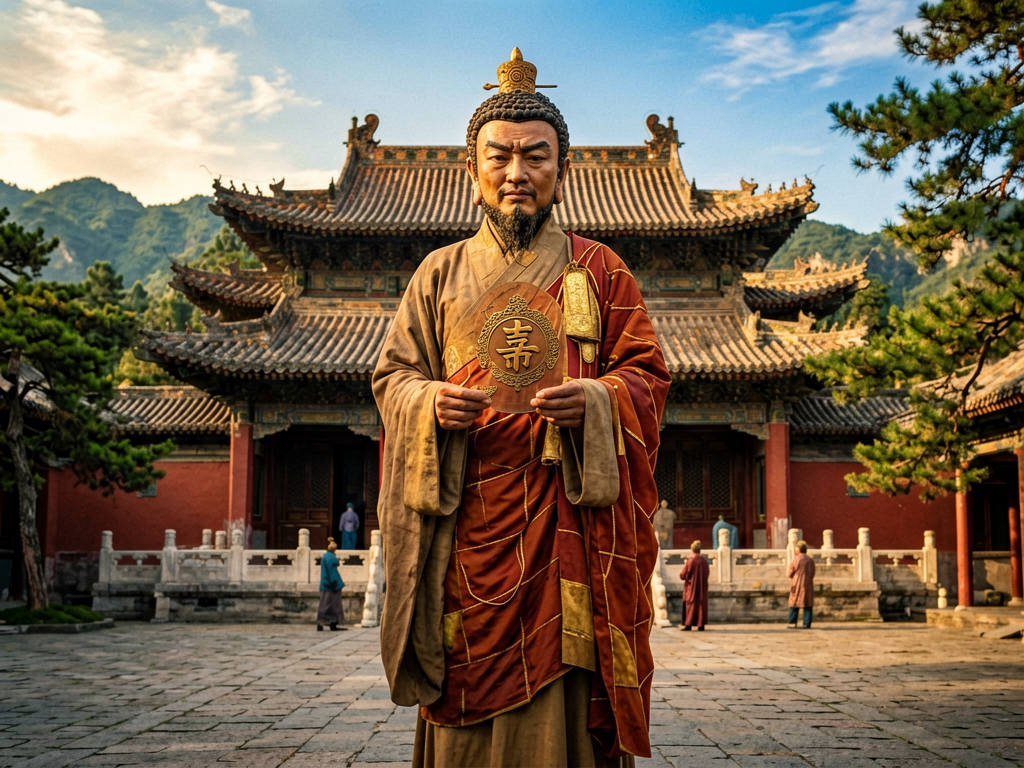
Look, I’ve been to Shaolin Temple. You have, too, if you’ve ever watched a kung fu movie or scrolled through a travel blog. It’s in Dengfeng, Henan province, just outside Zhengzhou. It’s crowded. It’s commercial. And if you go there expecting to see monks meditating in silence while dragons circle the pagoda, you’re going to be very disappointed.
I was skeptical at first. Honestly, I thought it would be a tourist trap designed to sell overpriced t-shirts and cheap martial arts DVDs. And sure, parts of it are. But beneath the noise and the neon lights of the surrounding town, there’s a history that’s so thick with smoke, blood, and prayer that it actually changed the course of human culture.
So, let’s cut through the noise. Let’s talk about the real history of the Shaolin Temple. Not the Bruce Lee version. Not the Jet Li version. The real, dusty, complicated, and utterly fascinating story of the place that gave the world Kung Fu.
The Monk Who Built a Fortress in the Mountains
To understand Shaolin, you have to start with the guy who actually built it. His name was Batuo, or Bodhiruci. He wasn’t a fighter. He was a monk from Central Asia who arrived in China around 495 AD during the Northern Wei Dynasty.
Back then, the northern part of China was ruled by the Tuoba clan of the Xianbei people. They were warriors, basically. And they needed stability. Batuo asked the emperor for land to build a monastery. He chose Mount Song, specifically the hill called Shaoshi. It’s rugged. It’s isolated. It’s perfect for hiding, which turns out to be a very important plot point later on.
The name “Shaolin” comes from “Shaoshi Forest.” It sounds poetic, but let’s be real: it just means a forest on Shaoshi Mountain. Batuo started teaching meditation there. He brought with him the practice of Dhyana, which is Sanskrit for meditation. This eventually morphed into the Chinese term “Chan,” which became “Zen” in Japan.
Here’s the thing that most people miss: meditation isn’t just sitting still. It’s physical. It’s hard. Batuo believed that a weak body couldn’t support a strong mind. So, he prescribed physical exercises for his monks. They weren’t fighting techniques yet. They were health practices. Think of it as ancient yoga, but with less stretching and more spiritual grit.
I remember reading about the “Muscle Change Classic” (Yijin Jing). Legend says Batuo wrote this to help monks strengthen their bodies for long meditation sessions. Is it historically accurate? Maybe not entirely. But the idea is solid. If you sit in a lotus position for twelve hours a day, your hips are going to hurt. You need to move. You need to breathe. And you need to survive the harsh Henan winters.
Warriors, Not Just Monks
Now, we have to skip forward a few centuries. The Tang Dynasty. This is where the story gets bloody. And by bloody, I mean a lot of swords and a lot of very brave monks.
In the 620s AD, the Tang Empire was rising. But there was a warlord named Wang Shichong who controlled the area around Luoyang. He had captured the emperor’s nephew. A general named Li Shimin, who would later become Emperor Taizong, was trying to overthrow Wang. He was stuck in a stalemate.
Then, he heard about a group of thirteen Shaolin monks who were willing to help. These weren’t just guys in orange robes. These were trained fighters. The legend goes that they ambushed Wang’s army, captured his general, and handed him over to Li Shimin.
It sounds like a movie script, right? Surprised? It’s actually recorded in historical texts. The Shaolin monks helped Li Shimin win the battle. In return, he granted them special privileges. They could brew their own alcohol. They could own land. And, crucially, they could maintain a private militia.
This is the moment Shaolin became what we think of it as today: a martial arts temple. But here’s the twist. They didn’t fight because they were bloodthirsty. They fought because they were practical. The Tang Dynasty was chaotic. Bandits roamed the roads. Monasteries held wealth in the form of grain and gold. If you didn’t protect your property, someone else would take it.
I spent an afternoon talking to a local guide in Dengfeng about this era. He shook his head and said, “Monks don’t like war. But they like survival more.” He’s right. The Shaolin monks developed their skills not to conquer, but to defend their sanctuary. They studied the movements of animals, the flow of water, and the strength of trees. They weren’t trying to kill. They were trying to survive.
The Great Destruction and the Survival
You can’t talk about the real history of the Shaolin Temple without mentioning the fire. The big one. The one that nearly wiped it off the map.
Fast forward to 1705 AD. The Qing Dynasty was in power. The emperor, Kangxi, had a problem. He saw the Shaolin monks as a potential threat. A group of armed men living in the mountains, loyal to a temple rather than the state? That’s a recipe for rebellion. So, he ordered the temple burned down.
It wasn’t just a minor repair job. The main halls were torched. The statues were smashed. The library was ash. It was a systematic attempt to erase the institution. Most temples would have folded. Most sects would have scattered and forgotten their roots.
But Shaolin didn’t die. It went underground. This is the part that blew me away. The monks split up. Some went to other mountains. Some joined secret societies. Some even went to Southeast Asia, where their martial arts influenced the development of Silat and other regional styles.
I’m no expert on secret societies, but the idea that a cultural institution can survive state-sponsored destruction is pretty powerful. It’s like the phoenix, but with more kung fu. The monks preserved their knowledge through oral tradition. They memorized the forms. They taught the next generation in secret caves and remote villages.
When the temple was eventually rebuilt, it wasn’t the same. It was smaller. It was humbler. But the spirit was intact. And that resilience is what makes Shaolin so important today. It’s not just a place. It’s an idea that survives.
The Modern Renaissance
Let’s bring it to the present. In the 1980s, China started to open up. The cultural revolution had ended, and people were hungry for their heritage. Shaolin returned to the spotlight, but this time, it was different.
p>The movie Shaolin Temple, starring Jet Li, came out in 1982. It was a massive hit. Suddenly, everyone wanted to be a Shaolin monk. Travel agencies started busloads of tourists to Dengfeng. The temple had to figure out how to monetize its fame without losing its soul.
They opened schools. They created performances. They started sending teams around the world to demonstrate their skills. I’ve seen these performances. They’re impressive. The flips, the breaks, the precision–it’s athletic theater at its highest level.
But here’s the conflict. The monks who do the flips aren’t always the same monks who do the meditation. There’s a split between the “sports” side and the “spiritual” side. I’ve met monks who spend twelve hours a day meditating, and others who spend twelve hours a day practicing kicks for shows. Both are valid, but they’re very different lives.
I tried a meditation session once. It was harder than any kick. My back hurt. My mind wandered. I kept thinking about lunch. But the monk next to me, a guy named Shi Yan, sat there like a statue. He didn’t sweat. He didn’t fidget. I was honestly skeptical at first, but watching him made me realize that this isn’t just about flexibility. It’s about control.
Why It Matters Today
So, why should you care about the real history of the Shaolin Temple? Is it just a cool story for a blog post?
No. It matters because Shaolin represents the balance between body and mind. In a world where we’re all glued to our phones and stressed out of our minds, the idea that you can train your body to calm your mind is radical.
The history of Shaolin isn’t just about fighting. It’s about adaptation. It’s about how a group of monks from Central Asia adapted to Chinese culture, how they adapted to war, and how they adapted to modern tourism. They’ve survived dynasties falling and rising, wars, and fires. They’ve stayed relevant by changing, but they’ve kept their core intact.
I love that. It’s better than most alternatives you’ll find in the self-help aisle. You don’t need to move to a mountain in Henan to find that balance. You just need to understand that discipline is a choice. And that sometimes, the hardest thing you can do is sit still.
Next time you’re in Dengfeng, skip the souvenir shops. Go to the back of the temple. Listen to the bells. Watch the older monks sweeping the courtyard. They’re not performing for you. They’re just living. And there’s a lot to learn from that.
Trust me. It’s worth it.