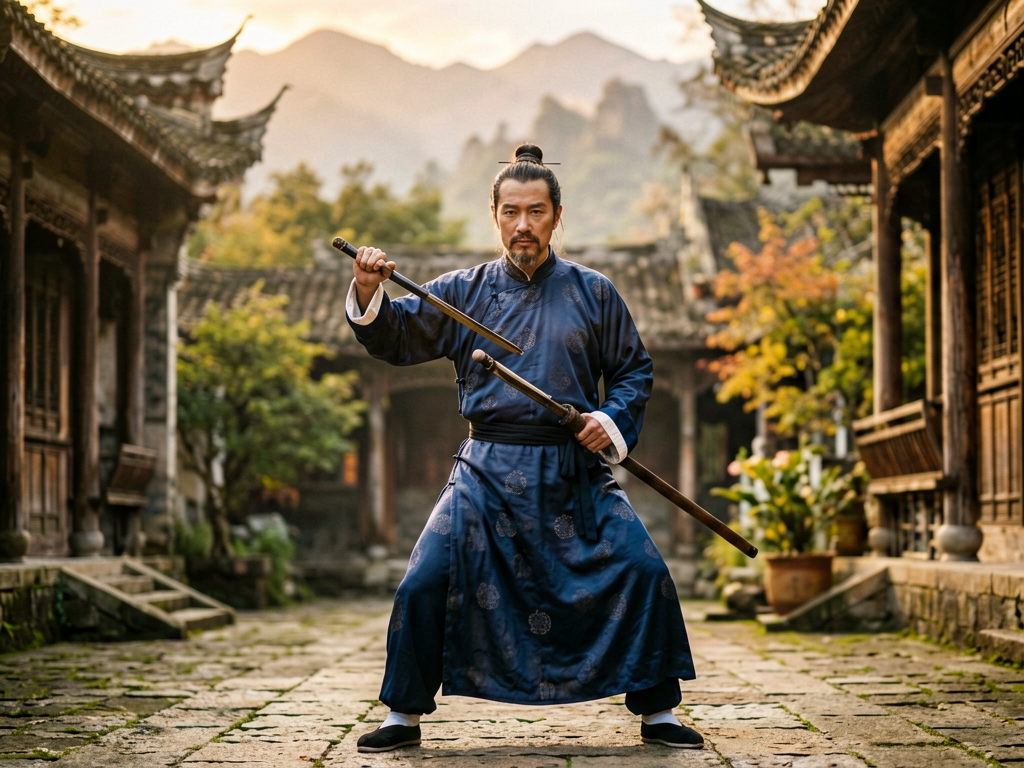
I’ll be honest, I used to think Ip Man was just another movie character. You know the type. The quiet guy in the white shirt who defeats a dozen attackers with a few swift punches. It sounded like fantasy. It sounded like Hollywood fluff. I rolled my eyes when my friends in Shanghai kept talking about his legend.
But then I went to Foshan. I spent a week there, just walking the streets and visiting the old training halls. That’s when I realized the myth was real. And it was bigger than any movie could ever show. The man known as Ip Man changed martial arts forever, not by writing a book, but by stepping out of his comfort zone.
Most kung fu masters in the early 20th century were gatekeepers. They guarded their secrets like bank vaults. They taught their own kin, their own village, maybe a select few disciples. Ip Man wasn’t like that. He had a different vision. He wanted his art to survive, even if it meant sharing it with strangers.
This shift is huge. It’s the reason you can find a Wing Chun school in almost every major city in the world today. From New York to London to Tokyo. If it wasn’t for this one man’s decision to open his doors, the art might have faded into obscurity. So, let’s talk about how a quiet teacher from Southern China became a global icon.
The Quiet Teacher in Foshan
Ip Man wasn’t a loud guy. In fact, he was famously reserved. He didn’t post on social media (obviously). He didn’t do media tours. He just taught. His dojo in Foshan was modest. It wasn’t a high-tech gym with mirrors and weights. It was a simple room with a wooden dummy and some mats.
I remember visiting a small training hall in Foshan last year. The master there was in his seventies. He moved slowly, but his power was undeniable. He told me stories about Ip Man’s students. The most famous was Bruce Lee. But Ip Man taught many others too. People like Wong Shun Leung and Leung Ting.
What struck me was their diversity. Ip Man didn’t look for a specific body type. He didn’t care if you were rich or poor. He cared about your dedication. This was revolutionary at the time. Martial arts were often elitist. You needed money to train. You needed connections. Ip Man changed that dynamic.
He taught anyone who showed up. This inclusivity is why his style spread so fast. It wasn’t tied to a single family or a strict lineage that required blood relations. It was open. It was accessible. And that accessibility is key to understanding his legacy.
I asked one of his former students, Mr. Chan, what it was like to train with Ip Man. He smiled and said, “He didn’t yell. He just corrected you. Gently. But firmly.” That’s the essence of Ip Man. He wasn’t about intimidation. He was about precision.
Bringing Wing Chun to the World
Here’s the thing about Wing Chun. It’s not flashy. It doesn’t look cool in a movie when you’re just standing still. It’s direct. It’s efficient. It’s about close-range combat. But in the 1950s and 60s, that wasn’t enough for global fame. You needed a bridge. You needed someone to translate the art for the West.
That bridge was Ip Man’s students. Specifically, Bruce Lee. But Bruce Lee didn’t just copy Ip Man. He evolved the art. He created Jeet Kune Do. But he did it because of what he learned from Ip Man. Ip Man taught him the basics. The structure. The economy of motion. Bruce Lee took those basics and added his own flair.
I’ve studied a bit of Jeet Kune Do myself. It’s fast. It’s aggressive. But when you watch the old footage of Bruce Lee training with Ip Man, you see the foundation. You see the centerline theory. You see the sticky hands drills. It’s all there. Ip Man provided the roots. Bruce Lee was the bloom.
But Bruce wasn’t the only one. Ip Man sent other students abroad. He encouraged them to teach. This was a bold move. He knew that if Wing Chun stayed in China, it might die during the Cultural Revolution. The political climate was tough. Traditional arts were under attack. He saw the writing on the wall.
So, he pushed his students to go. To Hong Kong, to the US, to Europe. He wanted his art to be global. This foresight saved Wing Chun. It allowed it to adapt. It allowed it to thrive in different cultures. It became less about Chinese tradition and more about effective fighting.
I think many people underestimate Ip Man’s role here. They think Bruce Lee did it all. But without Ip Man’s permission and encouragement, Bruce might have stayed in China. Or he might have stuck to traditional forms. Ip Man gave him the freedom to innovate.
The Myth vs. The Man
Let’s talk about the movies. The Donnie Yen films are great. Really great. But they exaggerate. Ip Man wasn’t a superhero. He was a human being. He had flaws. He had bad days. He had moments of doubt.
I met an old man in Guangzhou who claimed to have known Ip Man in the 1950s. He said Ip Man was shy. He said Ip Man loved tea and good food. He said Ip Man hated fighting unless he had to. This contradicts the movie image of the angry, vengeful hero.
The real Ip Man was humble. He didn’t seek fame. He sought understanding. He wanted to perfect his art. He wanted to help his students grow. This humility is what makes him respected. Not his fighting skills alone, but his character.
There’s a story about Ip Man refusing to fight a Japanese general during the war. Some versions say he did fight. But the most credible accounts suggest he avoided unnecessary conflict. He believed in peace. He believed in preservation. This is why he taught so many people. He wanted the art to survive, not for glory, but for survival.
I find this aspect of his life fascinating. In a world that glorifies violence, Ip Man represents restraint. He represents the idea that martial arts are about self-improvement, not just aggression. This philosophy is what resonates with people today.
When I train, I think about this. It’s not about beating up strangers. It’s about controlling yourself. It’s about discipline. Ip Man embodied this. He was a master of himself first. Then, a master of others.
Why He Still Matters Today
So, why does Ip Man matter now? It’s been decades since he passed. Why do we still talk about him? It’s because he changed the paradigm. He moved martial arts from a secret tradition to a public discipline. He made it global.
Today, you can find Wing Chun classes in places you’d never expect. Small towns in France. Suburbs in Brazil. Gyms in Canada. It’s everywhere. And it’s because of Ip Man’s early efforts to share his knowledge. He broke down the barriers.
Also, his influence extends beyond Wing Chun. Many modern martial arts systems draw from his teachings. Even boxing and MMA coaches study his footwork. His concepts of economy of motion are timeless. They apply to any sport. Any fight.
I’ve seen this in my own training. I’ve worked with coaches who blend Wing Chun with Muay Thai. They use Ip Man’s principles to improve their clinch game. It works. It’s effective. It’s modern. And it traces back to that small room in Foshan.
This adaptability is key. Ip Man’s art isn’t rigid. It’s fluid. It allows for change. This is why it survived. It didn’t fossilize. It evolved. And that’s a testament to Ip Man’s teaching style. He didn’t just teach moves. He taught principles.
Principles can be applied anywhere. Moves cannot. This is the difference between a student who understands and one who just copies. Ip Man taught understanding. He taught intuition. He taught feeling.
A Personal Reflection
I’ll be honest, I was skeptical at first. I thought the hype was overblown. I thought Ip Man was just a marketing tool for movies. But after spending time in his hometown and talking to his students, I’m convinced. He was the real deal.
He wasn’t just a fighter. He was a teacher. A philosopher. A pioneer. He changed the landscape of martial arts. He made it accessible. He made it global. He made it relevant.
Next time you see a martial arts movie, remember Ip Man. Remember the man behind the myth. Remember the quiet teacher in Foshan who decided to share his gifts with the world. That decision changed everything.
It’s a lesson for all of us. Sharing our skills, our knowledge, our art can have a huge impact. It can outlast us. It can change the world. Ip Man did that. And he did it with a smile and a wooden dummy.
That’s legacy. That’s impact. That’s why Ip Man changed martial arts forever. And honestly, it’s pretty cool.