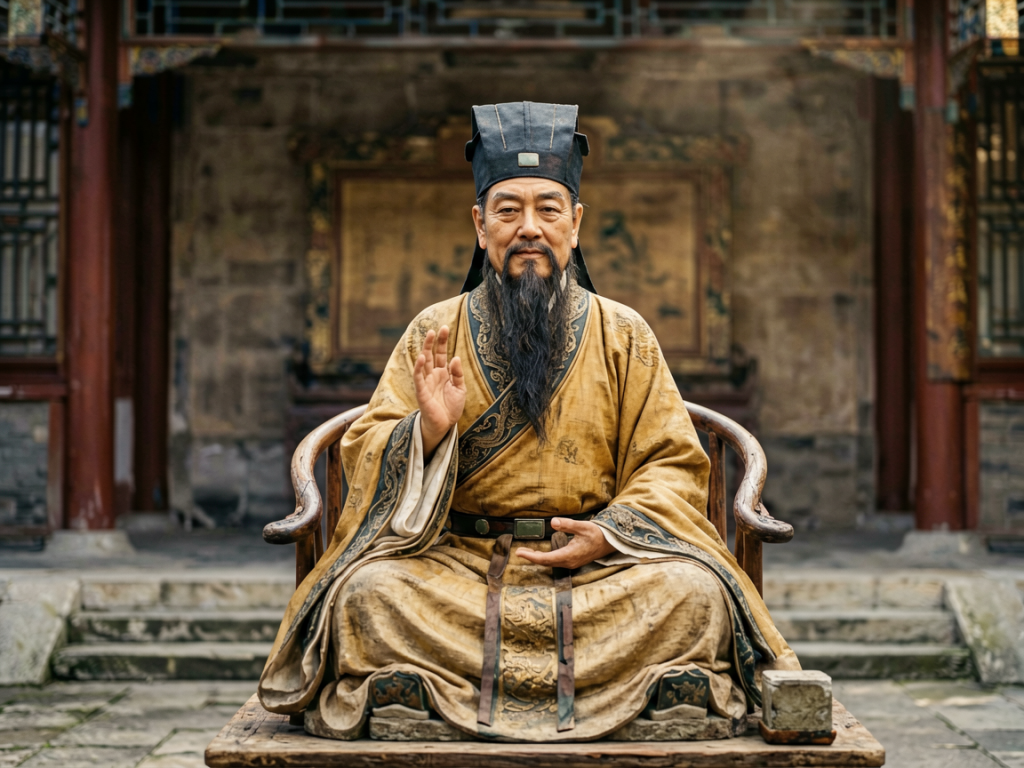
Look, I’m going to be honest with you. When I first moved to Beijing, I thought Confucius was just a guy you bowed to in history textbooks. He was a dusty old man with a beard, floating somewhere in the clouds of ancient philosophy. I didn’t see how he fit into my life of late-night hotpot dinners, chaotic subway commutes, and the constant pressure to succeed.
But after eight years of living here, I’ve realized something surprising. Confucius is everywhere. He’s in the way my Chinese friends argue about who pays the bill. He’s in the respect my boss demands during morning meetings. He’s even in the way I try to be a better neighbor to the lady in 4B.
You don’t need a PhD in philosophy to get it. You just need to understand that Confucius wasn’t trying to tell you how to worship gods. He was trying to figure out how to be a decent human being in a messy world. And honestly? We could use a little more of that right now.
It’s All About the Relationship, Not the Individual
Here’s the thing about Western culture. We’re obsessed with the individual. “Follow your dreams.” “Be yourself.” “Stand out.” It’s empowering, sure. But it’s also exhausting. You’re always performing, always separate from everyone else.
Confucianism flips that script. It says you don’t exist in a vacuum. You are a node in a web of relationships. You’re a son, a daughter, a friend, an employee, a neighbor. Your identity is defined by how you show up for those people.
I saw this play out vividly when I was invited to a family dinner in Shanghai. The table was round, obviously. There were dishes everywhere. But nobody started eating until the eldest grandfather picked up his chopsticks. It wasn’t about hunger. It was about respect for the hierarchy and the bonds holding that family together.
To the Confucian mind, if your relationships are harmonious, your life is good. If your relationships are chaotic, your life is a mess. That’s why family reunions during Chinese New Year are such a big deal. It’s not just about food. It’s about resetting those connections. It’s about saying, “I see you. I value you. We are in this together.”
Sound interesting? It might feel restrictive at first. But there’s a comfort in knowing exactly where you stand. You know your duties. You know what’s expected. And in return, you get support. You’re never truly alone.
Rituals Are Just Habits With Heart
People often hear the word “ritual” and think of stiff ceremonies or boring religious rites. I get it. It sounds stuffy.
But in Confucius’ world, rituals–or *Li*–are basically social glue. They’re the polite ways we interact so we don’t step on each other’s toes. It’s the handshake. It’s the gift you bring to a host. It’s the way you hold your chopsticks.
Think about the last time you went to a wedding in the West. There are rules. You dress up. You toast the couple. You don’t show up drunk and start fighting. That’s *Li*. It’s not about the rule itself. It’s about showing you care enough to follow the script so everyone else feels comfortable.
I remember trying to visit a friend’s parents for the first time in Hangzhou. I brought a box of tea. Not expensive, but decent. My friend laughed and said, “Just don’t show up empty-handed.” That small act of ritual–bringing a gift–communicated respect. It said, “I value your time and your hospitality.”
Without these rituals, life gets raw and awkward. Imagine if we just walked into people’s homes, yelled “Hey,” and sat on the couch. It would work for some friendships. But for most of society? It would be chaos. Rituals give us a shared language. They make social interactions smoother. They reduce friction.
So, next time you’re tempted to skip the “please” and “thank you,” think of Confucius. He’d probably sigh and shake his head. Those little words are the grease in the machine of society. Don’t break the machine.
The Power of Leading by Example
Confucius hated hypocrites. He believed that if you want society to be good, you start with yourself. You don’t issue commands. You set an example.
This concept is called *De*, which is often translated as “virtue” or “power.” But it’s more like moral authority. It’s the idea that people follow those who walk the talk.
I learned this the hard way when I tried to organize a volunteer cleanup in my neighborhood. I sent out emails. I made flyers. I yelled at people to pick up trash. Nobody showed up. I was frustrated. I thought everyone was lazy.
Then my neighbor, Lao Li, stepped in. He didn’t send emails. He didn’t give speeches. He just put on a vest, picked up a bag, and started picking up litter on the street in front of his building. Within an hour, three other people joined him. Then five. Then ten. They weren’t doing it because I told them to. They were doing it because Lao Li was doing it.
That’s Confucian leadership. It’s humble. It’s quiet. But it’s effective. You can’t force people to be good. You have to be good enough that they want to follow your lead.
We see this in modern Chinese workplaces, too. The best bosses aren’t the ones who bark orders. They’re the ones who stay late when the team is struggling. They’re the ones who take responsibility when things go wrong. That builds loyalty. That builds a team.
Try it yourself. Instead of telling your kids to put away their phones, put your own phone away. Instead of telling your colleagues to be on time, show up five minutes early. Watch what happens. The ripple effect is real.
Finding Your Place in the Middle
One of the most famous Confucian ideas is the “Doctrine of the Mean.” It sounds boring, I know. But it’s actually about balance. It’s about not going to extremes.
In a world of hot takes and polarization, this is gold. Confucius taught that virtue lies in the middle. Too much anger is bad. Too little anger is bad. The right amount is righteous indignation. Too much courage is recklessness. Too little is cowardice. The middle is bravery.
I struggled with this when I first started working in China. The pace is fast. The expectations are high. I wanted to hustle 24/7. I wanted to be the best. I was burning out fast.
A mentor of mine, a quiet accountant named Mr. Chen, pulled me aside. He didn’t yell. He didn’t give a pep talk. He just poured me tea and said, “The boat that goes too fast capsizes. The boat that doesn’t move goes nowhere. Find your rhythm.”
It wasn’t about working less. It was about working sustainably. It was about finding joy in the process, not just the result. It was about being firm in your principles but flexible in your methods.
This balance applies to everything. Food, travel, relationships. You don’t need the most expensive hotel to have a good trip. You don’t need the perfect partner to be happy. You need to find the balance that works for you. Stop chasing the extreme. Start appreciating the steady.
Ren: The Core of Being Human
If you take nothing else from this, remember *Ren*. It’s often translated as “benevolence” or “humaneness.” But it’s deeper than that. It’s the quality that makes us human. It’s empathy in action.
Confucius said *Ren* is loving others. It’s looking at someone else and seeing yourself. It’s the Golden Rule, but with more heart. Do unto others as you would have them do unto you. But it’s not just about avoiding harm. It’s about actively caring.
I saw *Ren* in action during a heatwave last summer. The power went out in my apartment complex. No AC. No fans. Just heat. It was miserable. I was angry. I was ready to complain to the property manager.
But then I saw my neighbor, a young student, walking around with a big box of water bottles. He wasn’t selling them. He was giving them away for free. He checked on the elderly couple downstairs. He made sure everyone was okay. He didn’t have much, but he shared what he had.
That was *Ren*. It wasn’t a grand gesture. It was small. It was practical. It was kind. And it changed the mood of the entire building. We stopped complaining. We started talking. We helped each other.
We need more of that today. We’re so busy looking at our screens, so busy worrying about our own problems, that we forget to look up. We forget to see the person next to us. Confucius is reminding us that our humanity is tied to our kindness to others.
You don’t need to save the world. You just need to be kind to the person in front of you. That’s enough. That’s everything.
Why This Matters Now
So, why does an ancient philosopher from 2,500 years ago matter to you, right here, right now? Because the problems haven’t changed. People are still selfish. Society is still chaotic. Families are still stressed.
Confucius offers a toolkit for navigating that chaos. It’s not a religious fix. It’s a practical one. It’s about building better relationships. It’s about showing up with integrity. It’s about balancing your life.
I’m no expert. I’m just a guy who’s lived in China for a while and learned a lot from watching how people live. But I’ve seen how these principles work. They make life easier. They make connections deeper. They make you a better friend, partner, and colleague.
Don’t overthink it. You don’t need to read the Analects cover to cover. Just try one thing. Next time you’re frustrated with someone, ask yourself: “How can I show more respect?” Next time you’re angry, ask: “Is there a balanced response?” Next time you see someone struggling, ask: “How can I help?”
It’s simple. It’s not easy. But it’s worth it. Confucius isn’t just a history lesson. He’s a guide for living. And honestly? We’re all better off when we try to be a little more like him.
Give it a shot. You might just find that the secret to a good life was sitting in a museum statue all along. Or maybe it’s just in the way you treat your neighbor. Either way, it’s worth exploring.