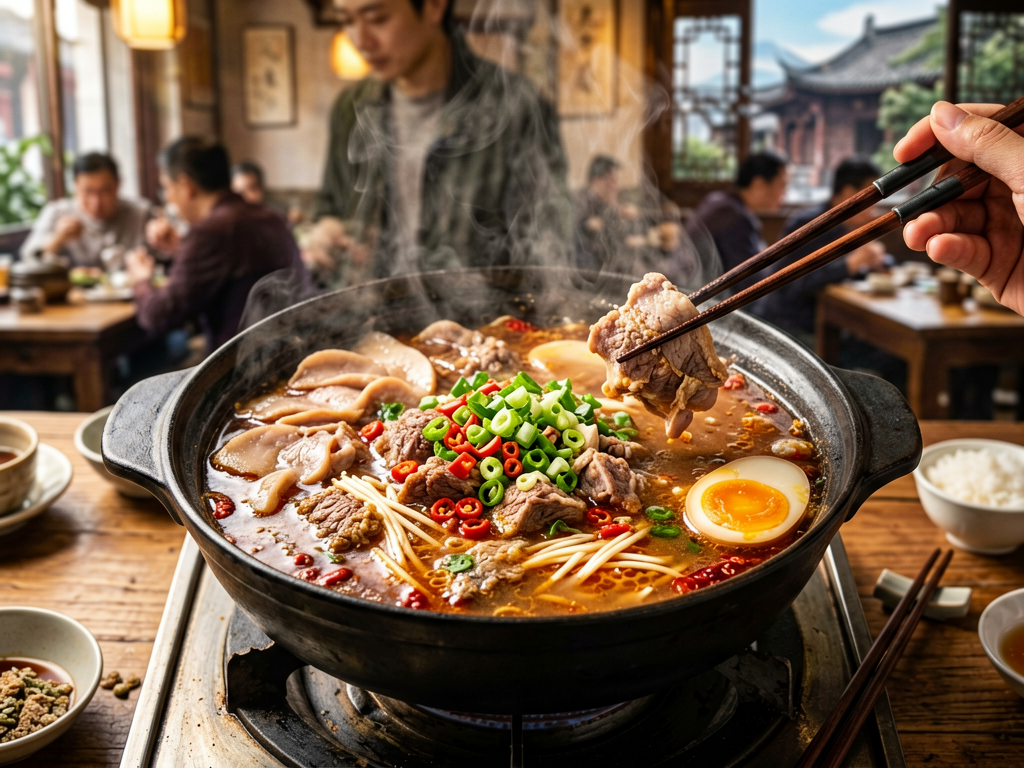
The Great Divide: Split-Pot Logic
Here’s the thing about Chinese hot pot. It isn’t just a meal. It’s a social experiment. You sit around a boiling pot of liquid, throwing raw ingredients into it, and waiting. The anticipation is almost as good as the eating. But before you even pick up your chopsticks, you have to make the first critical choice. What’s the soup going to taste like?
I remember my first time in Chongqing. I sat down with a group of locals who laughed when I ordered a single broth. They handed me a metal divider and showed me how to create a “yin-yang” pot. One side was clear, mild, and comforting. The other side was a fiery red nightmare of chili oil and peppercorns. It was overwhelming. It was perfect.
This split-pot style is the default in most decent restaurants across China. It’s the smartest way to handle the diversity of flavors. You can eat the spicy side if you’re brave. You can retreat to the mild side when your tongue feels like it’s melting. It’s easier than you’d expect to balance the two. You just need to know what you’re getting into.
Don’t be afraid to ask for one side of each. Trust me, most servers understand that not everyone can handle the heat. In fact, some places will let you customize the intensity. Just don’t be shy. The waiter knows you’re a beginner. They’ll probably give you a pity smile, but they’ll help you out.
The Sichuan Standard: Mala and Fire
Let’s talk about the elephant in the room. Or rather, the dragon in the pot. Sichuan hot pot is famous for a reason. It’s not just spicy. It’s *mala*. That’s a combination of “ma” (numbing) and “la” (spicy). The numbing comes from Sichuan peppercorns. The heat comes from dried chilies and beef tallow.
I’ll be honest. I was skeptical at first. I thought it was just pain. I was wrong. The first time I tasted it, my lips went numb. My mouth felt like it was vibrating. But then the flavor hit you. It’s rich, beefy, and deeply aromatic. The tallow coats the ingredients in a way that vegetable oil never can.
You need to know how to order this. If you ask for “spicy,” you might get something mild by Western standards. In Sichuan, mild is still fiery. I’ve seen tourists turn bright red and drink gallons of soy milk. It’s embarrassing, but it happens. Always specify how much heat you can take. “Wei la” is mild. “Zhong la” is medium. “Te la” is extreme.
The broth here is usually red and oily. You’ll see whole chilies floating on top. Don’t be fooled. The oil traps the heat. When you pull out a piece of beef, let it cool for a second. Dip it in the oil, then maybe a little vinegar. The vinegar cuts through the grease. It’s a clever hack that locals use all the time.
What foods work best here? Beef slices. Tripe. Duck intestines. These ingredients hold up to the strong flavor. Vegetables can get lost in the spice. Save them for later, or eat them with the mild side. I usually wait until I’ve eaten half the meat before I throw in the bok choy. By then, I’m sweating, but I’m happy.
The Northern Comfort: Clear Broths and Sesame
Now, let’s travel north to Beijing. The vibe changes completely. Hot pot here is less about burning your tongue and more about showcasing the quality of the meat. Think Beijing Duck, but boiled. The broth is usually clear. It might have ginger, scallions, or goji berries floating in it. It’s subtle. It’s clean.
This style is often called “Yangrou Chaoshuan.” It translates roughly to “boiled mutton.” The meat is the star. It’s sliced paper-thin. When you drop it in the boiling water, it cooks in seconds. You pull it out, and it’s tender and sweet. No marinade needed. The meat speaks for itself.
The dipping sauce is the other half of this equation. Forget the chili oil. Here, you mix sesame paste (tahini), fermented tofu, chive flower sauce, and a splash of vinegar. It’s creamy, salty, and tangy. The sesame paste coats the meat in a way that enhances the natural flavor. It’s not complicated, but it’s an acquired taste for some.
I spent a rainy afternoon in a small shop near the Drum Tower. The air was cold. The pot was steaming. I ate until I was stuffed. The clear broth warmed me up from the inside out. It’s a different kind of comfort than the fiery Sichuan style. It’s more gentle. It’s more reflective.
If you’re new to this, start with the clear broth. It’s forgiving. You can’t mess it up. Just make sure the water is boiling before you add the meat. If you put it in lukewarm water, it’ll get tough. Patience is key. Wait for the bubbles. Watch the meat turn from red to gray. That’s your cue.
The Coastal Clean: Cantonese and Seafood
If you head south to Guangdong, the rules change again. Cantonese hot pot is all about freshness. The broth is usually light. It might be a simple chicken stock, or a seafood broth with dried scallops. Sometimes, they use a “yeast extract” base, which adds a savory umami kick without being heavy.
I love this style because it’s healthy. It’s not about masking flavors with spice or heavy fats. It’s about letting the ingredients shine. The vegetables are crisp. The seafood is sweet. The meats are tender. You can taste the difference in quality immediately.
The dipping sauces are also distinct. You’ll see shrimp paste, soy sauce with ginger strips, and sometimes a bit of chili oil on the side. But the focus is on the food. I once had a pot with live mud crabs. They were still moving when they went into the water. The sweetness of the crab meat was incredible. It was the best crab I’ve ever had.
This style is great for families. Kids love it. Elderly people love it. It’s not intimidating. You can simmer the pot for hours. The broth gets better as it goes, absorbing the flavors of the seafood and vegetables. It’s a slow meal. A leisurely meal. Take your time.
Don’t rush the cooking. In Cantonese hot pot, timing is everything. Shrimp takes two minutes. Fish slices take thirty seconds. Vegetables take three. If you overcook anything, you ruin the texture. And in this style, texture is half the battle. You want that snap, that chew, that tenderness.
The Wildcards: Tomato, Mushroom, and Herbal
But wait, there’s more. China is huge. You can find almost any broth you can imagine. Tomato broth is a huge favorite among younger crowds and those who can’t handle spice. It’s sweet, tangy, and red. It’s like drinking a thick, savory soup. I often drink the broth before I start cooking. It’s that good.
Mushroom broth is another classic. It’s earthy and rich. It pairs well with beef and pork. The fungi absorb the flavors of the meat. It’s a symbiotic relationship. You’re not just eating the meat. You’re eating the essence of the pot. It’s deeply satisfying.
Then there are the herbal broths. These are less common in tourist areas, but if you look hard enough, you’ll find them. They contain ginseng, astragalus, and other traditional Chinese medicines. They’re supposed to be good for your health. I’m no expert, but they taste like warm tea. Not bad, but not exactly thrilling.
These wildcards are great for variety. If you’re eating with a group, order one of these. It breaks up the monotony. It gives your palate a rest. It’s a nice change of pace. And sometimes, it’s the highlight of the meal. I’ve had tomato broth so good I asked for a second cup. It sounds weird. It’s not.
Practical Tips for the Broth Newbie
So, you’re ready to order. Here’s how to survive. First, don’t crowd the pot. If you throw everything in at once, the temperature drops. The meat boils in its own juices instead of cooking in the broth. It gets tough. Add ingredients in batches. Meat first. Then vegetables. Then carbs.
Second, keep your dipping sauce simple. Start with a base. Sesame paste for the north. Soy sauce and garlic for the south. Chili oil for the spicy side. Add what you like. Don’t overcomplicate it. You can always add more. You can’t take it away.
Third, drink something to cool down. Soy milk is the traditional choice. It’s thick and soothing. Soda works too. Beer is popular, but it doesn’t help with the heat. If you’re eating Sichuan style, stick to soy milk or rice wine. It’s a tried-and-true method.
Finally, enjoy the process. Hot pot is about conversation. It’s about laughter. It’s about sharing. Don’t worry about etiquette. You won’t offend anyone. They’re too busy eating. Just relax. Pick up your chopsticks. Dip the meat. Wait for it to cool. Bite into it. It’s magic.
I still get excited when I see a boiling pot. It doesn’t matter if it’s spicy, mild, or tomato. The energy is the same. It’s communal. It’s warm. It’s Chinese. And once you try it, you’ll understand why it’s so much more than just dinner. It’s an experience. A delicious, fiery, numbing, comforting experience. Go find a pot. Sit down. Let the steam rise. You won’t regret it.