I still remember the first time I tried a “tiger claw” strike on camera. I was in a dusty community center in Chengdu, surrounded by kids who could probably snap my wrist without breaking a sweat. I was trying to replicate a move I’d seen on a popular martial arts channel. It looked cool. It looked powerful. It also resulted in me looking like a confused chicken flapping its wings while a seven-year-old laughed at me.
That moment stung. But it taught me something crucial about online advice. The internet is flooded with people showing off. They’re not teachers. They’re performers. And when you try to learn from performers instead of practitioners, you get hurt. Or worse, you get stuck in bad habits that take years to unlearn.
I’ve lived in China for eight years. I’ve trained in Tai Chi, Bagua, and Shaolin Kung Fu. I’ve watched thousands of hours of YouTube tutorials. And I’ve learned to filter out the noise. Here are the five most overrated pieces of advice you’ll find online, and why you should probably ignore them.
The Myth of the Perfect Stance
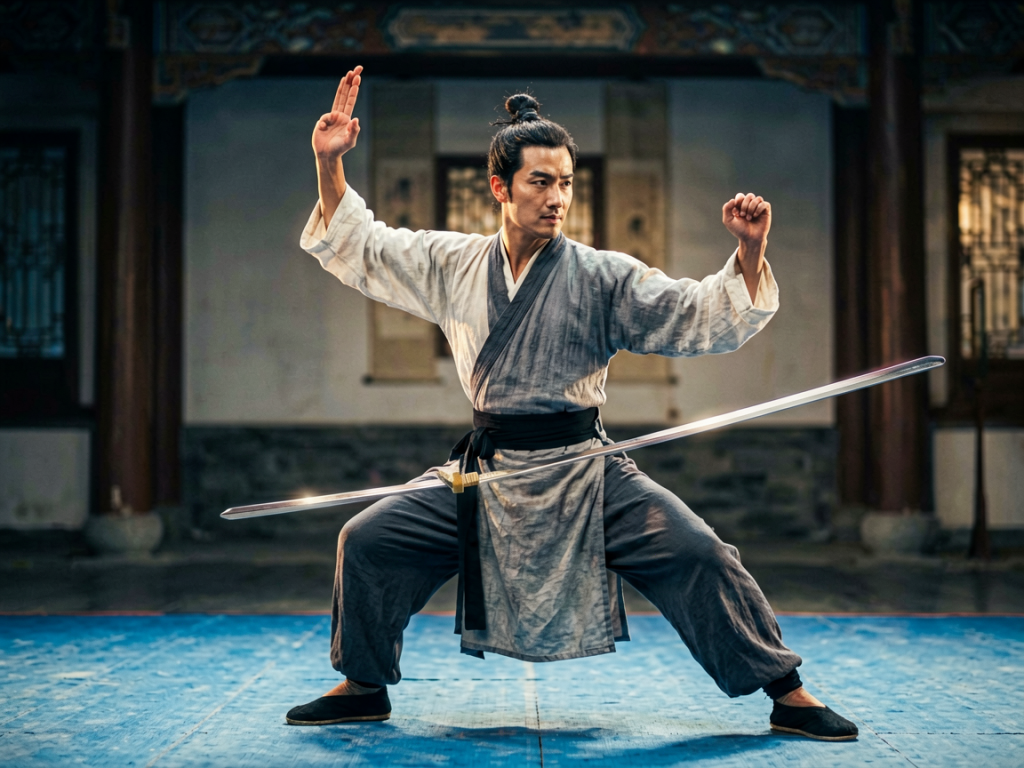
Look, I love a good horse stance. It builds leg strength like nothing else. But here’s the thing: YouTube gurus will tell you to hold a horse stance for ten minutes straight, with your knees bent at exactly 90 degrees and your back perfectly straight. They’ll show you photos of old masters holding this pose for hours.
That’s not practical for modern life, and it’s not how most functional martial arts work. I remember asking a master in Shaolin Temple about this. He laughed. He said, “The stance is not the goal. The movement is the goal.” He showed me how a true stance shifts weight. It breathes. It isn’t a statue.
When you hold a rigid stance, you lock your joints. You invite injury. You also lose balance. The advice to “hold still and be perfect” is dangerous. Real training is about finding stability while moving. Try this instead: move slowly. Feel where your weight shifts. If your knees shake, stop. Don’t push through pain. That’s not discipline; that’s just stupidity.
Does this sound too simple? It is. But simplicity is where the power lies. Stop trying to look like a statue. Start trying to feel grounded.
Chasing the “One-Inch Punch”
Everyone wants to hit like Ip Man. I get it. The idea that you can generate massive power from a tiny distance is romantic. It appeals to our desire for efficiency. But the YouTube tutorials on this? Most of them are fake.
I watched a guy in a warehouse explain the physics of the one-inch punch. He talked about kinetic chains and bone alignment. Then he hit a heavy bag. It made a dull thud. Not much happened. I tried it. My wrist hurt for two days. Nothing moved.
The secret isn’t the distance. It’s the relaxation. I learned this from an old sifu in Guangzhou. He didn’t give me a lecture on physics. He just tapped my shoulder. Softly. But I stumbled back. How? He didn’t push. He disrupted my balance.
YouTube tells you to tense up and snap. Real masters tell you to be loose. Tension is slow. Relaxation is fast. If you’re tightening your muscles before you strike, you’re already late. The advice to focus on “power generation” from a static position is misleading. Focus on relaxation and timing. The power will come naturally. It’s like slapping a mosquito. You don’t wind up. You just react.
Trust me, your neighbors will thank you if you stop trying to break walls in your living room.
Ignoring the Basics for “Cool Moves”
This is the biggest trap. I see it all the time. People watch a video of a backflip kick or a spinning hook kick. They think, “I want to do that.” So they start there. They skip the warm-up. They skip the basic punches. They skip the footwork.
It’s like trying to play a violin concerto before you can hold the bow properly. I saw this happen to a friend of mine in Beijing. He spent three months learning flashy kicks. Then he tried to spar. He tripped over his own feet. He got knocked down instantly.
The overrated advice here is “start with the advanced stuff to stay motivated.” It doesn’t work. Motivation fades. Pain remains. The basics are boring, yes. Punching the air is not exciting. But it teaches you structure. It teaches you how to turn your hips. It teaches you how to protect your face.
I remember spending a whole summer just practicing the front punch. Just one punch. My teacher made me do it ten thousand times. I hated it. But when I finally stopped thinking about my form and just let my body do it, it felt effortless. That’s when I understood. Mastery is boring. If you’re bored, you’re probably on the right track.
Stop chasing the highlights reel. Fall in love with the warm-up. It’s where the real magic happens.
The “No Pain, No Gain” Mentalities
There’s a stereotype that martial artists are tough. We take hits. We bruise. We bleed. And YouTube is full of guys showing off scars and telling you that pain is weakness leaving the body. They’ll tell you to ignore the ache in your joints. They’ll tell you to keep going when your muscles scream.
That’s terrible advice. I’m no expert, but I know my body. I learned this the hard way in a Wushu class. I ignored a twinge in my ankle. The instructor praised my “willpower.” Two weeks later, I couldn’t walk. I had to sit out for months.
Real training is about longevity. It’s about staying in the game for decades, not just days. The advice to “push through pain” leads to chronic injuries. It leads to quitting altogether. I’ve met martial artists in their sixties who are still training. They’re not tough. They’re smart. They listen to their bodies.
If something hurts, stop. Rest. Stretch. Eat well. Recovery is part of the training. You don’t get stronger when you’re training. You get stronger when you’re resting. The internet doesn’t talk about this because rest isn’t viral. But it’s essential.
Be kind to your body. It’s the only one you’ve got. Ignoring pain doesn’t make you a warrior. It makes you a patient.
The Belief That Style Matters More Than Function
This one is huge in China. People argue about styles all the time. Is Shaolin better than Wing Chun? Is Tai Chi better for health or fighting? YouTube is a battlefield of style wars. Creators will tell you their style is the “true” way and everything else is nonsense.
I’ve been to schools that teach five different styles. The students all move differently. But they all have one thing in common: they’re fit, they’re disciplined, and they can handle themselves. The style is just a vehicle. The function is what matters.
I remember arguing with a guy in Shanghai about the merits of external vs. internal styles. He was passionate. He quoted ancient texts. I just asked him if he could spar. He couldn’t. He had all the theory, but no experience.
The advice to “stick to one style forever” is overrated. You’ll learn more by trying different things. Try boxing. Try judo. Try traditional Kung Fu. See what resonates with you. Your body is unique. What works for one person might not work for you.
Don’t get caught up in the politics of martial arts. Focus on what works for you. If you like kicking, kick. If you like grappling, grapple. The best style is the one you enjoy enough to practice consistently. Boredom kills progress faster than any bad technique.
So, what’s the takeaway? Ignore the gurus who promise quick fixes. Ignore the ones who show off instead of teach. Ignore the ones who make you feel small. Find a teacher who challenges you, not just entertains you. And remember: the best martial art is the one you actually practice.
I’m still learning. I still make mistakes. I still look like a confused chicken sometimes. But I’m moving forward. That’s enough for me. What about you?