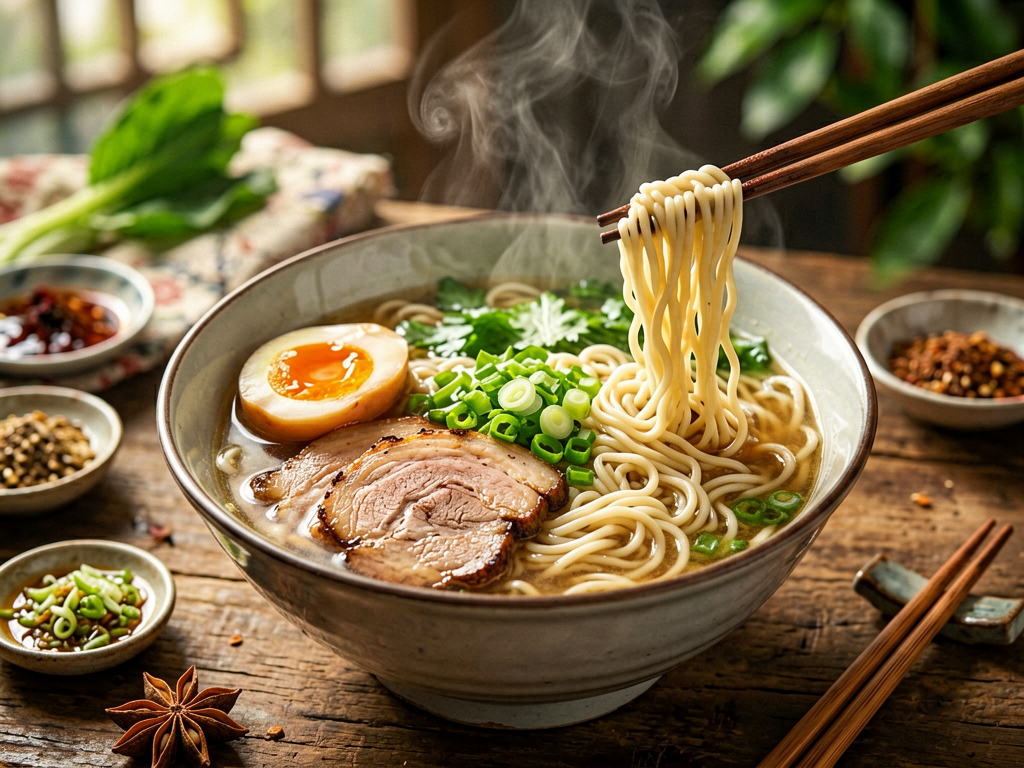
Here’s the thing about China. You think you know noodles. You’ve had them in New York, London, or maybe even in your local Chinatown back home. You think you’ve got a handle on the concept. Then you step into a hole-in-the-wall shop in Xi’an or a family-run stall in Jinan. And everything changes.
I lived in Shanghai for two years before I finally headed north. I thought I was a noodle connoisseur. I was wrong. I was barely a tourist in the world of wheat. The difference isn’t just regional. It’s geological, historical, and frankly, emotional. Northern Chinese noodles taste nothing like southern ones. Not even close. It’s like comparing a sturdy oak tree to a delicate bamboo shoot.
I’ll never forget the first time I ordered “Zhongmian” (medium wheat) in Beijing. I expected a bowl of soup with soft, slippery strands. What I got was a mountain of thick, hand-pulled ribbons swimming in a rich, spicy beef broth. It was hearty. It was aggressive. It was the best thing I’d ever eaten. I looked at my chopsticks and realized I had a lot to learn.
If you’re used to the delicate, rice-based dishes of the south, the north can feel like a cultural shock to your stomach. But trust me, once you get past the shock, you’ll never go back. Let’s break down why this divide exists, and why it matters so much to the soul of Chinese cuisine.
Wheat vs. Rice: The Great Divide
To understand the noodles, you have to understand the soil. China is split by the Qinling-Huaihe line. North of that line, the climate is dry and cold. South of it, it’s humid and warm. This isn’t just trivia. It dictates what farmers grow.
In the north, wheat is king. It thrives in the dry, cold winters. So, northern people eat wheat. They eat it in buns, in pancakes, and most importantly, in noodles. The flour is coarser. It has more gluten. It has more protein. When you mix it with water, it becomes elastic. It becomes strong.
In the south, rice is the staple. The humidity makes wheat hard to store without it going moldy. So, southerners eat rice. When they do eat noodles, they often use rice flour or a mix of rice and wheat. The result is softer. More translucent. Less chewy.
I remember asking a chef in Chengdu why his noodles felt so slippery. He laughed at me. He said, “We eat rice. Noodles are just rice that learned to swim.” It’s a funny way to put it, but it’s true. The texture difference is massive. Northern noodles bite back. Southern noodles glide down your throat.
This isn’t about one being better than the other. It’s about adaptation. Northern people need calories. They need fuel to stay warm in the freezing winters. A thick, doughy noodle provides that. Southern people live in heat. They prefer lighter, easier-to-digest foods. A delicate rice noodle fits that bill perfectly.
The Art of the Pull: Hand-Pulled Noodles
Let’s talk about technique. In the north, especially in places like Lanzhou, making noodles is a performance. It’s a sport. You walk into a shop, and you see masters slapping dough against the counter. *Slap. Slap. Slap.* The rhythm is hypnotic.
I watched a master in Xi’an pull noodles for hours. He didn’t use a machine. He used his forearms. He would take a ball of dough, stretch it, fold it, twist it, and stretch it again. With each fold, the strands doubled in number. Soon, what was one ball of dough became hundreds of thin, uniform strands.
This is called *lamian*, or hand-pulled noodles. It’s not just about looking cool. The pulling aligns the gluten strands. It creates a texture that is incredibly chewy. Some call it “al dente,” but that’s an Italian term. In China, we call it *jin dao* (劲道). It means it has a strong, resilient bite.
I tried making these at home once. I failed miserably. My dough snapped. It didn’t stretch. It was a sticky mess. I threw it in the trash and ordered delivery. The delivery guy brought me a box of beef noodles in twenty minutes. They were perfect. I paid $2.50. I realized then that some skills can’t be rushed. They require muscle memory and years of practice.
The south doesn’t do this. In Shanghai or Guangzhou, noodles are often machine-cut or hand-cut with a knife. They’re softer. They absorb sauce differently. When you mix them with peanut sauce or soy sauce, they coat it evenly. But they don’t have that resistance. They don’t fight back against your chopsticks.
When I’m in the north, I love that fight. I love that the noodle has a personality. It has a voice. When I bite into it, I feel the effort of the chef. I feel the strength of the wheat. It’s a connection to the land. In the south, the connection is more to the sea, or to the river deltas. It’s fresher. Lighter. But less substantial.
Sauce, Soup, and Soul
Then there’s the broth. Or the lack of it. Northern noodles are often dry. They’re tossed in sauce. Think of *Zhajiangmian* in Beijing. That thick, fermented soybean paste sauce. It’s salty. It’s umami bomb. It’s mixed with crunchy cucumber strips and bean sprouts.
I was skeptical at first. Mixing thick paste with noodles sounded heavy. But when the chef tossed it all together, the sauce clung to every strand. Each bite was a burst of flavor. It was savory. It was rich. It tasted like comfort. Like a hug from your grandmother, if your grandmother was a tough Beijing uncle.
In contrast, southern noodles are often served in soup. Or with a light, clear broth. Think of *Wonton noodles* in Guangzhou. The broth is made from dried shrimp and pork bones. It’s clear. It’s sweet. It’s delicate. You sip it before you eat the noodles. It’s a ritual.
Or consider *Guilin Rice Noodles*. The noodles are rice-based. They’re white and slippery. The broth is spicy and sour, made from chili oil and pickled beans. It’s an explosion of flavor. But the noodles themselves are neutral. They’re a canvas for the soup.
I’ve spent hours arguing with friends about which is better. My northern friends argue for the dry, saucy noodles. They say the sauce is where the soul is. My southern friends argue for the soup. They say the broth is the essence. I’m no expert, but I think they’re both right. And they’re both wrong.
The truth is, the sauce reflects the lifestyle. In the north, life is hard. You need strong flavors to wake you up. You need salt. You need spice. You need fat. In the south, life is faster. You need lightness. You need freshness. You need to eat quickly and move on.
I tried a *Hulatang* (spicy hot soup) in Henan one winter. It was thick. It was filled with beef, tofu skin, and mushrooms. I drank it in one go. I was sweating. I felt warm all over. It was the perfect antidote to the freezing wind. I couldn’t imagine having that in Shanghai in July. I’d melt.
The Noodle as Identity
Here’s what I’ve learned after eight years. Noodles aren’t just food. They’re identity. When a northerner talks about home, they talk about noodles. When a southerner talks about home, they talk about rice or dim sum. The noodle is a symbol of resilience in the north. It’s a symbol of refinement in the south.
I’ve seen this in the way people eat. In the north, you eat with gusto. You slurp. You make noise. You show appreciation. In the south, you eat quietly. You savor. You respect the ingredient. There’s a cultural difference there that goes deeper than taste.
When I’m in Beijing, I feel northern. I eat big bowls of noodles. I drink strong tea. I speak loudly. When I’m in Shanghai, I feel southern. I eat small plates. I sip my tea. I speak softly. I’m a chameleon. But deep down, I know my heart belongs to the wheat.
Don’t get me wrong. I love a good bowl of rice noodle soup. It’s elegant. It’s sophisticated. But when I’m tired, or cold, or sad, I want the north. I want the thick, chewy, satisfying noodle that fills my stomach and warms my soul.
I remember sitting in a small alley in Lanzhou. It was snowing. The wind was howling. I ordered a bowl of *Lanzhou Beef Noodles*. The chef pulled the noodles right in front of me. He dropped them into boiling water. He scooped them out. He added the broth. He topped it with cilantro and chili oil.
I took a bite. The beef was tender. The noodles were springy. The chili oil was fragrant. I looked up at the snow. I smiled. I knew then that I was home. Not because of the place, but because of the food. It tasted like life.
So, the next time you eat Chinese noodles, pay attention. Feel the texture. Taste the sauce. Think about where it came from. Is it a northern noodle, strong and resilient? Or is it a southern noodle, delicate and refined? Either way, you’re tasting history. You’re tasting geography. You’re tasting China.
And honestly? That’s better than any guidebook. That’s the real story. So go out there. Find a noodle shop. Order the biggest bowl they have. Slurp it up. And let it blow your mind.