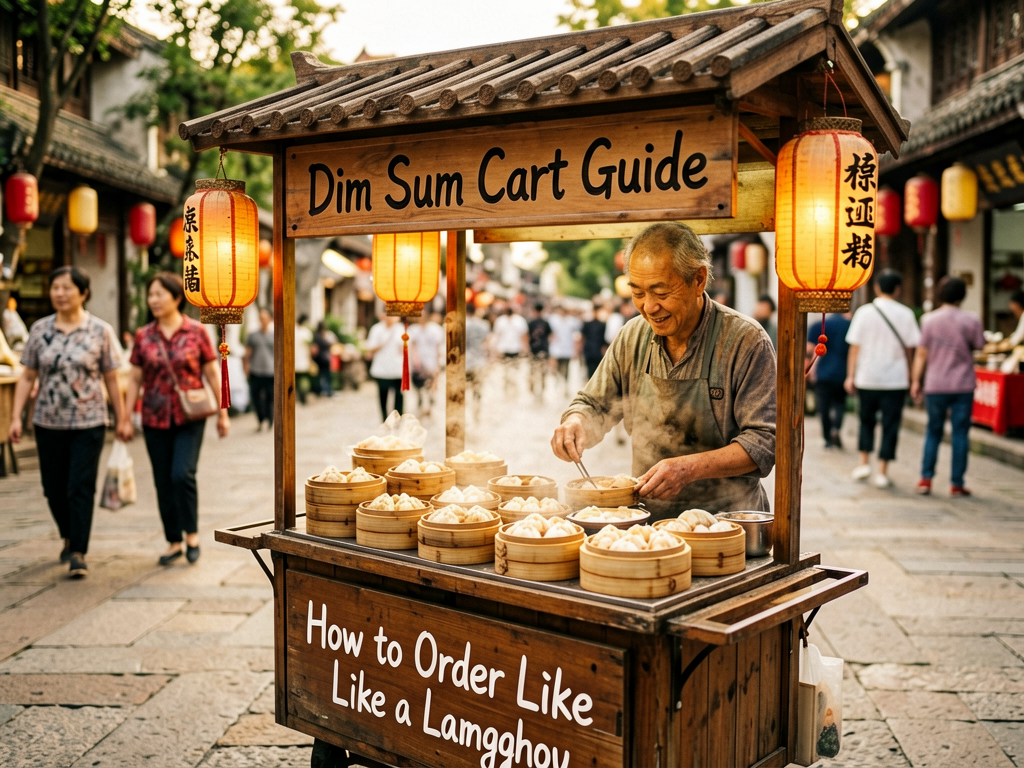
There’s a specific kind of magic that happens in the humid, noisy air of a Guangzhou tea house at 9 a.m. It’s not just the food. It’s the sound. The clatter of porcelain plates, the hiss of steam, and the rhythmic rolling of stainless steel carts across the tiled floor.
I spent eight years living here. I’ve eaten my share of dim sum, but I still get nervous when a cart stops at my table. Not because I’m afraid of making a mistake, but because the choices are endless and the pressure to look like a local is real.
You see the regulars. They move with the grace of dancers. They point, they nod, they pay, they eat. No hesitation. No awkward questions. Meanwhile, I’m standing there with my chopsticks hovering, wondering if that little white square is actually delicious or just steamed dough.
If you want to eat like a local, you need to drop the tourist mindset. You need to understand the rhythm. You need to know which items are worth your money and which are just filler.
Here’s the thing about dim sum in Guangzhou. It’s not just breakfast. It’s a lifestyle. It’s a social ritual that has survived dynasties, wars, and modernization. But for the outsider, it can feel like a foreign language. The signs on the carts are often handwritten. The prices might be hidden. The portion sizes are tiny, but the cost adds up fast.
I remember my first real lesson in this. I was at a busy spot near Xiguan. A cart rolled by with a stack of dark, glossy buns. They looked incredible. I pointed at them with my index finger, just like I would in a Western cafe. The auntie behind the cart looked at me, then at my finger, and shook her head. She pointed to a piece of paper instead. I was being rude. I was being a tourist.
That day, I learned that dim sum has its own etiquette. And if you follow it, the experience changes completely. You stop being a customer and start being a guest.
## The Cart Dance: Reading the Signs
The biggest barrier to entry for most people is the sign. In many modern restaurants, the carts have printed menus. In the traditional spots, especially the ones locals actually go to, the signs are handwritten on small pieces of paper or cardboard. Sometimes they’re faded. Sometimes they’re in Cantonese characters that don’t translate well.
Don’t panic. You don’t need to be fluent in Chinese to survive this. You just need to know what to look for.
First, look for the price. It’s usually printed clearly on the sign or on a small tag attached to the bamboo steamer. If there’s no price, don’t be afraid to ask. A simple smile and a question about the cost goes a long way. Most aunties will appreciate your curiosity.
Second, learn the visual cues. Dumplings have a distinct shape. Siu mai are open-topped and usually have a shrimp or pork filling visible. Har gow are translucent and pleated. If you see a cart with clear, pleated dumplings, that’s har gow. It’s the gold standard. It’s usually the first thing I look for.
I’ll be honest, I’ve made mistakes before. I once pointed at what I thought was a shrimp dumpling, but it was actually a pork bun with a tiny bit of shrimp on top. It wasn’t bad, but it wasn’t what I wanted. Now, I study the carts as they roll by. I watch the auntie’s hands. I watch what the people around me are ordering.
Pay attention to the crowd. If a cart is surrounded by locals chatting and eating, follow the herd. That’s usually where the good stuff is. Tourist traps tend to have empty tables and loudspeakers playing pop music. Real dim sum houses are quiet, except for the sound of eating.
## Tea is the Anchor
You can’t talk about dim sum without talking about tea. In fact, you can’t really start the meal without it. Tea is the anchor. It’s the reason you’re there.
In Guangzhou, tea isn’t just a drink. It’s a signal. When you sit down, the first thing you do is pour tea for everyone at the table. This is called “tea for the people.” It’s a sign of respect. If someone pours tea for you, tap your fingers on the table. This is the finger-tapping gesture. It’s a silent way to say thank you without interrupting the conversation.
Most places offer a basic tea for free. But if you want the real experience, pay the extra few yuan for premium tea. Jasmine, Tieguanyin, or Pu’er. The tea cuts through the richness of the fatty pork and sweet buns. It cleanses the palate. It prepares you for the next bite.
I used to skip the premium tea. I thought it was a rip-off. Then I tried it at a small shop in Liwan District. The tea was dark and earthy. It matched the complexity of the food. I was instantly converted. Now, I never order the basic tea. It’s worth the difference.
Also, keep your tea pot full. If your pot is empty, pour more for yourself or your guests. An empty pot is a rude host. It shows you’re not paying attention. And in dim sum, attention is everything.
## What to Actually Order
This is the part everyone worries about. What do you pick? There are hundreds of items. If you order everything, you’ll explode. If you order nothing, you’ll starve. You need a strategy.
Start with the classics. These are the items that define Guangzhou dim sum. If a place doesn’t do these well, leave. Har gow, Siu mai, and Cheong fun are the holy trinity. Har gow should be translucent and bouncy. Siu mai should be savory and juicy. Cheong fun should be smooth and soft.
Don’t ignore the meat dishes. Char siu bao, or BBQ pork buns, are essential. But be careful. Some places use artificial coloring. Look for buns that are naturally white or lightly browned. If they’re bright pink, run. The filling should be sweet and savory, not just sugary.
I’m no expert, but I’ve found that egg tarts are a great indicator of a kitchen’s skill. A good egg tart has a flaky, buttery crust and a custard that’s set but still wobbly. If the crust is soggy or the custard is rubbery, the kitchen isn’t fresh. And in dim sum, fresh is everything.
Try something different. Once you’ve mastered the basics, branch out. Try sticky rice in lotus leaves. It’s dense, savory, and loaded with mushrooms and pork. Try chicken feet. Yes, chicken feet. They’re gelatinous and tender. They’re an acquired taste, but they’re delicious if you let go of your preconceptions. I was skeptical at first. Now, I order them every time.
And please, avoid the fried dough sticks, or youtiao, unless you’re eating them with soy milk. They’re fine, but they’re boring. They don’t offer the complexity of the steamed items. Save your appetite for the good stuff.
## The Payment Puzzle
Here’s where things get tricky. In the past, you had to collect vouchers from the carts. You’d grab a slip of paper, stack them up, and pay the bill based on the number of slips. It was chaotic. It was error-prone. And it was stressful.
Thankfully, most places have moved to a digital system. You scan a QR code, pick your items, and pay at the end. It’s easier. But it’s not foolproof. Sometimes the items on the app don’t match what’s on the cart. Sometimes the prices are different.
I always double-check my bill. I count the items I ordered. I check the prices. If something is missing or incorrect, I point it out immediately. It’s not rude. It’s expected. The aunties appreciate you catching the mistake before you leave.
Don’t be shy about asking for the bill. In China, you have to ask for it. It won’t come to you. If you wait, you’ll be sitting there for an hour while the restaurant clears your table. Just raise your hand and say “Zhangdan,” which means bill. Or use your phone. But ask.
## The Local Secret: Timing is Everything
If you want to eat like a local, you need to understand timing. Dim sum is a morning thing. The best items are available between 9 a.m. and 11 a.m. After that, the selection dwindles. The good stuff is gone.
I’ve seen people show up at 1 p.m. and complain that there’s nothing left. That’s on them. If you want the fresh har gow, you need to be there early. And you need to be ready to move fast. The carts roll by quickly. If you hesitate, you miss out.
But don’t go too early. The kitchens are just starting up. The food might not be fully cooked. The tea might not be hot. Wait until the place is buzzing. That’s when you know the food is fresh and the energy is high.
I usually aim for 10 a.m. It’s the sweet spot. The rush has settled down a bit, but the food is still hot. I can sit with my friends, chat, and eat without feeling rushed. It’s the perfect balance.
## Embrace the Chaos
Dim sum in Guangzhou is messy. It’s loud. It’s crowded. It’s overwhelming. And that’s exactly why I love it.
It’s not a refined, quiet dining experience. It’s a celebration of life. It’s a place where generations come together. Where friends catch up. Where strangers become acquaintances over a shared plate of dumplings.
Don’t try to control it. Don’t try to make it perfect. Just enjoy it. Let the chaos wash over you. Taste the food. Feel the heat of the steam. Listen to the sounds of the city outside.
When you leave, you’ll be full, but you’ll also be satisfied. Not just in your stomach, but in your spirit. That’s the magic of Guangzhou dim sum. It feeds more than just your body. It feeds your soul.
So next time you’re there, drop the map. Drop the app. Just look at the carts. Smile at the aunties. Tap your fingers. And order like a local.
You might just find yourself coming back for more.