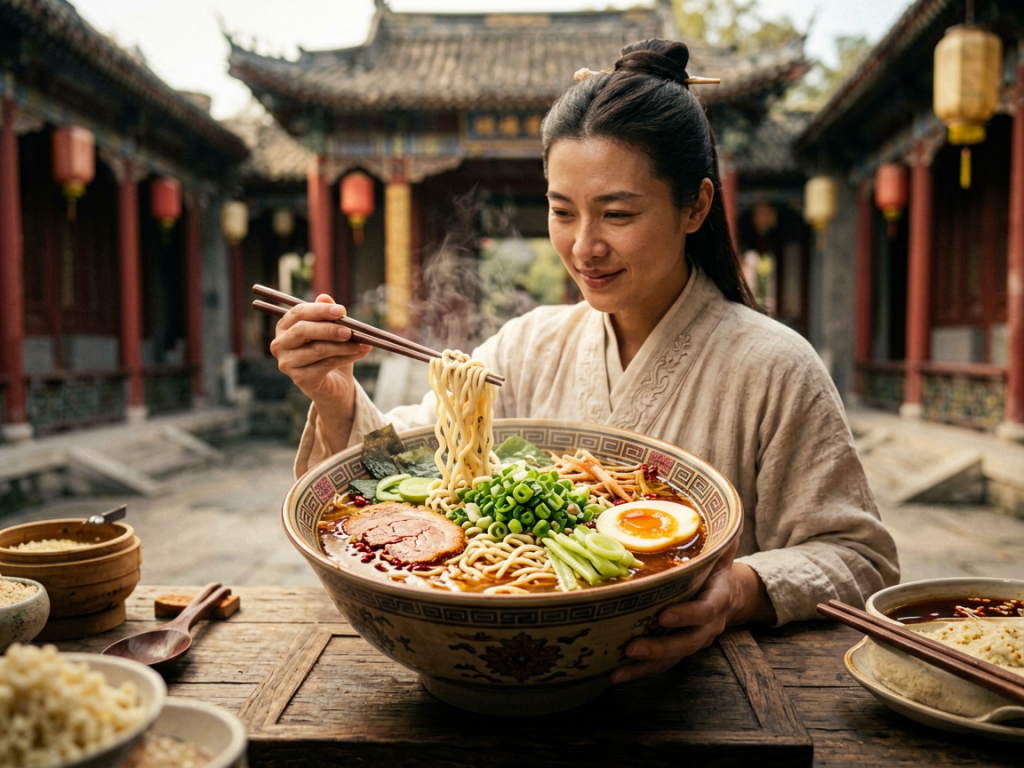
Look, if you’ve only ever had instant ramen or those sad, soggy noodles in a suburban American takeout spot, you don’t know what you’re missing. You think you’ve had Chinese noodles? Think again.
I spent the better part of the last decade living in China. I’ve eaten my way through nearly every province, from the humid, rice-heavy south to the dry, wheat-dominated north. And let me tell you, the difference isn’t just subtle. It’s like comparing apples to oranges, except the oranges are actually made of wheat and served with a side of vinegar.
Here’s the thing that trips up most foreigners. We assume “noodles” is a universal category. But in China, the line between North and South is drawn in dough. It’s not just geography; it’s climate, history, and stubborn regional pride all rolled into one bowl.
If you travel south of the Yangtze River, wheat becomes a secondary crop. If you’re north, wheat is king. This isn’t just an agricultural fact; it dictates your entire breakfast, lunch, and dinner routine. I learned this the hard way when I landed in Guangzhou expecting my usual bowl of comfort and got handed a plate of translucent rice noodles that tasted like nothing but texture.
The Great Flour Divide
Let’s start with the basics because everything else stems from this. Northern China has a long, cold winter. Crops need to survive the freeze. Wheat is tough. It’s resilient. It grows well in the dry soil of the North China Plain. Rice? Rice needs water. Lots of it. And warmth. So, naturally, the south grew rice.
I remember standing in a market in Xi’an, the ancient capital of the Qin dynasty, surrounded by mountains of flour. The air was thick with the scent of yeast and starch. The locals there don’t even call them “noodles.” They call them “mian,” which is the broad, umbrella term for wheat-based dough foods. Dumplings, buns, flatbreads, hand-pulled strands–it’s all mian.
In the south, the primary starch is rice. They make rice noodles, rice dumplings (zongzi), and rice cakes. If you go to Guilin, you’re eating rice noodles. If you go to Suzhou, you’re likely eating rice-based congee or rice noodles.
So, when we talk about Northern noodles, we’re talking about wheat gluten. That’s the protein that gives Northern dough its chew. It’s elastic. It’s sturdy. It can withstand heavy sauces and vigorous boiling. Southern rice noodles? They’re fragile. They break if you look at them wrong. They absorb broth like a sponge but have no structural integrity compared to their northern cousins.
I’m no food scientist, but I know this: the texture difference is night and day. A Northern hand-pulled noodle snaps back against your teeth. A Southern rice noodle slides down your throat. One is a workout; the other is a slide.
Texture Wars: Chewy vs. Silky
There’s a specific kind of pride in Northern Chinese cuisine regarding texture. They call it “jin dao,” which roughly translates to having some “spring” or “bite.” If your noodles are mushy, you’ve offended the chef. If they’re undercooked, you’ve insulted his ancestors.
I’ll never forget my first time trying Lanzhou beef noodles. I was in Lanzhou, a city in Gansu province, right in the heart of the northwest. The chef stood behind a counter, slapping a ball of dough against the wood. Slap. Stretch. Pull. Slap. Stretch. Pull. It was rhythmic, almost musical.
He handed me a bowl with a single, long, thin strand of noodle in it. Well, not just one. But it looked like one continuous ribbon. I took a bite and nearly dropped my spoon. It was bouncy. It had resistance. It wasn’t just soft; it was alive in my mouth.
That’s the Northern standard. You want chew. You want that slight resistance that requires actual chewing. It’s satisfying. It’s hearty. It feels like a meal that will sustain you through a long, cold day.
Now, take a trip to Guangdong. I sat in a small dim sum parlor in Shenzhen, watching them pull long, silky strands of rice noodle. These aren’t pulled; they’re steamed in thin sheets, then folded and cut. The result is slippery. Smooth. Almost gelatinous.
When you eat these, you don’t chew much. You just sort of scoop them up. They’re designed to carry the flavor of the light, clear broths or the sweet, sticky sauces they’re served with. They aren’t meant to be the star; they’re the vehicle.
I could be wrong, but I think this reflects a deeper cultural difference. Northerners value substance. They want to feel full. Southerners value subtlety. They want the ingredient to shine without overwhelming the palate. The noodle texture perfectly mirrors this philosophy.
The Sauce Situation
Let’s talk about what goes on top of these noodles. This is where the flavor profiles diverge completely. In the North, sauces are heavy. They’re salty. They’re savory. They’re often oil-based.
Vinegar is the king of Northern condiments. Specifically, aged black vinegar. It’s dark, thick, and has a deep, smoky complexity. You’ll see it in every Northern noodle shop. It cuts through the richness of the pork and the grease of the oil.
I remember eating Zha Jiang Mian in Beijing. That’s the fried soybean paste noodle. The sauce is made from fermented soybean paste, minced pork, and sometimes egg. It’s thick, dark, and incredibly salty. You eat it with cucumber strips and bean sprouts to add crunch and freshness. It’s a heavy meal. It’s a comfort food for people who work with their hands or live in harsh climates.
In contrast, Southern noodles are lighter. They’re often served dry, but the “dry” sauce is a mixture of sesame oil, soy sauce, and sometimes sugar. Think of the famous Scallion Oil Noodles from Shanghai. It’s simple. Just onions fried in oil until they’re brown and fragrant, mixed with soy sauce.
It’s sweet and savory. It’s not heavy on the stomach. It’s bright. It’s clean.
And don’t even get me started on the chili oil. In the North, chili oil is often a background note, used to add heat without overpowering the wheat. In the South, especially in Sichuan and Hunan, chili oil is the main event. But even there, it’s different. Sichuan chili oil is numbing (ma la), using Sichuan peppercorns. It’s a sensory experience that makes your lips tingle. It’s not just heat; it’s vibration.
When I first tried Sichuan spicy noodles in Chengdu, I was sweating buckets. But I couldn’t stop eating. The numbing sensation was weirdly addictive. It made me want more noodles, more spice, more everything. It’s a completely different relationship with food than the quiet, steady warmth of Northern vinegar and soy.
The Making Of: Hand-Pulled vs. Machine-Cut
You can’t talk about Northern noodles without mentioning the technique. Hand-pulled noodles, or “la mian,” are an art form. It’s not a gimmick. It’s a necessity born from the properties of wheat dough.
Wheat dough is elastic. If you cut it with a knife, it’s fine. But if you pull it, it stretches. Chefs in the North train for years to master this. They knead the dough with alkali, which gives it that yellow color and that distinct chewy texture. Then, they slap, fold, and pull it until it becomes dozens of strands.
I’ve watched masters do this in street stalls in Xi’an. They can pull a single piece of dough into hundreds of strands in seconds. It’s mesmerizing. It’s also efficient. You get hot noodles fast. And because they’re pulled, the surface area is uneven, which holds sauce better than a perfectly cut knife slice.
In the South, knife-cut noodles exist, but they’re less common than steamed or boiled rice noodles. The focus isn’t on the stretching. It’s on the preparation of the rice itself. The rice is soaked, ground into a paste, steamed into sheets, and then cut. It’s a process that prioritizes smoothness over elasticity.
I tried making hand-pulled noodles once. It was a disaster. I didn’t have the strength or the technique. My noodles were thick lumps that broke apart. My host laughed and said, “You need more gluten.” He meant it literally. I needed more protein. I needed to respect the flour.
Why It Matters to You
So, why does this matter? Why should you care about the difference between a wheat noodle and a rice noodle?
Because it changes how you eat. It changes how you experience a culture. When you understand that Northern noodles are about substance and resilience, you appreciate the people who eat them. They’re tough, practical, and direct. When you understand that Southern noodles are about subtlety and harmony, you appreciate the culture that created them. They’re nuanced, delicate, and refined.
It’s not about which is better. It’s about recognizing that food is a language. And in China, that language has two very distinct dialects.
If you go to China, don’t just order “noodles.” Ask where they’re from. Ask if it’s wheat or rice. Ask if it’s hand-pulled or cut. These questions will open doors. People will light up. They’ll see you’re not just a tourist checking boxes. You’re trying to understand.
I still have a favorite bowl of noodles from a small shop in Datong, Shanxi. It was a simple vinegar noodle dish. No meat, no fancy toppings. Just noodles, vinegar, garlic, and a bit of chili oil. It was perfect. It reminded me of the cold wind outside and the warmth inside. It tasted like home, even though I was thousands of miles away.
Try to find your own favorite. Don’t settle for the first thing you see. Go deep. Go north. Go south. Taste the difference. Trust me, your taste buds will thank you.