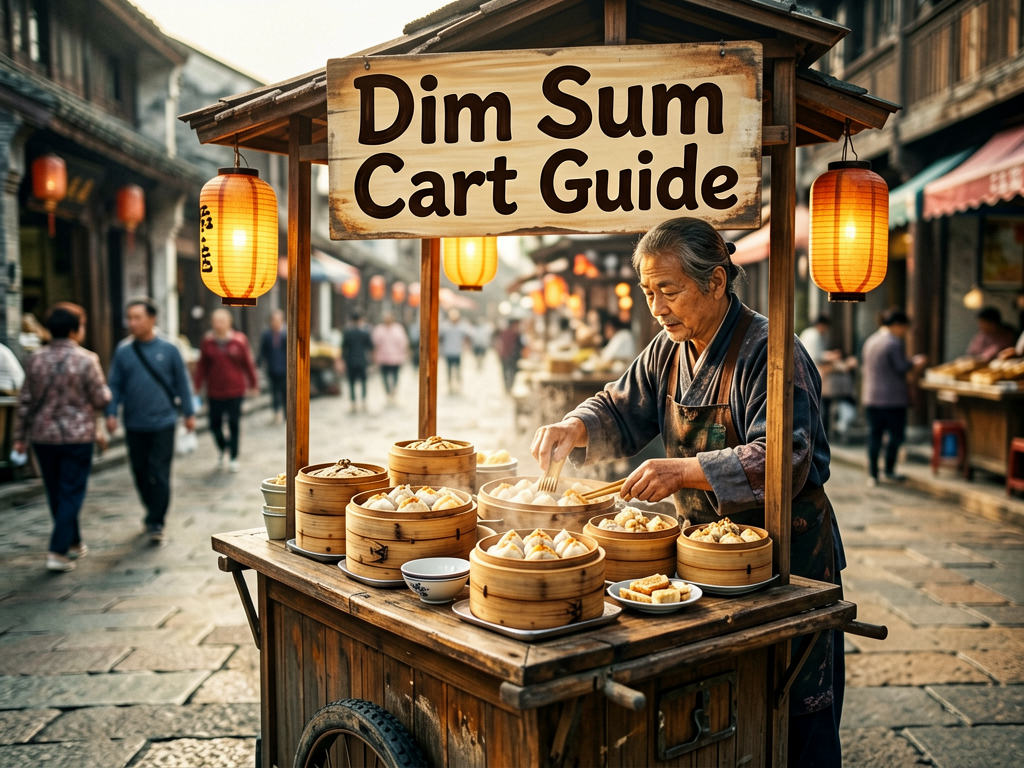
Look, I’ll be honest with you. The first time I walked into a crowded dim sum hall in Guangzhou, I felt completely lost. There was this loud, chaotic hum of Mandarin, the clatter of porcelain, and a sea of carts rolling past with steaming baskets balanced precariously on their tops. I just stood there, holding my empty plate, looking like a lost tourist. And honestly? I probably looked like one.
Guangzhou is the birthplace of Cantonese dim sum. It’s not just a meal; it’s a ritual. It’s a way to start the weekend, to do business, or just to catch up with family. If you want to eat like a local, you have to let go of the rigid structure you might be used to elsewhere. You need to understand the rhythm of the carts.
Here’s the thing about Guangzhou dim sum. It’s fast. The carts don’t wait for you. They roll by, sometimes with a gentle nudge from the server, sometimes with a confident push from the auntie who has been pushing that cart since 1995. You have to be ready. You have to know what you want before the cart is even in your line of sight.
## The Golden Rule of the Plate
Trust me, this is the most important part of the whole experience. In many places, you order from a menu. In Guangzhou, especially in the older, more traditional tea houses, you order from the cart. But how do you know how much a basket costs? You look at the plate.
Each dish has a specific plate color that corresponds to a price. It’s a brilliant, simple system. A yellow plate might be five yuan. A red plate might be ten. A blue one could be twenty. It varies by restaurant, so always ask the staff when you sit down. They’ll hand you a small card or point to a chart on the wall. I usually just take a photo of it with my phone because I get nervous and forget.
When the cart comes around, you don’t just grab a basket. You put a colored plate on the table to indicate which dish you want. The server will then take that plate, go get the corresponding basket from the cart, and bring it back to you. You keep the plate. At the end of the meal, they count your plates to calculate the bill.
This system is efficient, but it’s also where mistakes happen. I once saw a guy accidentally leave his plate on the table when the cart rolled past. He ended up paying for three baskets of siu mai because he couldn’t stop it in time. Don’t be that guy. Keep your eyes on the cart, but also keep your hand near your plates. If you don’t want something, don’t put the plate down. If you do, make sure you remove it quickly.
## What to Actually Order
I’m no expert on every single dish in the universe, but I’ve eaten enough dim sum to know what’s worth your money. The biggest mistake tourists make is ordering the same old har gow and siu mai. Sure, they’re good. But Guangzhou has so much more to offer.
You have to try the char siu bao. These are the fluffy white steamed buns filled with sweet, salty pork. The dough is like a cloud. You tear it open, and the meat inside is tender and glazed. It’s simple, but it’s perfect. I usually order two just to start. They’re cheap, usually on a yellow or red plate, and they satisfy that carb craving immediately.
Then there’s the cheung fun. It’s a rice noodle roll, often filled with shrimp or beef. The key is the sauce. A good dim sum place will drizzle a savory, slightly sweet soy sauce over it. I’ve had bad cheung fun where the noodles were too thick and gummy. I’ve had great ones where the texture was silky and the filling was generous. If you see a cart with fresh, white sheets of rice noodle being rolled out right in front of you, jump on it.
Don’t sleep on the chicken feet. I know, I know. It sounds intimidating. You’re looking at a claw, and you’re thinking, “Do I eat the bones?” The answer is yes. You suck the tendons and skin off the bones. It’s gelatinous, rich, and deeply flavorful. The sauce is usually a dark, fermented bean paste that’s sticky and savory. It takes a bit of practice to eat it elegantly, but that’s part of the fun. I remember my first time, and I made a bit of a mess. The local lady next to me just smiled and showed me how to use the little bone bowl. She wasn’t mocking me. She was helping. That’s the spirit of Guangzhou.
And let’s talk about the egg tarts. They’re not just dessert; they’re a main event. The pastry should be flaky, almost shattering when you bite it. The custard should be smooth, with a slight caramelized top. I’ve had egg tarts that were dry and cake-like. I’ve had ones that were creamy and divine. If you have room, order them. They’re usually a bit more expensive, so check your plate colors.
## The Cart Etiquette
There’s a dance to this. The servers push the carts with a specific rhythm. They want to make sure everyone gets a chance to order. If you’re sitting in the middle of a booth, you might not see the cart coming until it’s right in front of you. That’s when you need to act fast.
Make eye contact with the server. Raise your hand if you need to stop the cart for a specific request that isn’t on display. But for the standard items, just put your plate down. Don’t wave your arms. Don’t shout. Just a subtle nod and a plate placement is enough. The servers are pros. They’ve done this thousands of times.
One thing that surprised me was the pace. In some Western countries, dim sum is a slow, leisurely brunch. In Guangzhou, it can be a rush. People come in, order, eat, and leave. They have to get back to work, or to their next appointment. So, don’t hog the table if you’re done eating. If you’re waiting for the next cart, that’s fine. But if you’re taking up four seats for two people and an hour, you might get some side-eye.
Also, respect the communal nature of the meal. Dim sum is meant to be shared. You don’t order one basket for yourself. You order four or five dishes for the table. Pass the baskets around. If someone doesn’t want a specific item, don’t take it for yourself immediately. Ask if anyone else wants it. It’s a small gesture, but it shows you’re part of the group, not just a lone eater.
## Drinks and Desserts
You can’t have dim sum without tea. It’s the traditional accompaniment. The most common is pu’er or jasmine tea. It cuts through the richness of the fried and steamed foods. I usually stick to jasmine. It’s fragrant and light. If you’re drinking beer or soy milk, that’s fine too, but tea is the classic choice.
For dessert, you can’t go wrong with mango sago. It’s a cold dessert with diced mango, sago pearls, and coconut milk. It’s refreshing and sweet. It’s a nice contrast to the hot, savory dim sum. I love how the sago pearls have a slight chew. It’s a perfect way to end the meal.
There’s also the sticky rice in lotus leaf. It’s steamed rice wrapped in a lotus leaf, often with pork and mushrooms inside. It’s savory and sweet at the same time. The lotus leaf adds a subtle floral aroma. It’s a bit more complex than the other dishes, but I think it’s one of the most sophisticated items on the menu. If you see it on the cart, take a chance. It might become your new favorite.
## Finding the Right Spot
Guangzhou is huge. There are hundreds of dim sum places. Some are touristy, with English menus and air conditioning that’s too cold. Some are local, with no English signs and stools that are hard on the knees. I prefer the local spots. They’re more authentic, and the food is usually better.
Look for places that are packed with locals. If you see a line out the door at 9 AM on a Saturday, that’s a good sign. It means the food is fresh and the prices are fair. I’ve found some of my best dim sum in small, family-run establishments that have been around for decades. They don’t have fancy decor. The tables are wobbly. The chairs are plastic. But the food? It’s incredible.
Don’t be afraid to explore. Walk down a side street in the Liwan District. Look for the smell of steaming buns. Follow your nose. That’s how I found my favorite spot. It was tucked away in an alley, with a sign that said “Morning Tea” in simple characters. I went in, sat down, and never looked back.
So, here’s my take. Dim sum in Guangzhou is more than just food. It’s a cultural experience. It’s about community, tradition, and flavor. If you go in with an open mind, you’ll love it. You’ll make mistakes. You’ll drop a plate. You’ll struggle with a chicken foot. But you’ll also have a great time. And you’ll come back for more.
Just remember to watch your plate colors. And don’t forget to try the sticky rice in lotus leaf. Trust me, you won’t regret it.