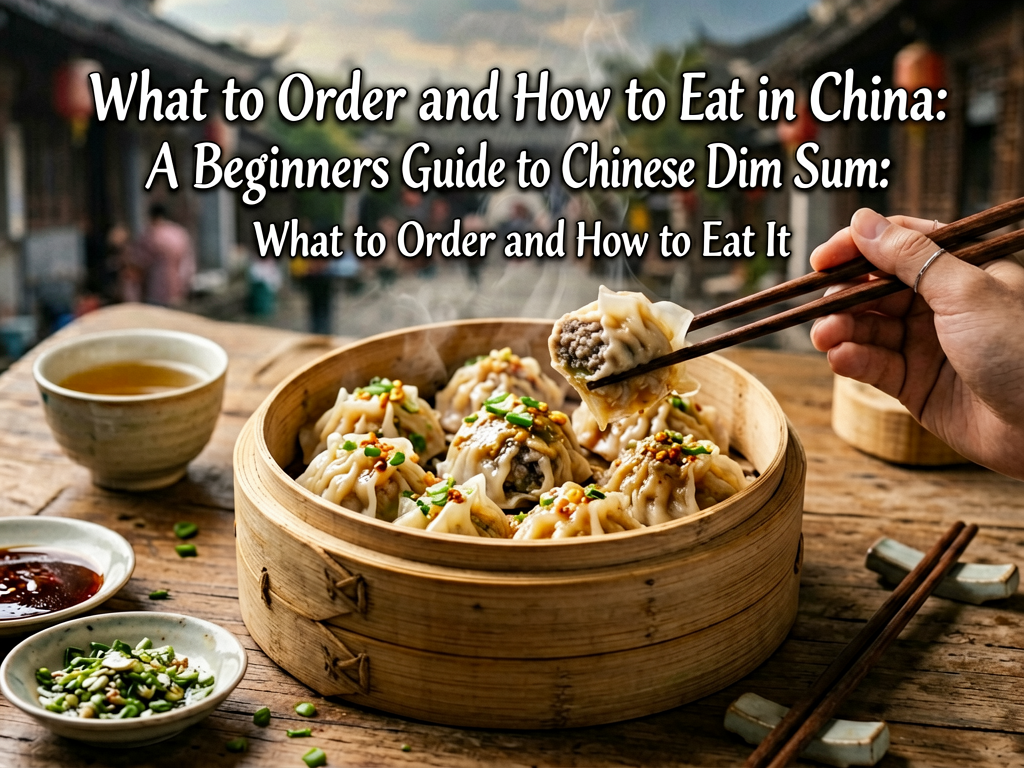
There’s a specific kind of chaos that happens inside a traditional Cantonese dim sum restaurant at 8 a.m. on a Sunday. It’s loud. The clatter of porcelain bowls sounds like rain on a tin roof. Waiters shove carts full of steaming bamboo baskets through narrow aisles, dodging elderly uncles in singlets and young couples snapping photos.
I’ve spent eight years in China, and honestly, nothing gets my heart racing like the smell of ginger and pork hitting hot steam. It’s not just breakfast. It’s a ritual. It’s social glue. And if you’ve never done it before, the sheer volume of choices can be paralyzing.
You’re standing there holding a red stamp book, wondering if you should get the chicken feet or the sticky rice. You don’t want to look like a tourist who’s never seen a dumpling before. So let’s fix that.
I’m going to walk you through the absolute basics of ordering dim sum. We’ll cover what to grab so you don’t waste money on bad food, and how to eat it without making a scene. Trust me, once you get the hang of it, you’ll never eat dumplings the same way again.
The Art of the Stamp
Before we talk about food, we need to talk about the system. In many older or more traditional dim sum houses, you don’t order from a menu. You order by watching the carts come by. Or, if you’re in a larger establishment, you might use a QR code or a tablet to order specific dishes.
But the classic experience involves the carts. A waiter pushes a trolley past your table. On it are stacks of bamboo steamers. If you see something you like, you wave him down. He’ll stamp your little booklet with a different colored stamp for each item.
The price is determined by the stamp. Usually, the cheaper dumplings get one stamp. The fancy ones with crab roe or lobster might get three or four. It’s pretty straightforward once you get used to it.
I remember my first time doing this. I was so excited I grabbed a basket of shrimp dumplings without checking the price. When the bill came, I nearly fainted. They were delicious, sure. But I’d just spent half my daily budget on three bites of dough and shellfish. Now, I always check the stamp color first. It’s not about being cheap. It’s about being smart.
If you’re in a modern place, you might just scan a code. The logic remains the same. You’re building a selection based on variety and appetite. Don’t go overboard. Dim sum is meant to be shared. If you order too much, you’ll be stuffed by the time you get to the savory stuff.
The Non-Negotiables
Let’s get to the food. If you walk into a dim sum parlor and you don’t order these four items, are you even trying? I’m no snob, but there are some classics that define the experience. They are the anchors of the meal.
First up: Har Gow. These are the shrimp dumplings. You know the ones. Translucent, almost see-through wrappers that hold plump, juicy shrimp. The wrapper is a miracle of culinary engineering. It should be slightly chewy, not doughy. If the wrapper is thick and white, send it back. I’m serious.
I tried Har Gow in Guangzhou last year. The shrimp was sweet and fresh, not fishy at all. The texture was perfect–a nice snap when you bit into it. They’re delicate. Don’t overload them with sauce. A little bit of soy sauce is enough to let the shrimp shine.
Next, you need Siu Mai. These are the open-topped pork and shrimp dumplings, usually topped with a bit of crab roe or just a yellow dot of egg. They’re heartier than the Har Gow. The filling is a mix of ground pork, shrimp, and mushrooms. It’s savory, umami-rich, and incredibly satisfying.
My favorite way to eat Siu Mai is with a mix of soy sauce and a drop of chili oil. It cuts through the richness of the pork. I’ve had them in tiny hole-in-the-wall shops and fancy hotels. The small shops usually win. The dough is thinner, and the filling has more character.
Then there’s Cheung Fun. This is the rice noodle roll. It looks like a white sheet of fabric rolled up. Inside, it’s usually shrimp, beef, or just plain with soy sauce. It’s soft, slippery, and mild. It’s the perfect palate cleanser between the stronger flavors of the dumplings.
Finally, you can’t leave without trying Char Siu Bao. These are the fluffy white steamed buns stuffed with sweet, savory barbecued pork. They’re like clouds. You bite into them, and the sauce inside spills out. It’s messy. It’s glorious. Just grab a napkin. Lots of them.
These four items cover the bases. You’ve got the delicate shrimp, the hearty pork, the soft noodles, and the sweet bun. It’s a complete journey in one meal.
For the Brave and the Hungry
Now, I know some of you are adventurous eaters. Maybe you’ve heard about the more… unique items on the menu. I’m not judging. I’ve tried things that would make a Westerner gag. But let’s be real. Not everything is a winner.
Take chicken feet, for example. It’s a classic dim sum item. The skin is gelatinous, and the bones are soft enough to chew. To me, it’s a texture thing. I love the skin. It melts in your mouth. But the bones? That’s a lot of work. If you’re in a rush, skip it. If you’re not, give it a shot. It’s acquired, but worth it if you like chewy textures.
Then there’s the sticky rice dumplings, or Lo Mai Gai. These are lotus leaves wrapped around glutinous rice, mushrooms, sausage, and sometimes chicken. They’re dense and heavy. Don’t eat these on an empty stomach unless you want a food coma by noon. They’re great, though. The lotus leaf adds this amazing floral scent that you don’t get anywhere else.
I once ordered a basket of these in a busy restaurant in Shenzhen. I thought I was getting a light snack. I was wrong. I ate two and felt like I’d swallowed a brick. But the flavor? Incredible. The rice absorbed all the juices from the sausage and mushrooms. It’s comfort food at its finest. Just pace yourself.
And what about the fish maw or sea cucumber? These are luxury items. They’re expensive. They’re healthy. But do they taste good? I’m not sure. They’re mostly texture. Slimy, chewy texture. If you’re interested in traditional Chinese medicine or just want to splurge, go for it. Otherwise, stick to the dumplings.
How to Actually Eat It
Okay, so you’ve ordered the food. The cart has arrived. The bamboo steamers are on the table. Now what? Do you just pick them up with your fingers? Do you use chopsticks? Do you use a fork?
Use chopsticks. Always. It’s part of the fun. If you can’t use chopsticks, ask for a spoon. Dim sum is designed to be eaten with utensils. The dumplings are small. They’re meant to be picked up delicately.
Don’t dip everything in the same sauce. That’s a rookie mistake. Each item has a companion sauce. Har Gow goes with sweet soy sauce. Siu Mai goes with regular soy and chili. Char Siu Bao is often eaten plain, or with a bit of preserved vegetable. If you’re unsure, just ask the waiter. They’re usually happy to help.
And here’s a tip that’ll make you look like a local: use the tea pot to rinse your bowl. Pour a little hot tea into your small bowl, swirl it around, and dump it out. It cleans off any grease from previous meals. It’s a subtle move. People will notice. They’ll think you’ve been coming here for years.
Eat while it’s hot. Dim sum loses its magic if it sits too long. The wrappers get soggy. The fillings get cold. If your food comes out and it’s lukewarm, send it back. I don’t care if you’re polite. Food is better hot.
Also, don’t forget the tea. A good pot of Pu-erh or Jasmine tea is essential. It cuts the grease. It refreshes the palate. If you’re drinking beer or soda with your dim sum, you’re doing it wrong. Well, maybe not wrong. But you’re missing the point. The tea is part of the balance.
My Final Thoughts
I could write a thousand words about the history of dim sum. The dynasties, the trade routes, the evolution from snack to meal. But honestly? It doesn’t matter as much as the experience. Dim sum is about connection. It’s about sitting with people you love and sharing small plates of joy.
It’s messy. It’s loud. It’s delicious. Don’t overthink it. Just go to a place with a long line of locals. Order the Har Gow and the Siu Mai. Drink the tea. Laugh at the jokes. Eat until you’re full.
You’ll come back for more. I promise. I’ve been doing this for eight years, and I’m still addicted. There’s always a new place to try. A new variation to discover. A new stamp to collect.
So, are you ready to try it? Go find a dim sum spot. Order something you’ve never had before. Embrace the chaos. You won’t regret it.