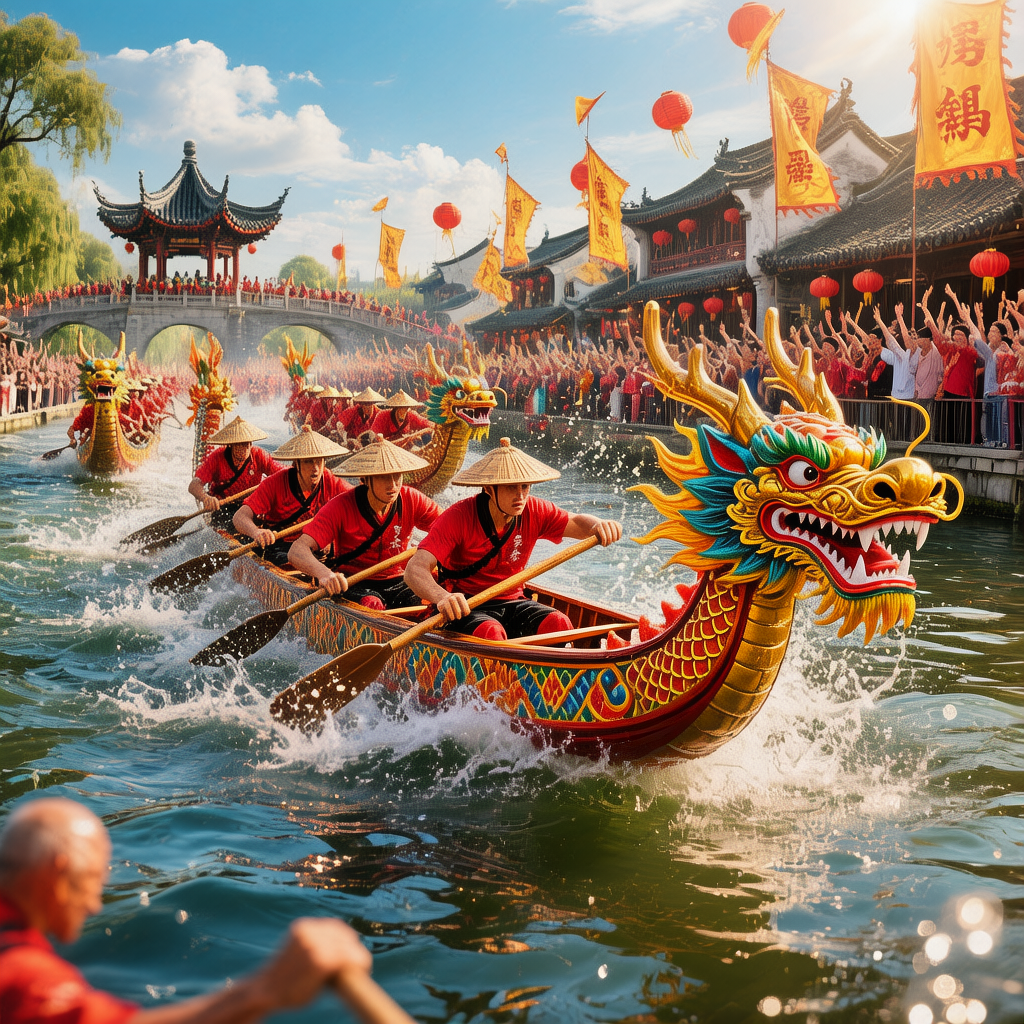
Among the most exhilarating and visually stunning celebrations in the Chinese cultural calendar, the Dragon Boat Festival—known in Chinese as Duanwu Festival (端午节)—stands as a testament to the enduring power of legend, loyalty, and community. Observed on the fifth day of the fifth lunar month, this festival transforms rivers and waterways across China into arenas of fierce competition and joyous celebration, where ornately carved dragon boats slice through the water to the thunderous rhythm of drums.
The Legend of Qu Yuan: A Poet’s Ultimate Sacrifice
At the heart of the Dragon Boat Festival lies one of China’s most poignant historical narratives. Qu Yuan (屈原), who lived from approximately 340 to 278 BCE, was a scholar, poet, and loyal minister of the State of Chu during the Warring States period. Renowned for his wisdom and unwavering patriotism, Qu Yuan advocated for alliances that would strengthen Chu against the growing threat of the State of Qin.
However, political intrigue proved his undoing. Corrupt officials, jealous of Qu Yuan’s influence, persuaded the king of Chu to banish his most loyal advisor. In exile, Qu Yuan wandered the countryside, composing some of Chinese literature’s most celebrated works, including the Li Sao (The Lament) and Tian Wen (Heavenly Questions), which expressed his deep sorrow at his country’s decline and his own political marginalization.
When Chu’s capital was finally captured by Qin forces in 278 BCE, the devastated poet waded into the Miluo River, choosing death over the sight of his beloved homeland’s destruction. According to legend, the local people, who deeply admired Qu Yuan, rushed out in boats to rescue him, beating drums and splashing water to scare away fish and river dragons. Though they could not save the poet, their desperate race became the origin of dragon boat racing.
Dragon Boat Racing: From Ritual to Sport
The dragon boat race has evolved from a desperate rescue attempt into one of the world’s most exciting team sports. A standard dragon boat is a long, narrow vessel adorned with a carved dragon head at the prow and a dragon tail at the stern, painted in vibrant reds, golds, and greens. The boat typically carries 20 paddlers sitting in pairs, along with a drummer at the front who sets the pace and a steerer at the rear who navigates.
The synchronized paddling, driven by the insistent beat of the drum, creates a mesmerizing spectacle. Teams train for months, developing the precision and stamina needed to propel these boats at speeds exceeding 20 kilometers per hour. In modern China, major races in cities like Hangzhou, Suzhou, and Guangzhou draw hundreds of thousands of spectators, while the sport has gained international recognition, with teams from over 50 countries now competing worldwide.
The symbolism runs deep. The dragon, the most revered creature in Chinese mythology, represents power, strength, and good fortune. By racing dragon boats, communities invoke these qualities while honoring the spirit of Qu Yuan’s unwavering devotion.
Zongzi: The Taste of Tradition
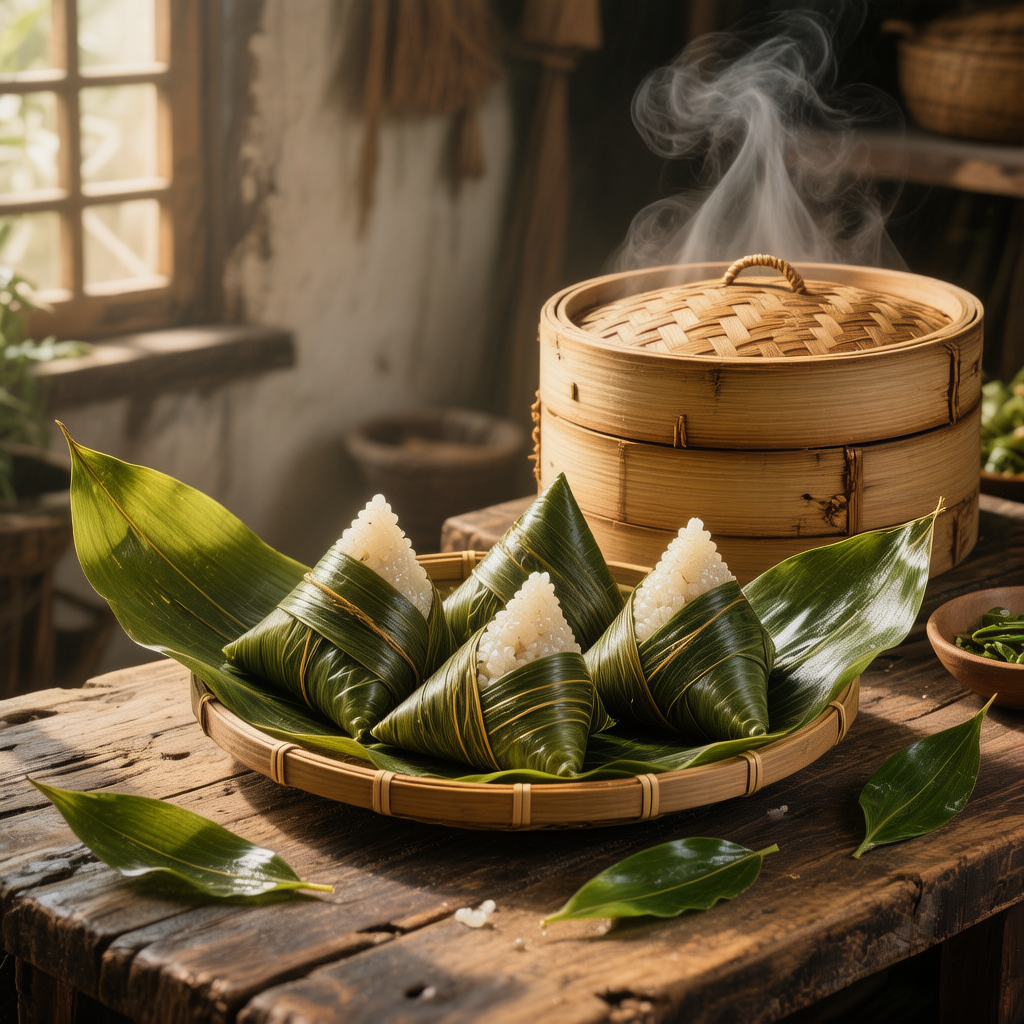
No Dragon Boat Festival would be complete without zongzi (粽子), the quintessential festival food. These pyramid-shaped dumplings, made of sticky rice wrapped in bamboo or reed leaves and bound with string, connect modern celebrants directly to the ancient legend. According to tradition, when the villagers could not find Qu Yuan’s body, they threw zongzi into the river to prevent fish from eating his remains.
The regional variations of zongzi tell their own story of China’s culinary diversity. In northern China, zongzi tend to be sweet, filled with red bean paste, jujubes, or dried fruits. Southern Chinese versions lean savory, stuffed with marinated pork, salted egg yolk, and mushrooms. The Cantonese version, with its rich filling of fatty pork, mung beans, and salted egg yolk, is particularly renowned. Regardless of the filling, the process of making zongzi is a cherished family activity, with recipes and folding techniques passed down through generations.
Realgar Wine and Five-Color Silk
Beyond racing and feasting, the Dragon Boat Festival carries profound connections to traditional Chinese medicine and folk beliefs about health and protection. The fifth lunar month was historically considered a dangerous time, when the warming weather brought out poisonous insects and diseases. The festival’s customs reflect centuries of accumulated wisdom about seasonal health practices.
Realgar wine (雄黄酒), made by adding realgar mineral to Chinese liquor, was traditionally drunk during the festival. While modern understanding has led to a decline in this practice—realgar contains arsenic—its historical significance speaks to ancient Chinese approaches to warding off evil spirits and disease. Today, some families still sprinkle a symbolic amount around the home for protection.
Children receive five-color silk threads (五彩丝线), braided bracelets worn around the wrists and ankles. The five colors—red, yellow, blue, white, and black—represent the five elements in Chinese philosophy: fire, earth, wood, metal, and water. These threads are worn throughout the festival period and then thrown into the rain during the first summer downpour, symbolically carrying away illness and misfortune.
Mugwort and Calamus: Nature’s Protective Herbs
The practice of hanging mugwort (艾草) and calamus (菖蒲) on doors and windows during the festival is one of its most widespread and enduring customs. Both plants have genuine insect-repellent properties, and their strong fragrances were believed to ward off evil spirits and disease-carrying insects during the hot summer months.
In many regions, calamus swords—bundles of the sword-shaped plant stalks—are hung alongside mugwort, creating a symbolic weapon against supernatural threats. Some families also prepare herbal baths using these plants, a practice that combines ritual purification with practical aromatherapy. Modern scientific studies have confirmed that mugwort does indeed possess antimicrobial and insecticidal properties, validating what Chinese families have known intuitively for millennia.
A Festival of Global Proportions
In 2009, UNESCO inscribed the Dragon Boat Festival on its Representative List of the Intangible Cultural Heritage of Humanity, recognizing its significance not just for China but for all of humanity. The festival has spread far beyond China’s borders, carried by diaspora communities and adopted by enthusiasts of Chinese culture worldwide.
Major dragon boat festivals now take place in cities from Toronto to Sydney, London to Cape Town. These international events celebrate not only the sport but the broader cultural values that the festival embodies: loyalty, perseverance, community cooperation, and the eternal human struggle against adversity. Teams from diverse backgrounds find common purpose in the synchronized rhythm of the drum and the shared pursuit of excellence.
Modern Celebrations and Cultural Revival
In contemporary China, the Dragon Boat Festival has experienced a remarkable cultural revival. Since being designated a national public holiday in 2008, the three-day weekend has become an occasion for families to reunite, share zongzi, and participate in local celebrations. Cities compete to host the most spectacular races, with professional teams and corporate sponsors elevating the sport to new heights.
Cultural institutions use the festival as an opportunity to educate younger generations about traditional arts and customs. Calligraphy exhibitions featuring Qu Yuan’s poetry, workshops on zongzi-making, and demonstrations of traditional herbal medicine all find their place in modern festival programming. Social media has amplified these efforts, with young Chinese sharing creative interpretations of festival traditions, from designer zongzi packaging to drone-filmed dragon boat races.
Cultural Insights: The Deeper Meaning
The Dragon Boat Festival encapsulates several fundamental principles of Chinese culture that remain remarkably relevant today:
- Loyalty and integrity — Qu Yuan’s story exemplifies the Confucian ideal of remaining faithful to one’s principles even in the face of betrayal and exile
- Community solidarity — Dragon boat racing is the ultimate team sport, requiring perfect synchronization and mutual trust
- Harmony with nature — The festival’s herbal customs reflect the Chinese philosophical tradition of aligning human activities with natural cycles
- Remembrance and reverence — By honoring Qu Yuan across more than two millennia, Chinese culture demonstrates the profound importance of collective memory
- Resilience and renewal — The festival’s protective rituals symbolize the human capacity to confront and overcome seasonal challenges
The Dragon Boat Festival is far more than an exciting sporting event or a culinary tradition. It is a living bridge between past and present, connecting modern Chinese people to their ancestors’ values, wisdom, and creativity. Whether you’re watching dragon boats race across a misty river or unwrapping your first zongzi, you’re participating in a tradition that has sustained Chinese civilization for over two thousand years—a tradition that continues to race forward, as unstoppable as the drumbeat that drives the boats themselves.