Walk down any bustling street in Chengdu, and the unmistakable aroma of Dan Dan Noodles (担担面) will stop you in your tracks. This iconic Sichuan street food combines thin, springy noodles with a fiery, numbing sauce that clings to every strand. A single bowl delivers the full spectrum of Sichuan flavor — spicy, savory, nutty, and tingling with mala (numbing-spicy) heat. Dan Dan Noodles are the essence of Sichuan cuisine in bowl form: bold, complex, and utterly addictive.
The History Behind Dan Dan Noodles
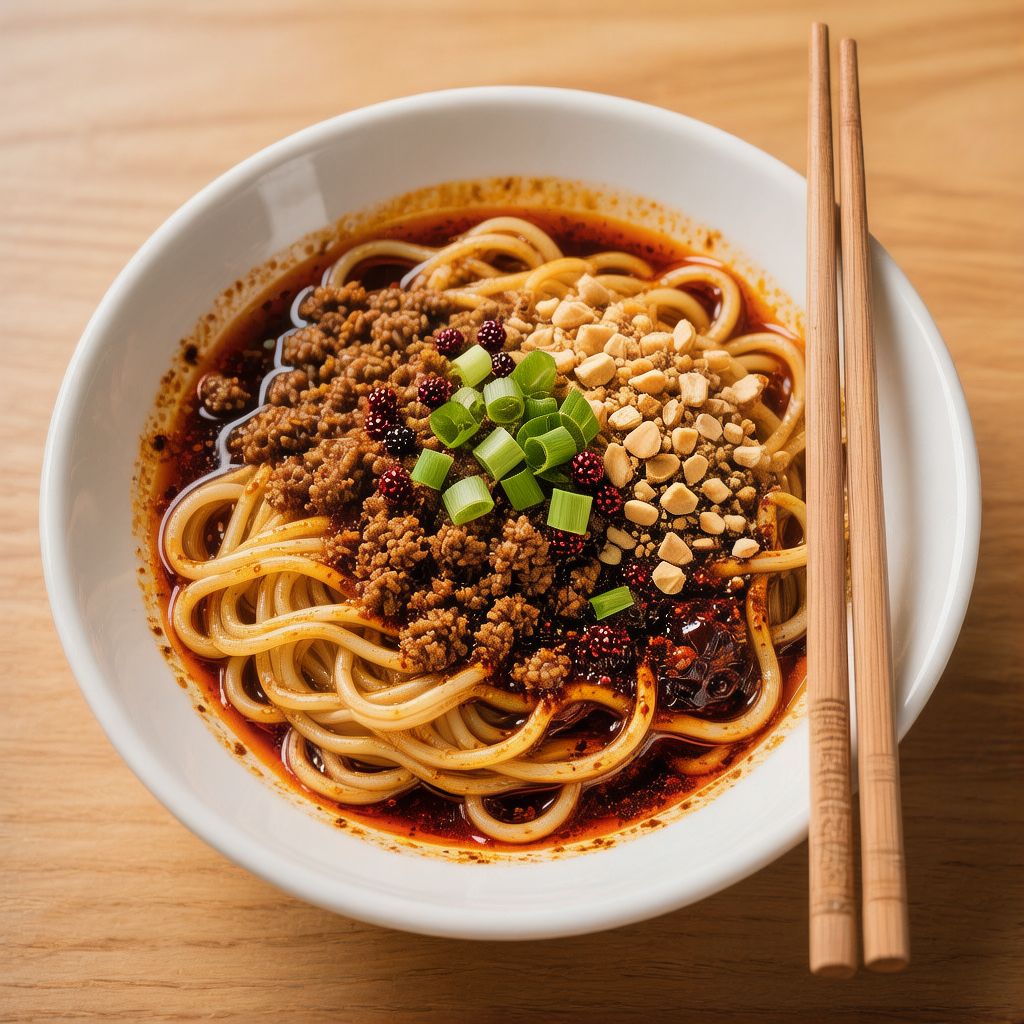
Dan Dan Noodles trace their origins to the late 19th century in Sichuan province. The name comes from the carrying pole (担担, dan dan) that street vendors used to transport their wares. One basket carried the noodles and sauce, the other held a small charcoal stove and boiling water. Vendors would walk through the streets calling out “Dan Dan Mian!” and serve bowls fresh to order right on the sidewalk.
The original version was a dry noodle dish — no soup, just noodles coated in a concentrated sauce of chili oil, Sichuan peppercorn, sesame paste, and ya cai (preserved mustard greens). This dry style remains the authentic Chengdu standard, though many restaurants outside Sichuan now serve a soupy version, which is actually a modified adaptation for broader palates.
What Makes Authentic Dan Dan Noodles?
Authentic Dan Dan Noodles are defined by their sauce, which is a carefully balanced blend of several key components:
- Chili oil (红油) — House-made Sichuan chili oil infused with star anise, cinnamon, and Sichuan peppercorns.
- Sesame paste or tahini (芝麻酱) — Provides a nutty, creamy backbone that tempers the chili heat.
- Ya cai (芽菜) — Preserved mustard greens from Yibin, Sichuan’s most famous topping. These add a salty, slightly sweet umami punch.
- Minced pork (脆臊子) — Dry-fried until crispy and golden, seasoned with soy sauce and wine.
- Sichuan peppercorn oil (花椒油) — Delivers the signature numbing sensation that defines Sichuan cuisine.
- Black vinegar — A splash of acidity to balance the richness.
The result is a sauce that coats each noodle in layers of flavor — nutty, spicy, salty, tangy, and numbing all at once.
Choosing the Right Noodles
The noodles are just as important as the sauce. Traditional Dan Dan Noodles use fresh, thin Chinese wheat noodles, similar to ramen but slightly thinner. The ideal noodle should be:
- Thin but not angel-hair thin — About 1.5-2mm in diameter, so they hold the sauce without being overwhelmed.
- Firm and springy (al dente) — Overcooked noodles will turn mushy under the sauce.
- Slightly alkaline — Some recipes add a pinch of lye water (kansui) for that characteristic chew and yellow tinge.
Cooking Tip: If you cannot find fresh Chinese wheat noodles, dried thin noodles work well too. Cook them 30 seconds less than the package instructions, then rinse briefly under cold water to stop the cooking and maintain their chew.
How to Make Crispy Minced Pork (Saozi)
The crispy pork topping is what elevates Dan Dan Noodles from good to unforgettable. Here is the method:
- Use ground pork with some fat content (80/20 lean-to-fat ratio).
- Heat a wok over medium-high heat. Add the pork without any oil — the fat will render out.
- Break the pork into small crumbles and cook until the fat is rendered and the meat is starting to brown.
- Add a tablespoon of Shaoxing wine, a tablespoon of soy sauce, and a pinch of sugar.
- Continue cooking until the pork is deeply browned and slightly crispy — about 8-10 minutes total.
- Remove from heat. The pork should be dry, crumbly, and intensely savory.
Cooking Tip: Do not rush the pork-frying process. The low-and-slow rendering is what creates the crispy texture. If the pork starts to stick, add a tiny splash of cooking oil.
The Dan Dan Noodles Sauce Formula
The sauce is mixed directly in the serving bowl before the noodles are added. For each serving, combine:
- 2 tablespoons Chinese sesame paste (or tahini thinned with warm water)
- 2 tablespoons chili oil (with the chili sediment)
- 1 tablespoon soy sauce
- 1 tablespoon black vinegar (preferably Chinkiang vinegar)
- 1 teaspoon Sichuan peppercorn oil
- 1 teaspoon sugar
- 1 teaspoon minced garlic
- 1 teaspoon finely chopped scallion (white part)
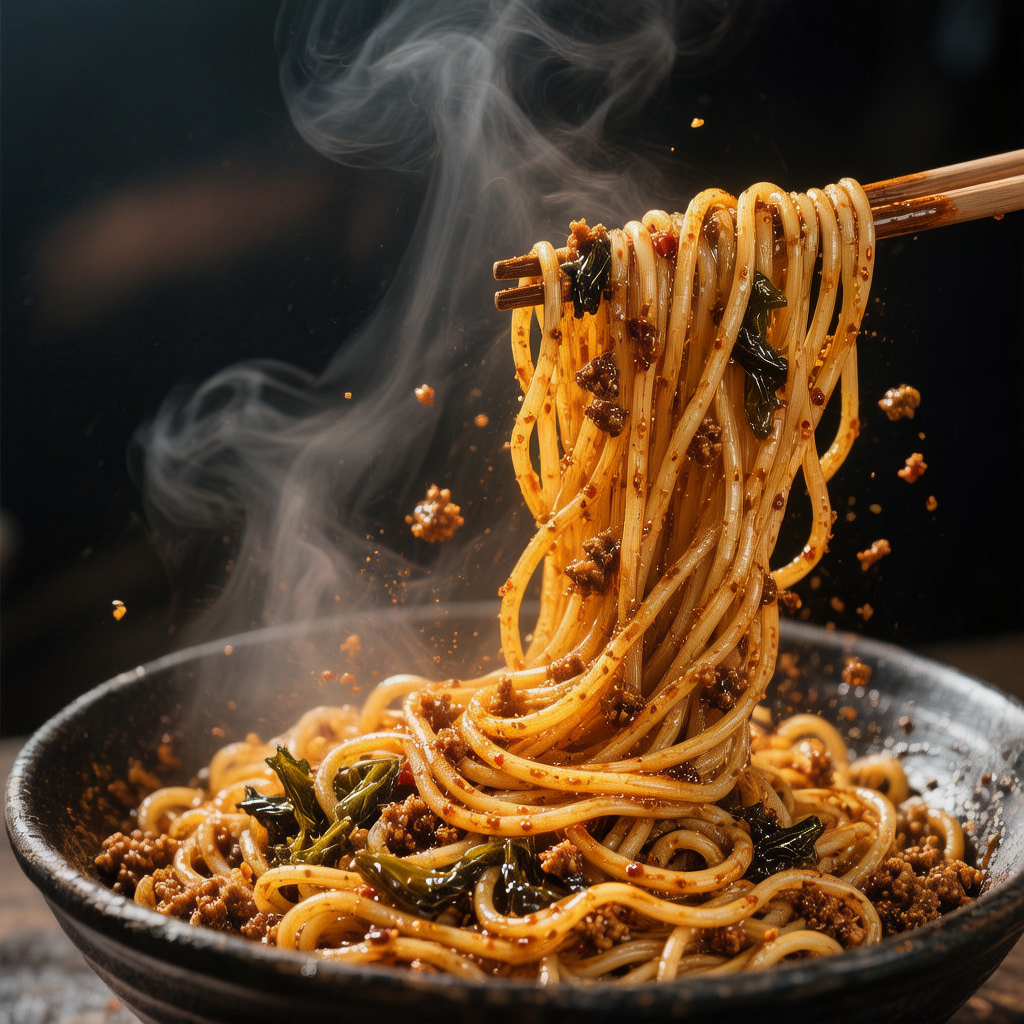
Mix everything into a thick, fragrant paste. When the hot noodles are added and tossed, the sauce will loosen and coat every strand evenly. This is the heart of the dish.
Step-by-Step: Assembling Dan Dan Noodles
Assembly is fast once all components are prepared. The key is to work quickly while the noodles are hot:
- Prepare the sauce — Mix all sauce ingredients in the bottom of a serving bowl.
- Cook the noodles — Boil fresh noodles for 1-2 minutes (or dried noodles according to package). They should be al dente.
- Add noodles to the bowl — Using a spider or tongs, transfer the drained noodles directly into the sauce bowl. Do not add noodle water — Dan Dan Noodles are a dry dish.
- Toss vigorously — Use chopsticks to toss the noodles in the sauce, lifting and separating to ensure every strand is evenly coated.
- Top and serve — Add the crispy minced pork, ya cai, crushed roasted peanuts, and sliced scallions on top. Serve immediately.
The Role of Ya Cai (Preserved Mustard Greens)
Ya cai is the unsung hero of Dan Dan Noodles. These fermented mustard greens from Yibin, Sichuan, are dark, fragrant, and packed with umami. They add a crunchy texture and a deeply savory, slightly sweet flavor that complements the spicy sauce perfectly.
To prepare ya cai for Dan Dan Noodles:
- Rinse the ya cai briefly under cold water to remove excess salt.
- Squeeze out all the water.
- Finely chop into small pieces.
- Optionally, stir-fry in a little oil for 30 seconds to intensify the aroma.
If you cannot find ya cai, you can substitute with zha cai (preserved radish) or even finely chopped kimchi, though the flavor will differ.
Spice Level: Customizing Your Dan Dan Noodles
One of the beauties of Dan Dan Noodles is how easily you can adjust the heat level. Here are guidelines:
- Mild — Reduce chili oil to 1 teaspoon and omit the chili sediment. Increase sesame paste to compensate for flavor.
- Medium (authentic) — 2 tablespoons chili oil with sediment. This is the standard Chengdu level.
- Spicy — 3-4 tablespoons chili oil, add a teaspoon of doubanjiang (Sichuan chili bean paste) to the sauce.
- Fire-breathing — Maximum chili oil, add dried chili flakes and extra Sichuan peppercorn oil. Not for the faint of heart.
Dan Dan Noodles vs. Other Sichuan Noodle Dishes
Dan Dan Noodles are often confused with other Sichuan noodle dishes. Here is how they differ:
- Dan Dan Noodles (担担面) — Dry, with sesame paste-based sauce, crispy pork, and ya cai.
- Chongqing Noodles (重庆小面) — Can be dry or soupy, with a simpler sauce of chili oil, Sichuan pepper, and garlic. No sesame paste.
- Red Oil Wontons (红油抄手) — Wontons in a spicy chili oil sauce, similar flavor profile but with dumplings instead of noodles.
- Sichuan Cold Noodles (川味凉面) — Served cold with a similar sauce but without the hot pork topping.
Vegetarian Dan Dan Noodles
You can easily make a vegetarian version that is equally delicious:
- Replace the minced pork with crumbled firm tofu or chopped shiitake mushrooms, pan-fried until crispy.
- Use vegetarian ya cai (check the label, as some versions contain fish sauce).
- The sesame paste-based sauce is already vegetarian, so no changes needed there.
- Top with extra crushed peanuts and scallions for added texture.
Complete Dan Dan Noodles Recipe
Sauce (Per Serving)
- 2 tablespoons Chinese sesame paste
- 2 tablespoons chili oil with sediment
- 1 tablespoon soy sauce
- 1 tablespoon Chinkiang black vinegar
- 1 teaspoon Sichuan peppercorn oil
- 1 teaspoon sugar
- 1 teaspoon minced garlic
- 1 teaspoon chopped scallion whites
Crispy Pork Topping
- 200g ground pork (80/20)
- 1 tablespoon Shaoxing wine
- 1 tablespoon soy sauce
- 1 teaspoon sugar
Garnishes
- 2 tablespoons ya cai, rinsed and chopped
- 2 tablespoons crushed roasted peanuts
- Sliced scallion greens
Noodles
- 150g fresh thin Chinese wheat noodles per serving
Instructions
- Make the crispy pork: Cook ground pork in a dry wok over medium heat, breaking into small crumbles. When fat renders and pork starts browning, add Shaoxing wine, soy sauce, and sugar. Cook until deeply browned and crispy, 8-10 minutes. Set aside.
- Prepare the ya cai: Rinse, squeeze dry, and finely chop.
- Mix the sauce: Combine all sauce ingredients in a serving bowl. Stir into a smooth paste.
- Cook the noodles: Boil noodles until al dente (1-2 minutes for fresh, per package for dried). Drain well.
- Assemble: Add hot noodles to the sauce bowl. Toss vigorously with chopsticks until every strand is coated.
- Top with crispy pork, ya cai, crushed peanuts, and scallion greens.
- Serve immediately and enjoy while hot.
Pairing Suggestions
Dan Dan Noodles pair beautifully with:
- Iced plum tea (酸梅汤) — The sweet-tart flavor cuts through the spice and richness perfectly.
- Cucumber salad (拍黄瓜) — A refreshing, cooling side that balances the heat.
- Steamed egg custard (蒸蛋) — Silky and mild, it provides a soothing contrast.
- Soy milk — Cold, unsweetened soy milk is a traditional Sichuan pairing for spicy dishes.
Common Mistakes to Avoid
- Adding soup broth — Authentic Dan Dan Noodles are dry. A soupy version is a restaurant adaptation, not the original.
- Using peanut butter instead of sesame paste — While it works in a pinch, the flavor is noticeably different. Seek out Chinese sesame paste for the real deal.
- Overcooking the noodles — They should be chewy and firm. Mushy noodles will dissolve into the sauce.
- Skipping the ya cai — This ingredient is not optional. It provides a unique umami crunch that ties the dish together.
- Not tossing enough — The noodles need vigorous tossing to distribute the sauce evenly. Lazy tossing means clumpy, unevenly flavored noodles.
Final Thoughts
Dan Dan Noodles are proof that great food does not require complexity — it requires balance and boldness. A handful of ingredients, each pulling its weight, come together in a bowl that is greater than the sum of its parts. The nutty sesame paste, the fiery chili oil, the numbing Sichuan pepper, the crispy pork, the crunchy ya cai — every bite is a symphony of flavors and textures. Make it once, and you will understand why this humble street food has captured hearts far beyond the streets of Chengdu.