
China vast geography creates dramatically different regional cultures developed over thousands of years in response to distinct environmental conditions, historical experiences, and cultural influences. Understanding these differences enhances travel experiences and provides insight into the diversity within this enormous country. The contrast between northern and southern China represents one of the most significant cultural divides in the world, shaping cuisine, language, architecture, and social customs.
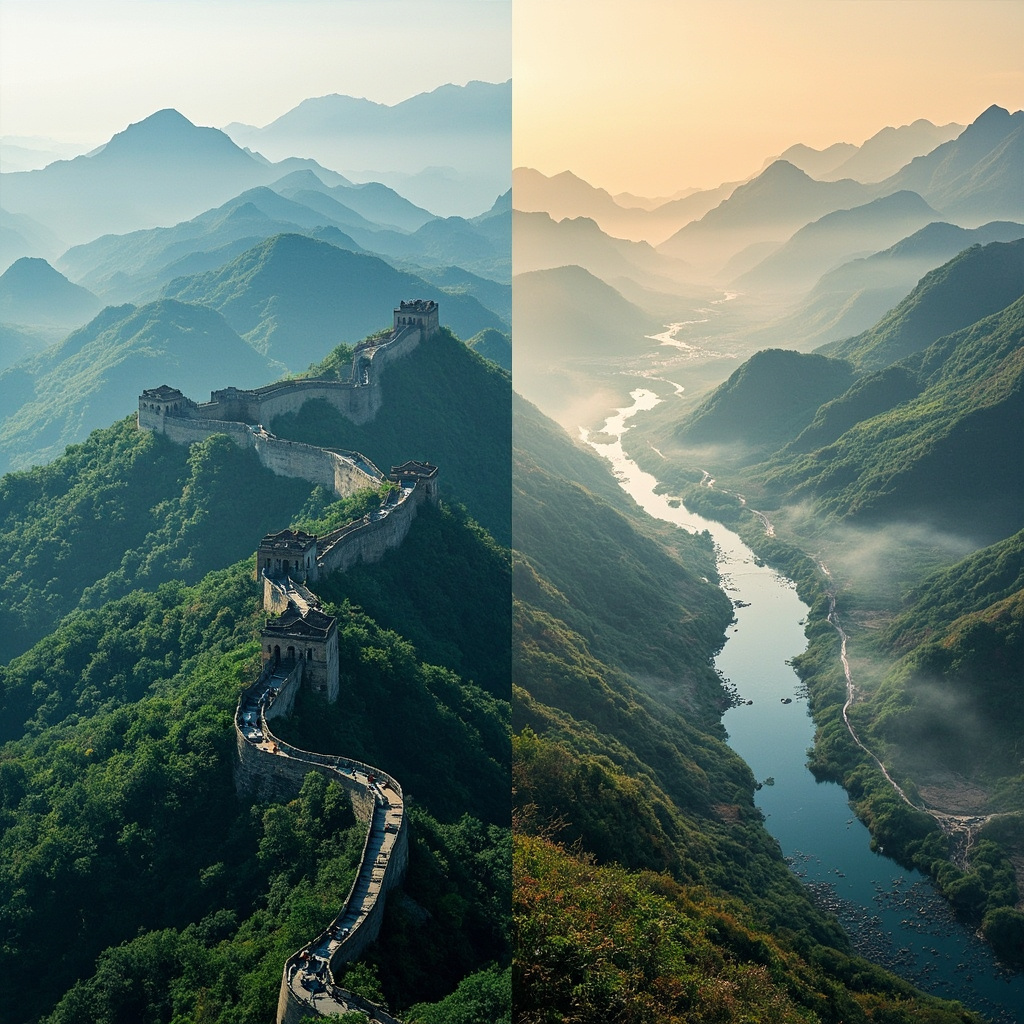
The Qinling Mountain range and Huai River form the traditional dividing line between north and south, creating distinct climate zones that influenced agricultural practices and cultural development. Northern China, with colder climate and wheat-growing plains, developed different culinary traditions and social customs than the warmer, rice-growing south. This division has been recognized throughout Chinese history, with different dynasties often controlling only one region.
Climate and Environmental Differences
Northern China experiences cold, dry winters with temperatures frequently below freezing, while summers are hot and dusty. Limited rainfall creates dry plains requiring irrigation for agriculture. Southern China has a subtropical climate with hot, humid summers and mild winters with abundant rainfall. The south lush green landscapes, fed by monsoon rains, support dense vegetation and multiple rice harvests yearly. These climatic differences affect housing design, daily routines, and lifestyle. Life in Harbin, where winter temperatures drop to minus 30 degrees Celsius, differs dramatically from life in Guangzhou, where temperatures rarely drop below 10 degrees.
Culinary Traditions: Wheat versus Rice
Northern cuisine is based on wheat, with noodles, dumplings, steamed buns, and flatbreads forming meal foundations. Northern cooking emphasizes hearty flavors with garlic, scallions, and soy sauce, featuring lamb and beef prominently. Beijing famous Peking duck, Lanzhou hand-pulled beef noodles, and Xi’an lamb skewers exemplify northern traditions. Southern cuisine is based on rice, with white rice accompanying most meals. Southern cooking emphasizes fresh ingredients, subtle seasoning, and lighter preparations. Cantonese cuisine features fresh seafood, delicate dim sum, and stir-fried vegetables. Sichuan and Hunan cooking, though southern, represents distinct interior traditions where chili peppers are embraced enthusiastically.
Architectural Styles
Northern courtyard houses called siheyuan feature buildings arranged around a central courtyard with thick walls and small windows for heat retention. The courtyard orientation follows feng shui principles, with main buildings facing south for maximum sunlight. Southern architecture emphasizes ventilation and shade, with large windows, high ceilings, and open courtyards for cooling breezes. Whitewashed walls and dark tile roofs create the iconic southern Chinese aesthetic. Suzhou gardens represent the pinnacle of Chinese landscape design, incorporating rocks, water, plants, and pavilions in harmonious compositions.
Language and Dialects
China linguistic diversity reflects geographical and historical divisions, with hundreds of dialects across the country. Mandarin serves as the official national language taught in schools, but regional dialects remain primary for daily communication. Northern China is relatively linguistically uniform with mutually intelligible Mandarin variants. Southern China contains most linguistic diversity, including Cantonese, Hakka, Min, Wu, and Xiang dialects as different from each other as French is from Italian.
Social Customs
Northern Chinese are often described as direct, outgoing, and warm-hearted, with a robust sense of humor and love for social drinking. Southern Chinese are considered more reserved, practical, and business-oriented, with formal social relationships reflecting commercial history and dense population. While these stereotypes oversimplify, they reflect real cultural differences noticeable during extended stays in different regions.
Conclusion
China regional diversity rewards exploration beyond major cities, revealing the complexity of Chinese civilization. Understanding north-south differences enriches travel experiences and provides insight into the cultural richness that makes China fascinating. The contrast represents a complementary relationship that together creates the complete picture of Chinese culture.
Historical Development of Regional Differences
The historical development of north-south differences in China can be traced through several major periods that shaped regional identities. The early Chinese civilization developed along the Yellow River in the north, with the Shang and Zhou dynasties establishing the cultural foundations that would influence all of China. The southward migration of Chinese populations during periods of northern invasion, particularly during the Jin Dynasty and the Song Dynasty, brought northern culture to the south while also adapting to local conditions. The development of the Grand Canal during the Sui Dynasty connected north and south economically, facilitating the exchange of goods, ideas, and people that gradually reduced regional differences while also creating new cultural syntheses. The Opium Wars and subsequent treaty ports opened southern cities to Western influence earlier and more extensively than northern cities, creating different patterns of modernization. The post-1949 era saw deliberate policies to reduce regional inequality, including investments in northern industry and infrastructure development in western regions, though significant differences persist.
Economic Differences Between North and South
The economic development patterns of northern and southern China have diverged significantly since the economic reforms of the 1980s. Southern China, particularly the coastal provinces of Guangdong, Fujian, and Zhejiang, experienced explosive economic growth driven by export-oriented manufacturing, foreign investment, and entrepreneurial culture. The Pearl River Delta and Yangtze River Delta became engines of China economic transformation, creating wealth that transformed southern cities into global economic centers. Northern China, with its heavier industrial base and state-owned enterprise legacy, adapted more slowly to market reforms, leading to a widening economic gap between north and south. The northeast rust belt, once China industrial heartland, experienced significant economic decline as heavy industries struggled to compete. Recent government initiatives like the Belt and Road Initiative and the revitalization of the northeast aim to address these regional imbalances, but significant economic disparities between prosperous southern cities and struggling northern industrial regions persist.
Natural Resources and Agriculture
The natural resource endowments of northern and southern China differ significantly, shaping their economic development and environmental challenges. Northern China possesses abundant coal deposits that have powered China industrial development but also created severe air pollution problems. The north also has significant oil and natural gas reserves, though domestic production has not kept pace with demand. Southern China has richer water resources, with extensive river systems and higher rainfall supporting hydroelectric power generation and water-intensive industries. The south also has greater mineral diversity, including rare earth elements essential for high-tech manufacturing. Agricultural differences are equally pronounced, with northern China producing wheat, corn, soybeans, and cotton on large mechanized farms, while southern China produces rice, tea, sugarcane, and tropical fruits on smaller, more labor-intensive farms. The southward transfer of water through massive engineering projects highlights the environmental challenges created by China uneven distribution of water resources.
Education and Regional Disparities
Educational resources vary significantly between northern and southern China. Southern and coastal cities benefit from greater educational investment, with better-equipped schools and higher university attendance rates. Top universities cluster in Beijing and Shanghai, attracting students from across the country. Northern rural areas face challenges including underfunded schools and teacher shortages. The gaokao exam creates intense pressure on students throughout the country but access to preparation resources varies by region. Students from wealthier southern cities have access to private tutoring and international schools unavailable to students from poorer northern regions. Government initiatives aim to reduce this educational gap, though significant disparities persist.
Healthcare Systems North vs South
Healthcare quality in China shows significant regional variation. Major cities in both north and south have world-class hospitals with advanced medical technology. Beijing and Shanghai hospitals attract patients from throughout China seeking treatment for serious conditions. Rural areas face healthcare challenges including shortages of doctors and limited equipment. Northern industrial cities face particular health challenges related to air pollution, including higher rates of respiratory disease. Southern regions face different challenges including higher rates of insect-borne infectious diseases. The government has invested significantly in healthcare infrastructure, establishing universal health insurance coverage. Regional disparities in healthcare quality are gradually decreasing but remain significant.