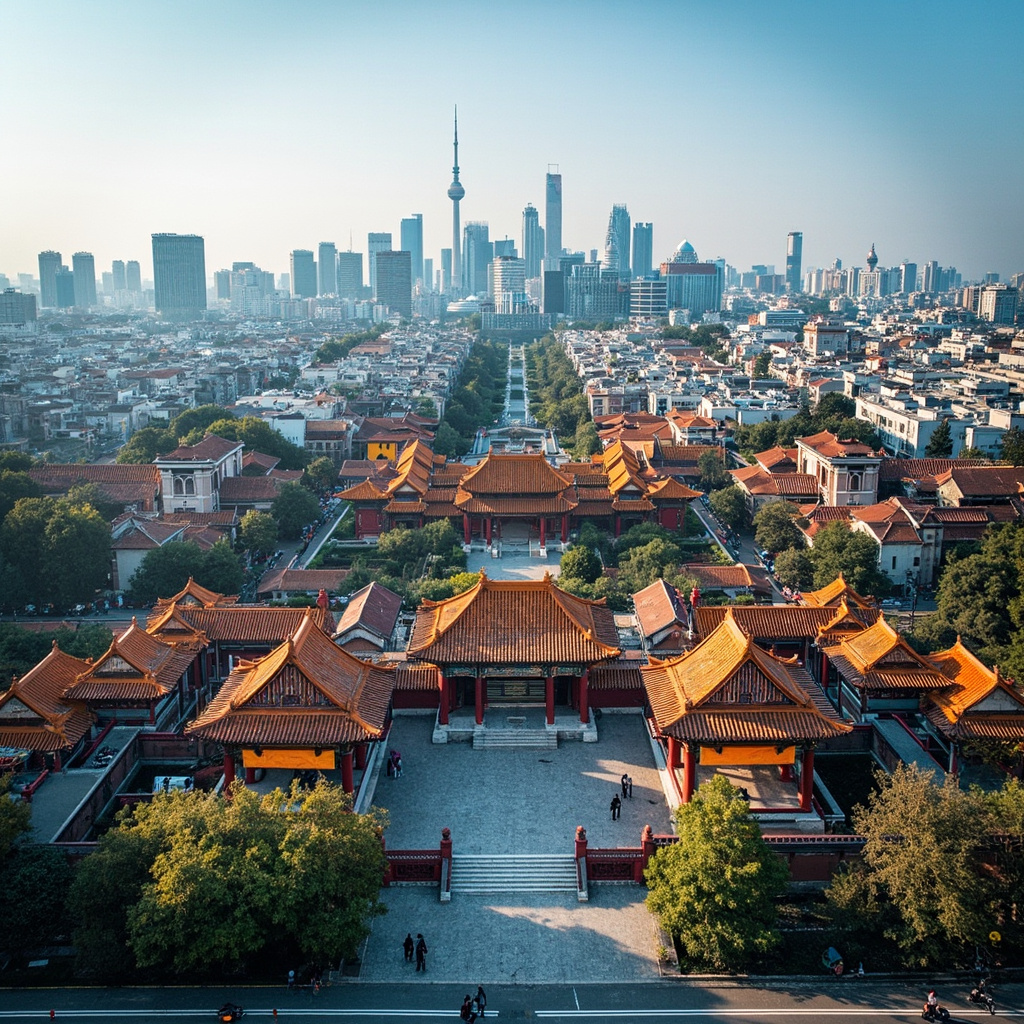
**Nanjing Historical Sites: From Imperial Capital to Modern City**
Nanjing, the capital of Jiangsu Province, is a city where every street corner whispers stories of emperors, poets, and revolutions. Once the capital of six different dynasties, Nanjing has amassed a treasure trove of historical sites that chronicle China’s imperial, cultural, and modern history. Whether you’re a history buff, a culture lover, or simply looking for a memorable travel experience, the *Nanjing Historical Sites* offer an unparalleled journey through time. This guide takes you through the city’s most iconic landmarks, explains their significance, and supplies practical travel tips to make your visit seamless and rewarding.
—
## Why Nanjing? The Legacy of Six Dynastic Capitals
Nanjing’s nickname “Six Dynasties’ Capital” (Liu Chao Du) reflects its pivotal role from the 3rd to the 6th century, when it served as the seat of the Eastern Wu, the Eastern Jin, and the Southern Dynasties (Song, Qi, Liang, Chen). Each of these regimes left architectural and cultural imprints that still shape the city’s layout and spirit. The blend of ancient temples, royal mausoleums, and 20th‑century monuments makes Nanjing a living museum, offering visitors a rare chance to walk from the era of imperial courts straight into the modern age.
—
## 1. Ming Xiaoling Mausoleum – The Tomb of the Hongwu Emperor
**Location:** Ziling Road, Xuanwu District
**Highlights:** UNESCO World Heritage Site, massive spirit way, exquisite stone sculptures
The Ming Xiaoling Mausoleum is the final resting place of Zhu Yuanzhang, the founding emperor of the Ming Dynasty (1368‑1644). Known as the Hongwu Emperor, he established Nanjing as the empire’s first capital before the court moved to Beijing. The site covers about 170 hectares and is renowned for its imposing **Sacred Way** (Shengdao), a 2.5‑kilometer avenue flanked by massive stone beasts, officials, and mythical creatures.
### Why Visit?
– **Historical Depth:** The tomb illustrates Ming architectural grandeur and imperial burial customs.
– **Scenic Landscape:** The mausoleum sits on a hill, surrounded by pine forests—perfect for a tranquil walk.
– **Cultural Significance:** It’s a UNESCO site, making it a “must‑see” for any traveler interested in Chinese heritage.
**Travel Tip:** Arrive early in the morning to avoid crowds and enjoy a cooler climate. Combine the visit with a stroll through **Zijin Mountain** for panoramic city views.
—
## 2. Dr. Sun Yat‑sen Mausoleum – The Father of Modern China
**Location:** Southern slope of Purple Mountain
**Highlights:** Grand staircase, elegant architecture, solemn memorial hall
A short walk from the Ming Xiaoling Mausoleum lies the **Dr. Sun Yat‑sen Mausoleum**, built in honor of the revolutionary leader who founded the Republic of China. Sun’s mausoleum combines traditional Chinese architectural motifs with modern symbolism, featuring a striking tri‑colored glazed roof and a central chamber housing his marble statue.
### Why Visit?
– **Patriotic Significance:** It’s a symbol of China’s transition from empire to republic.
– **Architectural Beauty:** The 392 steps leading up to the mausoleum offer both a physical and spiritual ascent.
– **Cultural Experience:** The surrounding **Zhongshan Scenic Area** includes the **Music Stage** and **Lihua Hall**, which often host traditional performances.
**Travel Tip:** Wear comfortable shoes, as the ascent is steep. After the visit, head to the nearby **Zhongshan Gate** for a photo opportunity with the city skyline.
—
## 3. Nanjing Massacre Memorial Hall – Remembering History
**Location:** Shuiguan Street, Jianye District
**Highlights:** Commemorative courtyard, exhibits of artifacts, somber reflection pools
The **Nanjing Massacre Memorial Hall** stands as a solemn reminder of the 1937‑38 atrocities committed by Japanese forces during the Second Sino‑Japanese War. The hall’s design is intentionally somber, with black granite walls, a “peace plaza,” and a series of underground galleries that house photographs, personal testimonies, and recovered items.
### Why Visit?
– **Educational Value:** Provides deep insight into one of the 20th century’s most tragic events.
– **Reflective Atmosphere:** The layout encourages contemplation and respect.
– **Symbol of Peace:** The hall’s emphasis on reconciliation and the “Never Again” message resonates globally.
**Travel Tip:** Allocate at least two hours for a thorough visit. English audio guides are available, and guided tours in English can be booked in advance through the official website.
—
## 4. Confucius Temple (Fuzi Miao) Area – The Heart of Old Nanjing
**Location:** Gongyuan Street, Qinhuai District
**Highlights:** Ancient temple, bustling night market, Qinhuai River lights
The **Confucius Temple**, or *Fuzi Miao*, is a complex of religious and commercial spaces dedicated to the philosopher Confucius. The surrounding **Qinhuai River** area is famous for its illuminated boat rides, lantern displays, and lively street food stalls. The temple itself dates back to the Song Dynasty (960‑1279), while the present structure reflects Ming and Qing renovations.
### Why Visit?
– **Cultural Fusion:** Experience a blend of sacred worship, folk tradition, and modern entertainment.
– **Nighttime Charm:** The riverside becomes magical after dark, with colorful lanterns reflecting on the water.
– **Shopping & Food:** Sample local snacks like **Nanjing salted duck**, *Tangbao* (soup dumplings), and *Qinhuai snacks* at the night market.
**Travel Tip:** Take a **boat cruise** on the Qinhuai River to see the illuminated architecture from the water. The best time to visit is during the **Lantern Festival** (mid‑February) when the area bursts with traditional decorations.
—
## 5. City Wall of Nanjing – A Fortress Through Time
**Location:** Various sections (Zhonghua Gate, Qingliang, etc.)
**Highlights:** Ming‑era bricks, panoramic city views, integrated watchtowers
Nanjing’s **ancient city wall**, built primarily during the early Ming period, stretches roughly 25 kilometers, making it one of the longest surviving city walls in China. The most impressive sections include **Zhonghua Gate**, a massive barbican with 27 openings, and the **Jinshan** and **Taiping** gates. Walking along the top provides a unique perspective of the city’s layout and the surrounding hills.
### Why Visit?
– **Engineering Marvel:** The wall demonstrates advanced construction techniques, including the use of糯米 (sticky rice) mortar.
– **Unmatched Vistas:** Views from the wall reveal the juxtaposition of ancient fortifications and modern high‑rises.
– **Historical Layers:** The wall incorporates materials from earlier dynasties, showing Nanjing’s continuous urban evolution.
**Travel Tip:** Start at **Zhonghua Gate** in the morning, then walk toward the **Xuanwu Lake** side for a pleasant 3‑hour hike. Wear sturdy shoes, as some sections are uneven.
—
## 6. Presidential Palace – Where China’s Republic Was Born
**Location:** 292 Changjiang Road, Xuanwu District
**Highlights:** Traditional Chinese and Western‑style buildings, museum exhibits, beautiful gardens
The **Presidential Palace** served as the headquarters of the Republic of China from 1912 to 1949, housing Sun Yat‑sen, Chiang Kai‑shek, and other pivotal figures. The compound features a harmonious mix of Qing‑dynasty architecture and Western neoclassical design, reflecting the transitional period of modern China.
### Why Visit?
– **Political Legacy:** Walk through the offices where the provisional government was established and where pivotal decisions were made.
– **Architectural Diversity:** Explore the “Two‑story Western Hall,” the “Study of Sun,” and the tranquil garden “Wang Zhi Hui.”
– **Educational Exhibits:** Permanent displays include original documents, photographs, and personal items of the early republic.
**Travel Tip:** Combine this visit with the nearby **1912 Bloc** (a historic bar street) for a meal after exploring the palace’s history.
—
## 7. Qinhuai River – The Lifeline of Nanjing
**Location:** Runs through the heart of the city, bordering the Confucius Temple area
**Highlights:** Night cruises, riverside parks, historic bridges
The **Qinhuai River** is not just a scenic waterway; it’s the historic artery that connected Nanjing’s imperial districts to the bustling markets of the old city. Today, the river is flanked by parks, ancient bridges like **Wujiange**, and modern art installations. Evening boat rides are particularly popular, offering illuminated views of the surrounding historic sites.
### Why Visit?
– **Atmospheric Experience:** The gentle flow, lanterns, and reflections create a romantic setting.
– **Access to Other Sites:** Many of Nanjing’s key historical sites, including the Confucius Temple and the City Wall, are within walking distance of the river.
– **Cultural Events:** The river hosts annual events such as the **Qinhuai River Lantern Festival**, featuring floating lanterns and traditional performances.
**Travel Tip:** Rent a **bicycle** from the riverside bike‑share stations to cover multiple sites efficiently. The **Qinhuai Night Cruise** departs every hour from 6 pm to 10 pm.
—
## 8. Practical Travel Tips for Exploring Nanjing Historical Sites
### Getting There
– **By Air:** Nanjing Lukou International Airport (NKG) offers direct flights from major Chinese cities and international hubs.
– **By Train:** High‑speed trains connect Nanjing to Shanghai (≈1 hour), Beijing (≈3.5 hours), and other major cities.
– **Local Transport:** The city’s metro network is extensive. Purchase a **Nanjing Public Transportation Card** for seamless travel on buses and the subway.
### Best Time to Visit
– **Spring (April‑May)** and **Autumn (September‑October)** provide pleasant weather and fewer crowds.
– Summer can be hot and humid; early morning visits are advisable.
– Winter (December‑February) is quieter, but some outdoor sites may have limited hours.
### Tickets & Passes
– **Nanjing Historical Sites Pass:** Available at most major attractions, this combined ticket offers discounted entry to the Ming Xiaoling Mausoleum, Dr. Sun Yat‑sen Mausoleum, Presidential Palace, and the City Wall (sections). It’s cost‑effective if you plan to see at least three sites.
– **Online Booking:** Many sites allow pre‑booking via official WeChat accounts or travel platforms, reducing wait times.
### Accommodation
– **Downtown (Xinjiekou)** is centrally located with easy metro access to most sites.
– **Qinhuai District** offers riverside hotels that provide scenic views and proximity to the night market.
– **Near Purple Mountain** (Zijinshan) – ideal for early morning visits to the mausoleums; several boutique inns cater to heritage lovers.
### Food & Dining
– **Nanjing Salted Duck (Yan Rui Ji)** – a local specialty, best sampled at老字号 (time‑honored brand) restaurants like **Fujianian**.
– **Soup Dumplings (Xiaolongbao)** – try them at **Nanjing Da Xiao Chao** or street stalls near the Confucius Temple.
– **Nanjing Snacks Street (Mao Zhuang)** – offers an array of small bites, from *stinky tofu* to *rice cakes*.
### Language & Communication
– English signage is common in major attractions, but learning a few Mandarin phrases (e.g., “请问” – excuse me) can be helpful.
– Download an offline translation app and keep a **pocket Wi‑Fi** device or a local SIM card for seamless connectivity.
### Safety & Etiquette
– Nanjing is a safe city, but keep an eye on personal belongings in crowded areas.
– When visiting solemn sites (e.g., the Massacre Memorial Hall), maintain a respectful demeanor, avoid loud conversations, and refrain from flash photography in certain galleries.
—
## Conclusion: Stepping Through Time in Nanjing
Nanjing’s *Historical Sites* form a living tapestry that narrates China’s imperial splendor, revolutionary fervor, and contemporary aspirations. From the solemn steps of the **Ming Xiaoling Mausoleum** to the vibrant lantern‑lit evenings along the **Qinhuai River**, each landmark offers a distinct facet of the city’s rich heritage. By exploring these sites, you’ll not only witness architectural marvels but also gain a deeper appreciation for the resilience and spirit of Nanjing.
Whether you’re tracing the footsteps of emperors at the **City Wall**, reflecting on history at the **Massacre Memorial Hall**, or soaking in the cultural atmosphere of the **Confucius Temple**, Nanjing promises an unforgettable journey. Plan your itinerary wisely, use the practical tips above, and allow the city’s stories to unfold before you. In Nanjing, the past is never far away—it’s ready to be discovered, one historic site at a time.