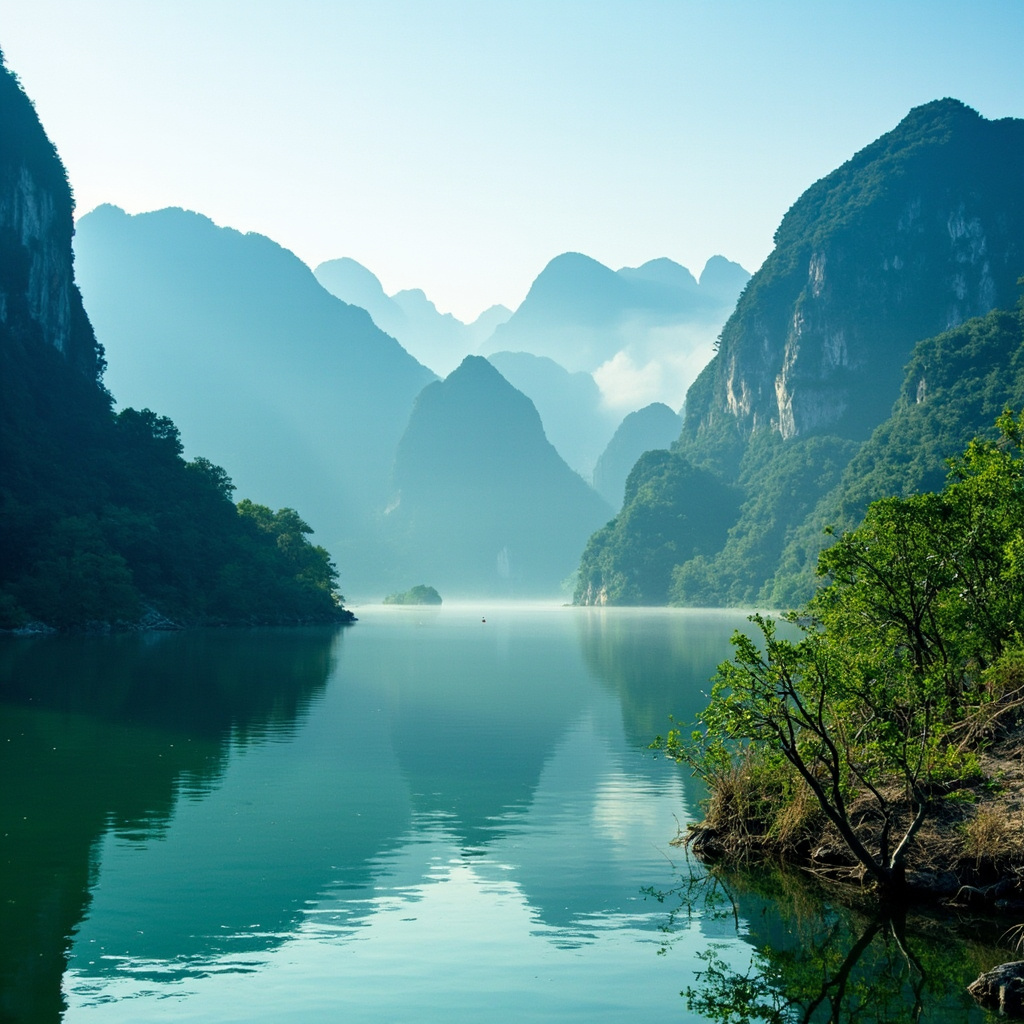
**Guilin Li River Scenery: China’s Most Beautiful Landscape**
*Meta Title (recommended for SEO):* **Guilin Li River Scenery – Discover China’s Most Stunning Karst Views**
*Meta Description:* Explore the breathtaking Guilin Li River scenery, from karst peaks to Yangshuo’s rural charm. Find practical travel tips, best time to visit, and must‑see attractions in this comprehensive guide.
—
## Introduction
When travelers dream of China’s postcard‑perfect vistas, **Guilin Li River scenery** often springs to mind. Nestled in the Guangxi Zhuang Autonomous Region, Guilin is celebrated for its otherworldly karst formations, gentle waterways, and a landscape that has inspired poets, painters, and wanderers for centuries. The Li River, winding its way from Guilin to the bustling town of Yangshuo, frames these limestone pillars like a living gallery. This article walks you through every essential experience—from cruising the river to cycling through paddy fields, tasting local noodles, and uncovering hidden caves—so you can plan an unforgettable journey.
—
## 1. The Iconic Karst Landscape
Guilin’s karst terrain is the result of millions of years of limestone dissolution, giving rise to thousands of sharply‑peaked hills, deep valleys, and dramatic cliffs. The formations rise abruptly from the flat river plain, creating a striking contrast of sky, water, and stone. UNESCO recognizes this region as part of the “South China Karst,” a world heritage site, underscoring its global significance.
– **Unique Features:** Needle‑sharp peaks such as **Fubo Hill**, **Diecai Hill**, and the legendary **Elephant Trunk Hill** are just the beginning. Each hill often carries a legend, making the landscape as culturally rich as it is visually stunning.
– **Best Vantage Points:** While many viewpoints are accessible from the city, the most immersive perspectives appear from the river itself and from the surrounding countryside, where the hills seem to float above the mist.
—
## 2. The Li River Cruise Experience
A **Li River cruise** is the quintessential way to absorb Guilin Li River scenery. Most tours depart from Guilin’s downtown dock and glide downstream for about 4–5 hours, ending in the vibrant town of Yangshuo.
### What to Expect
| **Segment** | **Highlights** |
|————-|—————-|
| **Guilin to Yangshuo** | The first hour passes by cityscapes and the iconic Elephant Trunk Hill. As you leave the urban area, the river narrows and the karst walls rise dramatically. |
| **Middle Section** | Small fishing villages, bamboo groves, and the famous **Nine‑Horse Fresco**—a rock formation said to depict nine horses—are visible. |
| **Final Stretch** | Approaching Yangshuo, you’ll see the legendary **Green Lotus Peak** and the serene **Yulong River** confluence. |
### Practical Tips
– **Booking:** Opt for a licensed riverboat rather than a private charter; they often include bilingual guides.
– **Timing:** Early morning cruises (departure around 8 am) catch the sunrise over the peaks and avoid afternoon crowds.
– **Dress:** Layered clothing is advisable; the river breeze can be cool, especially in spring and autumn.
– **Camera Gear:** A wide‑angle lens captures the sweeping panoramas, while a telephoto helps with distant rock details.
—
## 3. Yangshuo County – A Countryside Gem
Yangshuo sits at the heart of Guilin Li River scenery, offering a blend of traditional Chinese culture and modern backpacker amenities.
– **West Street (Xijie):** The oldest pedestrian street in China, lined with cafés, souvenir shops, and vibrant nightlife. Perfect for an evening stroll after a day of exploration.
– **Cultural Shows:** The **“Impression Liu Sanjie”** open‑air stage performance, directed by Zhang Yimou, brings local folk songs and river scenes to life with thousands of lanterns.
– **River Activities:** Apart from cruises, you can try **bamboo rafting** on the Yulong River or **kayaking** along calm sections of the Li River.
—
## 4. Elephant Trunk Hill
Standing at the confluence of the Li River and the Taohua River, **Elephant Trunk Hill** (Xiangshan) is the most recognizable landmark of Guilin. Its name derives from the natural arch that resembles an elephant drinking water.
– **Visiting Tips:** The hill is within the city limits, so you can reach it by bus or taxi in under 20 minutes. The best photos are taken from the **waterfront promenade** at sunrise or from the **viewing platform** inside the park.
– **Cultural Note:** According to legend, the hill was once a sacred elephant that guarded the city until a poet released it back to the river.
—
## 5. Reed Flute Cave (Ludi Yan)
A short drive north of downtown Guilin brings you to the **Reed Flute Cave**, a subterranean wonderland illuminated by colorful LED lights.
– **Highlights:** Stalactite and stalagmite formations have been given whimsical names like “Crystal Palace,” “Dragon Pagoda,” and “Virgin Forest.” Guided tours (available in English) explain the geological processes.
– **Visitor Information:** Open daily 8:30 am–5:00 pm; ticket price includes a guided tour. Plan 1–2 hours for the visit.
– **Accessibility:** The cave paths are smooth, but there are some stairs; comfortable walking shoes are recommended.
—
## 6. Cycling Through the Karst Fields
For an active perspective on **Guilin Li River scenery**, rent a bike and explore the network of quiet lanes that weave between the karst hills.
### Popular Routes
| **Route** | **Distance** | **Level** | **Key Stops** |
|———–|————–|———–|—————-|
| **Yangshuo–Gaotian** | 15 km (9 mi) | Moderate | Rice terraces, local farms, sunrise over Elephant Hill |
| **Yulong River Loop** | 20 km (12 mi) | Easy | Bamboo bridges, water buffalo, small tea houses |
| **Moon Mountain & Big Banyan** | 25 km (15 mi) | Challenging | Panoramic hilltops, ancient banyan tree |
– **Bike Rentals:** Most guesthouses and tour agencies in Yangshuo offer mountain bikes and e‑bikes for ¥30–¥80 per day.
– **Safety:** Wear a helmet, stay on marked paths, and be cautious of occasional road traffic.
—
## 7. Savoring Guilin’s Local Cuisine
No journey through **Guilin Li River scenery** is complete without tasting the region’s culinary delights.
– **Guilin Rice Noodles (Guilin Mifen):** The iconic breakfast dish—thin rice noodles served in a hot, spiced broth with pickled beans, peanuts, and fresh herbs. The most famous spots are found on **Shancha Jie** (Snack Street).
– **Beer Fish (Pi Jiu Yu):** Fresh fish from the Li River cooked in a savory, slightly spicy beer sauce. A favorite in Yangshuo’s riverside restaurants.
– **Water Snail (Shui Niu Tang):** A delicate broth of freshwater snails seasoned with lemongrass, mint, and chili; perfect for a light lunch.
– **Sticky Rice Dumplings (Zongzi) & Sweet Rice Balls (Tangyuan):** Available at local markets, these sweets make great snacks while wandering.
**Dining Tips:**
– Opt for restaurants with a posted menu and bilingual staff to avoid language barriers.
– Street food is safe if you choose vendors that cook to order and avoid raw salads.
—
## 8. Best Time to Visit
| **Season** | **Weather** | **Scenery & Events** |
|————|————|———————-|
| **Spring (Mar‑May)** | 15‑25 °C (59‑77 °F), occasional rain | Green hills, blooming azaleas; Li River mist creates ethereal photos. |
| **Summer (Jun‑Aug)** | 28‑35 °C (82‑95 °F), high humidity, occasional typhoons | Lush foliage; ideal for water activities, but expect larger crowds. |
| **Autumn (Sep‑Nov)** | 18‑28 °C (64‑82 °F), clear skies | Crisp air, golden rice paddies; best for photography. |
| **Winter (Dec‑Feb)** | 5‑15 °C (41‑59 °F), cool nights | Fewer tourists, soft lighting; occasional frost adds a magical touch. |
– **Peak Travel:** The Chinese National Day holiday (early October) sees a surge in domestic visitors. If you prefer solitude, plan for late November or early March.
—
## 9. Practical Travel Tips
### Getting There & Around
– **By Air:** Guilin Liangjiang International Airport (KWL) offers direct flights from major Chinese cities and some international hubs. A 30‑minute airport shuttle bus reaches downtown.
– **By Train:** High‑speed trains connect Guilin with Guangzhou, Shenzhen, and Nanning. The new **Guilin North Railway Station** is centrally located.
– **Local Transport:** Buses and the modern **Guilin Metro** (Line 1) provide easy city navigation. For Yangshuo, local buses or rented e‑bikes are popular.
### Visa & Documentation
– Most foreign nationals need a **tourist visa (L)** for China. Apply at the Chinese embassy or use a visa service for convenience. Ensure your passport is valid for at least six months beyond entry.
### Language & Communication
– Mandarin Chinese is the official language. English signage is common in tourist zones, but learning a few basic phrases (e.g., “你好” – hello, “谢谢” – thank you) enhances interactions.
– Download offline maps (Google Maps with VPN or Baidu Maps) for reliable navigation.
### Money & Payments
– **Cash:** Chinese Yuan (CNY) is widely accepted. Carry small denominations for markets and small eateries.
– **Mobile Payments:** Alipay and WeChat Pay dominate; set up an account linked to a Chinese bank card or use a prepaid travel card if available.
– **ATMs:** Available throughout Guilin and Yangshuo; inform your bank about travel plans to avoid card blocks.
### Health & Safety
– **Tap water** is not potable; use bottled or filtered water.
– **Sun Protection:** Sunscreen, a hat, and sunglasses are essential, especially during summer cruises.
– **Travel Insurance:** Highly recommended for medical emergencies, trip cancellations, and equipment loss.
### Packing List
– **Comfortable walking shoes** (for karst trails and cave floors)
– **Lightweight rain jacket** (spring and autumn)
– **Reusable water bottle** (reduce plastic waste)
– **Power adapter** (China uses Type I/II sockets, 220 V)
– **Portable charger** (for long boat rides)
### Respectful Travel
– Follow local customs: remove shoes when entering homes or temples, and avoid pointing the soles of your feet at others.
– Preserve the natural beauty: stick to designated paths, do not litter, and support eco‑friendly tour operators.
—
## Conclusion
The **Guilin Li River scenery** encapsulates the essence of China’s natural wonder—a landscape where towering karst peaks rise from crystal‑clear waters, where ancient legends meet modern adventure, and where every bend of the river reveals a new masterpiece. From leisurely cruises past Elephant Trunk Hill to cycling through emerald rice fields, from tasting steaming bowls of Guilin rice noodles to marveling at the illuminated stalactites of Reed Flute Cave, this destination offers a tapestry of experiences for every traveler.
Whether you’re a photographer chasing golden‑hour light, a foodie eager to explore aromatic street markets, or a nature lover seeking serene karst vistas, Guilin and the Li River promise memories that will linger long after you’ve left their tranquil shores. Pack your bags, brush up on a few Mandarin phrases, and set out to discover why this corner of Guangxi is celebrated as China’s most beautiful landscape.
*Ready to explore? Book your Li River cruise, reserve a bike in Yangshuo, and let the timeless scenery of Guilin sweep you off your feet.*