## Introduction
China’s street food scene is a vivid, fast‑moving tapestry of flavors, aromas, and culinary traditions that have been passed down for centuries. From the sizzling woks of Beijing’s night markets to the fragrant herb‑laden stalls of Chengdu, every region offers its own signature snacks and local delicacies. For food‑loving travelers, a walk through a Chinese market is not just about tasting new dishes; it is an immersive experience that reveals the country’s geography, history, and daily life. This guide dives deep into the most popular Chinese street foods, outlines regional specialties, and provides practical tips so you can navigate the bustling stalls like a local.
### Why Chinese Street Food is a Cultural Icon
Street food in China is more than a quick bite; it is a social ritual. Whether it’s a morning *jianbing* (savory crepe) bought from a mobile cart or a late‑night skewer of lamb *chuan’r* shared with friends, the act of eating on the go reflects the rhythm of Chinese urban life. Many of these snacks originated in the working‑class neighborhoods of the 20th century, when inexpensive, portable foods fed laborers and students alike. Today, they have become emblematic of Chinese food culture, celebrated in food blogs, documentaries, and even culinary diplomacy.
### What to Expect on a Chinese Street Food Tour
– **Diverse Cooking Techniques:** Grilling, steaming, deep‑frying, stir‑frying, and pickling all appear on a single street.
– **Flavor Profiles:** Expect a balance of sweet, sour, salty, bitter, and umami, often with a spicy kick in the south and a more savory, wheat‑based focus in the north.
– **Portability:** Most items are designed to be eaten with one hand, using simple wrappers or sticks.
– **Cost:** Most street snacks range from ¥5 to ¥30 (about $0.70 – $4.30), making them accessible to almost everyone.
## Popular Snacks Across China
### Jianbing – The Quintessential Chinese Street Crepe
Originating in Shandong, *jianbing* has become a national breakfast staple. A thin wheat batter is spread onto a hot iron plate, topped with an egg, crispy *baocan* (fried dough), scallions, cilantro, and a choice of sauces—most commonly a savory soybean paste and a hint of chili. The finished pancake is folded into a roll, cut in half, and handed to you in a paper sleeve. Prices typically hover around ¥8 – ¥12.
**Pro tip:** Look for stalls that add a “crispy” *baocan* and a drizzle of sesame oil; that’s where the signature crunch comes from.
### Xiaolongbao – Soup Dumplings from Shanghai
Though often served in dim‑sum restaurants, *xiaolongbao* can also be found at dedicated street counters in Shanghai. These delicate buns are filled with pork and a rich, gelatinous broth that turns into a luscious soup when steamed. The dough is thin but sturdy enough to hold the liquid. Expect to pay ¥10 – ¥20 for a basket of eight.
**How to eat:** Use chopsticks to lift a dumpling, gently bite a corner, sip the broth, then enjoy the whole bite.
### Stinky Tofu – A Bold Fermented Delight
Found throughout China but especially popular in Changsha and Nanjing, *stinky tofu* is deep‑fried blocks of fermented soy bean curd. The fermentation gives the tofu a pungent aroma that can be off‑putting at first, but the crispy exterior and juicy interior deliver a savory, slightly salty flavor. Prices are low—around ¥5 – ¥10 per skewer.
**Flavor twist:** Some vendors marinate the tofu in a spicy sauce made from chili, garlic, and fermented bean paste, creating a fiery contrast.
### Scallion Pancake (Cong You Bing)
This flaky, layered flatbread is pan‑fried with a generous amount of chopped scallions embedded in the dough. The result is a crisp, golden crust with a chewy, aromatic center. A single pancake costs about ¥5 – ¥8. It’s often sold by street vendors who fold it into quarters and wrap it in a paper sleeve for easy transport.
### Lamb Skewers (Chuan’r) – The Night‑Market Grill Star
Originating from the Xinjiang region, *chuan’r* are bite‑size pieces of marinated lamb threaded onto thin metal sticks and grilled over charcoal. The meat is typically seasoned with cumin, chili flakes, and a pinch of salt. Night markets in Beijing, Xi’an, and Chengdu have rows of *chuan’r* stalls, each with its own spice blend. Expect to pay ¥3 – ¥6 per skewer.
**Serving suggestion:** Squeeze a bit of lemon juice and sprinkle some ground cumin before eating.
### Fried Dough Twists (Mahua)
*Mahua* are twisted strips of wheat dough that are deep‑fried until they puff up and turn golden. They are crunchy on the outside, slightly chewy inside, and often flavored with a sweet glaze or a savory soy sauce coating. Prices are minimal—¥2 – ¥5 per piece. They are a common snack at rural markets and are also offered as a festive treat during the Chinese New Year.
### Rice Noodles (Guangxi‑style)
In Guilin and the surrounding Guangxi province, rice noodles are served in a clear, sour‑spicy broth topped with pickled vegetables, peanuts, and fresh herbs. The dish, known locally as *guangxi rice noodles*, is inexpensive (¥8 – ¥15) and perfect for a light lunch. Vendors often give you a choice of protein—pork, beef, or chicken—so you can customize the bowl.
### Candied Fruit on a Stick (Tanghulu)
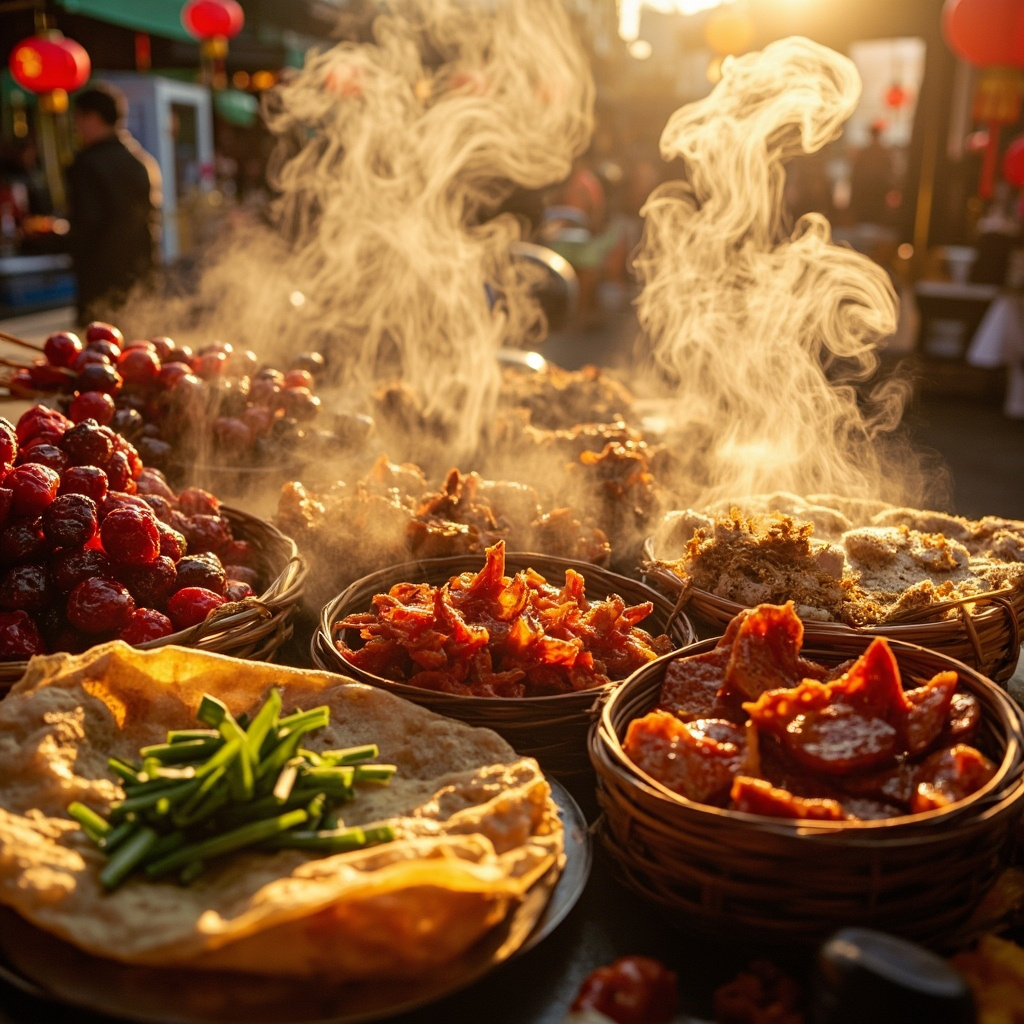
During winter, you’ll see vendors selling *tanghulu*—hawthorn berries or other seasonal fruits skewered on a bamboo stick and coated in a thin, hardened sugar syrup. The result is a sweet‑tart candy that crunches when you bite. Prices range from ¥5 – ¥10 per stick. It’s a nostalgic treat for many Chinese and a fun introduction for visitors.
## Regional Delicacies
### Northern China: Beijing and the North
#### Peking Duck Pancakes (Mini Version)
While the full Peking duck experience is a sit‑down affair, street vendors offer mini *peking duck* pancakes—small, thin wrappers filled with sliced duck, cucumber, and hoisin sauce. These are quick to eat and cost about ¥10 – ¥15 for a set of three.
#### Baozi – Steamed Buns
Steamed buns come in many forms across the north. The classic *baozi* is a fluffy, white dough filled with pork, vegetables, or red bean paste. A single bun typically costs ¥3 – ¥6. Look for the “Soup Bun” variety (also known as *xiaolongbao* in Shanghai) at night markets for an extra burst of broth.
#### Mung Bean Noodles
In the northeast, especially in Harbin, cold *mung bean noodles* (or *fensi*) are tossed in a sesame‑based sauce with cucumber strips, garlic, and chili oil. They are refreshing on hot summer days and cost about ¥8 – ¥12.
### Eastern China: Shanghai and Jiangsu
#### Shengjian Bao – Pan‑Fried Soup Dumplings
Unlike their steamed cousins, *shengjian bao* are cooked in a shallow pan, creating a crispy bottom while retaining the juicy filling. These are often sold at early‑morning breakfast stalls, priced at ¥10 – ¥20 for a small steamer basket.
#### Shanghai Fried Noodles (Chow Fun)
Wide rice noodles stir‑fried with beef, bean sprouts, and a smoky soy sauce. The dish showcases the wok‑hei (breath of the wok) that defines many Shanghai street foods. A generous portion costs around ¥15 – ¥25.
### Western China: Sichuan and Xi’an
#### Mapo Tofu – Spicy Tofu Street Style
A street version of the classic Sichuan dish, *mapo tofu* features soft tofu cubes swimming in a fiery sauce of fermented black beans, Sichuan peppercorns, and minced pork. Vendors serve it in small paper cups with a side of rice, costing ¥8 – ¥12.
#### Dan Dan Noodles
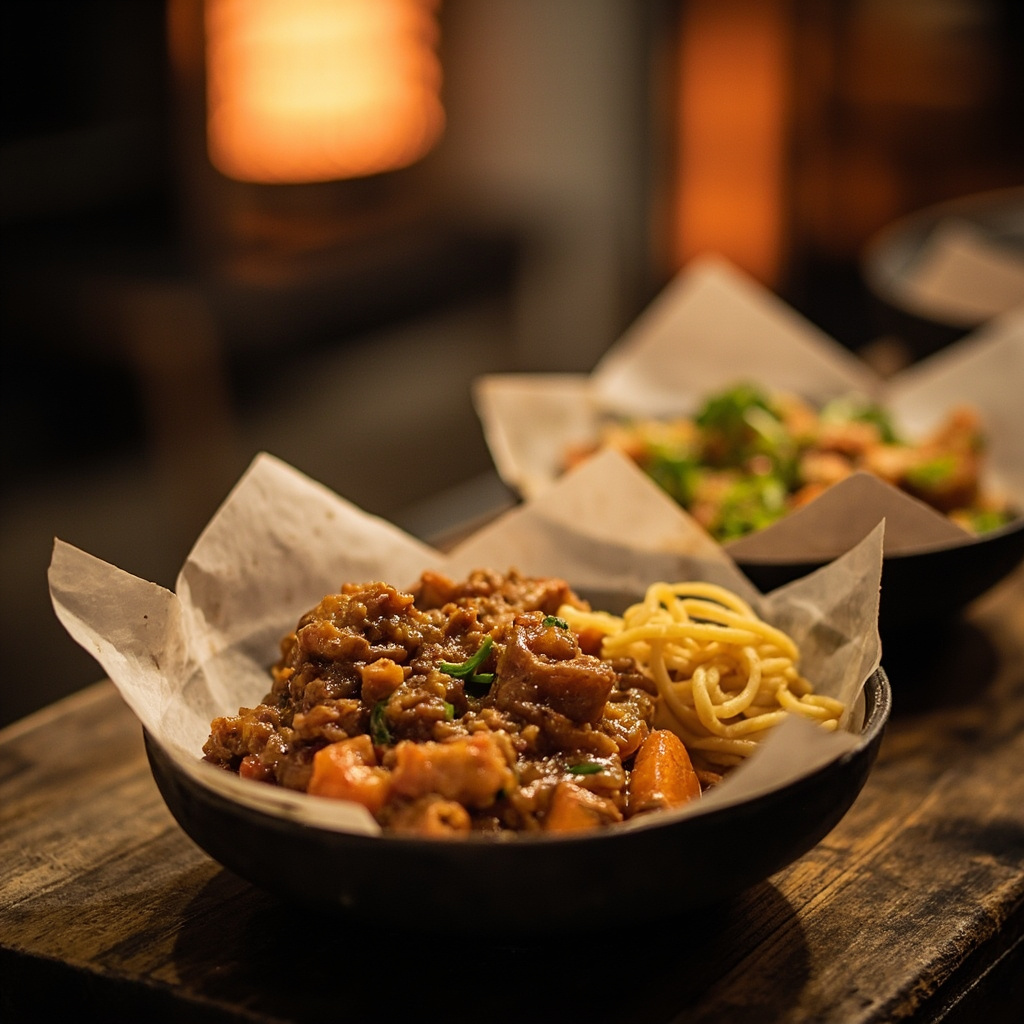
Named after the pole‑carrying vendors of old Chengdu, *dan dan noodles* combine thick wheat noodles with a spicy sesame‑based sauce, ground pork, and pickled vegetables. A bowl typically runs ¥10 – ¥15.
#### Roujiamo – Chinese Hamburger
Originating in Shaanxi, *roujiamo* is a flatbread “bun” filled with braised, spiced pork. The meat is stewed for hours with star anise, cinnamon, and ginger, then chopped and tucked into a crispy *mo* (bread). Prices are about ¥8 – ¥12.
#### Biangbiang Noodles
These wide, belt‑like noodles are a signature of Shaanxi cuisine. Served with a generous drizzle of chili oil, soy sauce, garlic, and vinegar, they are both spicy and sour. Expect to pay ¥12 – ¥18 per bowl.
### Southern China: Guangdong and Fujian
#### Char Siu on a Stick
Cantonese roast pork, glazed with honey and five‑spice, is often sold as *char siu* skewers. The caramelized exterior and tender interior make it a favorite at night markets in Guangzhou and Shenzhen, priced at ¥5 – ¥10 per skewer.
#### Cheung Fun – Rice Noodle Rolls
Soft, translucent rice noodle sheets are rolled around fillings such as shrimp, beef, or char siu, then drizzled with sweet soy sauce and a sprinkle of sesame seeds. A plate typically costs ¥8 – ¥12.
#### Fish Balls
In Hong Kong and coastal Guangdong, fish balls made from ground fish paste are boiled and served in a fragrant broth with green onions and cilantro. Prices are modest—¥5 – ¥8 for a small bowl.
### Central China: Hunan and Hubei
#### Spicy Crayfish (Seasonal)
During summer, Hunan’s night markets explode with *spicy crayfish*—freshwater crabs boiled in a broth of dried chili, garlic, and Sichuan peppercorns. They are messy to eat but worth the effort. A portion of 500 g costs around ¥30 – ¥50.
#### Hunan Spicy Beef Jerky
Thin strips of beef are marinated in a fiery blend of chili flakes, soy sauce, and rice wine, then dried and grilled. This snack offers a punch of heat and can be found in most Hunan street stalls for ¥10 – ¥15 per pack.
## Street Food Markets and Where to Find Them
### Famous Night Markets: Wangfujing, Jinli Street, and Guiyuan
– **Wangfujing (Beijing):** A bustling pedestrian street where traditional snacks sit alongside modern fusion stalls. Don’t miss the *stinky tofu* and *candied hawthorn* on a stick.
– **Jinli Street (Chengdu):** Famous for its historic feel, Jinli offers a wide range of Sichuan snacks, including *mapo tofu* cups and *dan dan noodles*.
– **Guiyuan (Guangzhou):** Known for Cantonese dim sum and fresh seafood, Guiyuan’s market stalls open early and stay busy until late night.
### Tips for Navigating a Chinese Night Market
1. **Arrive early or stay late:** Evening rush usually peaks between 7 pm and 9 pm; arriving at 8:30 pm can mean shorter lines.
2. **Follow the crowd:** Stalls with long queues often have the freshest turnover and the most popular items.
3. **Bring cash:** While many vendors accept mobile payments (Alipay, WeChat Pay), small cash is still handy for low‑priced items.
4. **Look for the “fresh” sign:** Some markets display a small sign indicating “freshly made” (现做) which often means the food is cooked to order.
## Etiquette and Practical Tips for Travelers
### Ordering and Payment
– **Point and smile:** If you don’t speak Mandarin, pointing to the item you want is widely understood.
– **Ask for “shao” (less spice) or “duo” (extra):** Most vendors will adjust the heat level on request.
– **Mobile payment:** Download a mobile payment app before your trip; many stalls only accept QR code payments.
### Hygiene and Food Safety
– **Observe the cooking process:** Choose stalls where the food is cooked in front of you at high temperatures.
– **Carry hand sanitizer:** Helpful after handling communal utensils or wiping hands.
– **Drink bottled water:** Tap water is not recommended, but bottled or boiled water is readily available.
### Dietary Restrictions and Vegetarian Options
– **Vegetarian:** Look for stalls labeled “素食” (vegetarian) or ask for “不要肉” (no meat). Vegetable *baozi*, *cong you bing* (plain), and *tanghulu* (fruit only) are usually safe.
– **Gluten‑free:** Rice‑based snacks such as *cheung fun*, *rice noodles*, and *tanghulu* are naturally gluten‑free, but always check the sauce ingredients.
## Conclusion
Chinese street food is a vibrant gateway into the country’s diverse culinary landscape. From the comforting wheat‑flour folds of a *jianbing* in Beijing to the fiery *dan dan noodles* of Chengdu, each bite tells a story of regional ingredients, historical migrations, and everyday ingenuity. By exploring the bustling night markets, respecting local etiquette, and experimenting with the endless variety of snacks, you’ll discover that the best Chinese food isn’t always found on a restaurant menu—sometimes it’s right there on a steaming cart, waiting to be sampled. So pack your appetite, bring a few yuan, and set out on a flavor‑filled adventure across the streets of China. Happy eating!