I still remember the exact moment the city skyline faded into open sky. I was crammed into a rattling green train leaving Beijing, watching the concrete sprawl dissolve into flat, endless green. That’s when I knew we were crossing a threshold. Hohhot isn’t just a capital city anymore. It’s the messy, wonderful gateway to the Inner Mongolian steppe, and it’s absolutely worth the six-hour trek.
Most people fly straight through to see one thing, then bounce back to the metropolis. You can do that if you want. But trust me, you’ll miss the whole point. This place doesn’t rush. It breathes. And once you get past the modern high-rises, the real story starts rolling across the grass.
Getting past the airport and into the real Hohhot
Hohhot looks like any other growing Chinese city at first glance. Glass towers, crowded cafes, and a food market that smells like cumin and charred fat. I’ll be honest, I was pretty skeptical when I first booked a room near the old city wall. I expected some sterile, planned-out tourist trap. Instead, I found a place that actually feels lived-in.
You have to start at the Dazhao Temple area. It’s not fancy. The stone steps are worn down by generations of boots, and the monks shuffle around in yellow robes while tourists try to sell them plastic prayer wheels. I bought a bowl of butter tea from a street vendor for three yuan. It tasted weird at first. Salty. Rich. Like drinking warm cream with a pinch of soy sauce. But by the third sip, it warmed me up better than any coffee shop in San Francisco ever could.
The vibe there is all Tibetan Buddhism and everyday life bleeding together. You’ll see young kids doing homework on wooden benches right next to elders turning prayer strings. It’s not staged. It’s just how people live here. I spent two afternoons just walking around, watching dogs nap in the shade, smelling roasted mutton skewers, and listening to monks chant from somewhere nearby. Sound interesting? It’s exactly the kind of slow, grounded travel I crave.
Food is where this city really shines. Don’t even bother looking for a fancy restaurant. Just follow the crowd to any place serving hand-grabbed mutton or milk skin. I sat down at a spot called Geyin Si with a local guy named Lao Li. He ordered the whole deal. Fresh noodles, fried tofu, and a steaming pot of lamb stew that made my eyes water. He laughed when I tried to eat it with chopsticks and handed me a pair of thick wooden sticks instead. That’s how you learn. Right?
Chasing the grassland ghosts in Zhuluo Banner
Leaving the city is easy. You just hop on a bus or hire a driver, and within ninety minutes you’re staring at nothing but horizon and grass. The steppe isn’t some postcard fantasy. It’s rougher. Wilder. And completely different depending on which patch of dirt you pick.
I headed out to Zhuluo Banner for a weekend stay. My host family runs a small cooperative, but they still keep things pretty traditional. We stayed in a proper ger, the kind with wood framing and wool felt insulation. It sounds cold, but the stove inside kept it toasty. I woke up at dawn, stepped outside, and watched smoke curl up from a dozen other gers. A kid was already leading sheep toward the morning pasture. No fences. No roads. Just animals and earth figuring each other out.
You’d think living like this would be exhausting. And it is. I helped break camp after breakfast. Packing up a ger takes serious muscle. You roll the thick walls, tie the poles, and lift everything onto a truck while your hosts yell good-natured jokes over the wind. I sweat through three shirts just loading my sleeping bag. But then we hopped on horseback and rode out to check the herd. The moment I got up on that chestnut mare, my shoulders dropped. I finally understood why nomadic herders have stuck to this lifestyle for centuries. The land pays you back in peace, even if it demands hard work.
People always ask me what the best time to visit is. Summer, obviously. But I’ll tell you a secret. Late September hits different. The grass turns gold, the air gets crisp, and the light stretches long and low across the hills. I rode through a field of wild buckwheat that came up to my knees. It smelled sweet and dusty. My guide, a quiet guy named Batdorj, pointed to a distant ridge and told me his grandfather used to graze sheep there before the borders shifted. He didn’t say much else. I didn’t need him to.
Staying with a herder family changes how you look at food, too. They don’t waste anything. We drank fermented mare’s milk that tasted sharp and fizzy. I gagged on the first gulp, but Batdorj just smiled and kept pouring. By day two, I was asking for seconds. They served roasted calf liver on a hot stone, seasoned with just salt and wild onions. It was gamey and rich. Honestly, it beat every steakhouse I’ve tried in Shanghai. Try something new. You’ll thank yourself later.
The quiet hum of rockets rising above the steppe
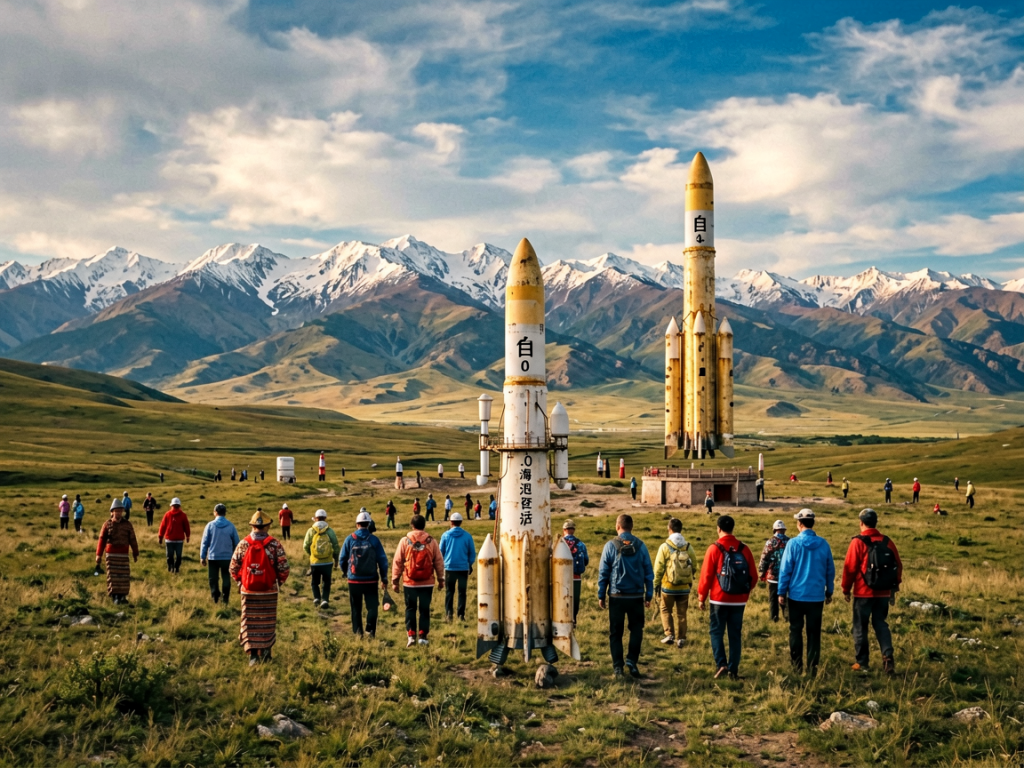
Now for the part that trips most travelers up. About two hundred kilometers northeast of Hohhot sits the Zhidongshan Aerospace Center. It’s a working missile test site, and honestly, it’s way more fascinating than anyone expects. I never thought I’d fall in love with a restricted military zone, but here we are.
I managed to get permission to visit during a public observation window last spring. You need a permit, and they don’t give them out lightly. I emailed the tourism office, explained my angle, and waited three weeks. When I finally drove up the dirt road, the landscape looked completely normal. Dry scrub, low hills, and a few grazing goats. Then the ground started vibrating.
It starts as a low thrum in your chest. Then it becomes a sound you feel in your teeth. Within forty seconds, the sky splits open. I’ve seen launch videos online, but nothing prepares you for the raw physical push of it. A Long March rocket cleared the tower, trailing orange fire and white vapor. It didn’t look like CGI. It looked heavy. Real. Dangerous. The shockwave rolled over the hills three minutes later, kicking up dust and making my camera shake.
What strikes you isn’t just the engineering. It’s the location. They built these rocket-launch sites right in the middle of nowhere because the steppe offers a perfect flight corridor. No cities. No traffic. Just open space stretching to the horizon. I stood there with a bunch of locals who’d driven in from Hohhot just to watch. We clapped when it cleared the atmosphere. Someone cracked open a thermos of hot water. We watched the contrail fade into the blue. It felt oddly peaceful, somehow.
Visiting here requires patience. You can’t just show up and park your car. The staff are strict about safety zones, and they speak mostly Mandarin. But the experience sticks with you. It reminds you that China isn’t just about ancient temples and neon skylines. It’s also pushing satellites into orbit from dirt roads and shepherd trails. I’m no aerospace expert, but standing on that plateau felt like watching history happen in real time. Surprised?
Why this corner of the map actually works
I’ve lived in China for eight years now, and I’ve seen enough polished tourist traps to last a lifetime. Hohhot and the surrounding steppe don’t try very hard. That’s exactly why they work. You don’t need to book a luxury resort to have a good time here. A clean guesthouse, a trusted driver, and a willingness to get a little dirty goes a long way.
The pace slows you down. I know that sounds cliché, but it’s true. Cities like Chengdu or Xi’an pull you forward with their energy. This place pulls you inward. You notice the wind changing direction. You notice how long it takes for shadows to stretch across the grass. You notice the difference between a herder’s daily reality and the Instagram version of rural China. I prefer the real stuff.
Logistics are easier than you’d expect. Buses run daily from Beijing to Hohhot. Trains take longer but cost half as much. Once you’re there, hiring a private car for a multi-day loop is cheap. I paid about four hundred yuan a day for a driver who knew every dirt track and hidden pasture. He picked up my friends along the way, refilled our water, and even negotiated prices when we stopped for lunch. That’s the hidden advantage of traveling in the north. People actually stop to talk.
Don’t come expecting five-star hotels or English menus. Come expecting solid food, open skies, and a chance to watch a rocket carve a line through a quiet afternoon. Pack layers. The wind bites. Bring cash. Small vendors don’t take digital payments out in the counties. And leave your phone on airplane mode once you cross the city limits. The signal drops fast anyway.
I used to think the steppe was just empty space. Now I know it’s full of invisible lines. Trade routes, grazing boundaries, satellite corridors, monastery paths. Everything connects here, even if it doesn’t look like it at first glance. Hohhot sits right in the middle of it all, serving milk tea and watching the sky. I’ll keep coming back for that. If you’re planning a trip north of Beijing, skip the museum tours and rent a car. The real China is waiting out there in the grass.