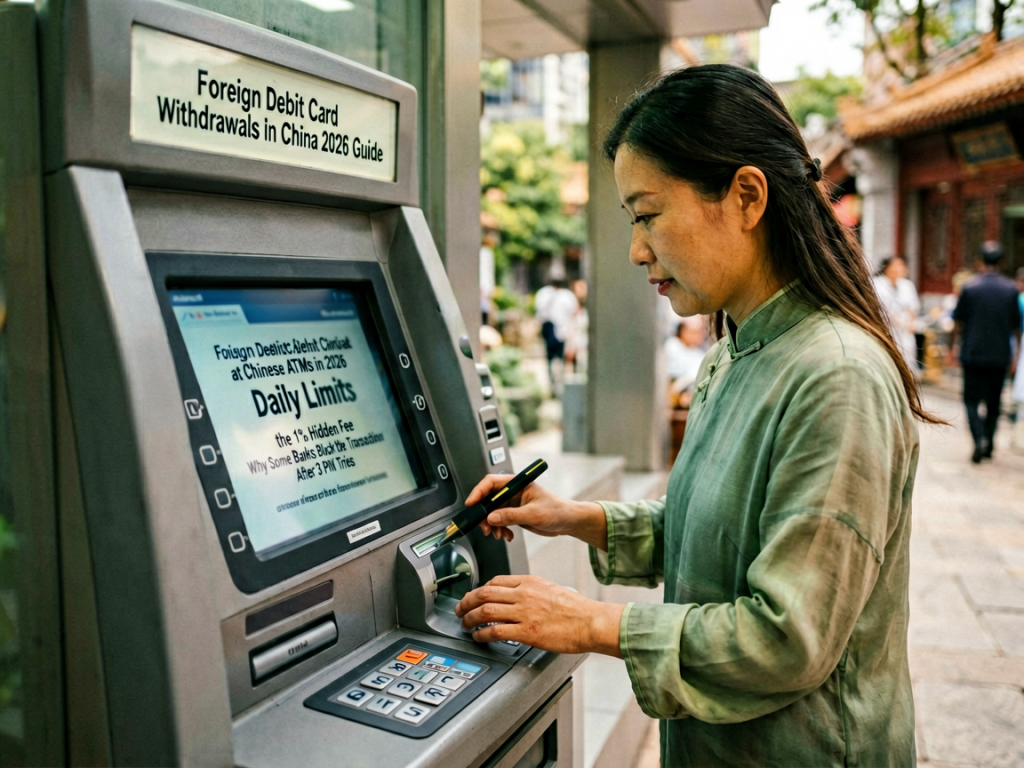
I’ll never forget standing in front of a dimly lit ATM in a Chengdu alleyway last winter. My stomach was growling from three hours of noodle hunting, and the only place serving authentic dan dan mian down that street didn’t accept digital wallets. I swiped my American Visa debit card, punched in my four-digit PIN, and watched the screen flash “Transaction Declined.” I felt that familiar mix of panic and frustration.
Fast forward to 2026, and the situation hasn’t really changed, even though half the country pays with facial recognition now. Cash still moves through the underground markets, rural train stations, and late-night snack stalls. If you’re planning to pull money from a Chinese ATM with a foreign debit card, you need to know the rules before you pack your bags.
The Real ATM Limits You’re Actually Facing
Here’s the thing about withdrawing cash in China right now. Every single bank enforces a hard daily limit on foreign cards, and it’s usually set around 10,000 RMB per day. That’s roughly fourteen hundred US dollars, depending on how the market shakes out.
I tested this myself at a Bank of China branch near West Lake in Hangzhou. I asked the teller directly if I could bump up the limit for a special trip. She shook her head and pointed to a laminated sign in both Mandarin and English.
The rule is strictly enforced for anti-money laundering compliance. You won’t get around it, and you shouldn’t even try. That said, ten grand a day is plenty for most travelers. I’ve spent weeks in Yunnan pulling small amounts across different machines, and it never felt like a burden.
Just spread your withdrawals out if you’re planning bigger purchases like trekking gear or long-distance bus tickets. The process is smoother when you respect the cap instead of fighting it. Some major networks handle the conversion automatically, while others route through UnionPay first.
I prefer routing through UnionPay whenever possible because their exchange rates usually beat what my home bank offers on a straight USD to CNY swap. It’s cleaner, faster, and honestly less confusing. Right?
That Sneaky One Percent Hidden Fee
You’re probably wondering where that extra charge comes from when your statement finally posts. Most foreign debit cards get hit with a standard two to three dollar flat fee just for touching a non-domestic machine. But the real thief hides in the dynamic currency conversion option.
Look, I fell for this trap in Guangzhou during the Spring Festival. The ATM screen offered to charge me in dollars instead of yuan. I clicked yes because I wanted to see the exact amount upfront. Two days later, my bank statement showed a ninety-dollar loss on a five-hundred-yuan withdrawal.
I nearly threw my phone across the terminal. The merchant bank or the ATM operator tacks on a hidden percentage, usually sitting right around one percent, sometimes higher during peak travel seasons. They call it a convenience fee, but it’s basically just marking up the exchange rate behind the scenes.
To be fair, it’s not unique to China. You’ll find the same trick at airports in Tokyo or Berlin. I learned to always choose “charge in local currency” no matter what. It forces the conversion to happen through your own issuing bank, which follows standard wholesale rates.
The math works out heavily in your favor. Trust me on this one. Also, keep your receipt until the transaction actually clears. I’ve had to dispute charges twice because the ATM spat out a slightly different amount than what my card network logged.
Having paper backup saved me from eating a two-hundred-dollar loss on a single afternoon. It’s a small habit that protects your wallet when you’re miles from home. Surprised by how many travelers skip this step?
Why Your Card Freezes After Three Mistyped PINs
This part always catches newcomers off guard. You type your password wrong once because the keypad feels weird. You try again, but your fingers are cold. On the third attempt, the machine just eats your card and spits out a slip that says “Contact Your Bank.”
Chinese banking regulations treat PIN security differently than back home. The three-strike rule isn’t a suggestion. It’s a hard lockout trigger built into the terminal software itself.
I found out the hard way at an ICBC kiosk in Shenzhen after trying to withdraw cash for a late-night taxi ride to the airport. The keypad layout is also slightly different. Some machines number the keys top-to-bottom instead of left-to-right, which messes with muscle memory.
I’ve watched seasoned travelers stare at the screen, muttering curses under their breath. It’s completely understandable. If this happens to you, don’t panic. Your card isn’t stolen, and you haven’t ruined your credit score.
You just need to call your home bank’s international hotline. They’ll verify your identity and manually release the hold. It usually takes twenty minutes and a couple of security questions. I keep a printed card with my bank’s overseas support number tucked inside my passport wallet.
It’s saved me more times than I care to admit. The whole process feels bureaucratic, but it’s actually designed to protect you from skimmers and thieves. It’s better than most alternatives you’ll encounter while traveling solo. I’m no expert at coding, but even I can see why transaction security matters here.
Making Cash Work Without Losing Your Mind
Despite all these hurdles, I still think carrying a backup debit card for ATM pulls is worth it. Digital payments dominate everything in China, but they leave you stranded when apps refuse to verify foreign passports or when your battery dies in a remote village.
I ran into this exact problem last month in Guilin. My phone’s translation app crashed mid-conversation with a boat captain who only accepted cash for a private river tour. Because I’d already withdrawn two thousand yuan earlier that week, we shook hands and crossed the Li River without missing a beat.
Stick to major bank ATMs like ICBC, China Construction Bank, or Bank of China. They tend to have better English menus, clearer error messages, and fewer mechanical glitches. I avoid smaller regional banks unless absolutely necessary.
Their interfaces are often outdated, and customer support barely responds to foreign inquiries. Always tell your home bank you’re visiting China before you land. Fraud algorithms flag international transactions as suspicious by default.
I usually send a quick email update with my travel dates, and it stops ninety percent of those annoying decline emails. It’s a tiny step that saves hours of stress later. Carry small bills whenever possible, too.
Vendors at street food markets or rural train stations rarely carry change for a fifty-yuan note. I learned this the hard way after buying roasted sweet potatoes in Xi’an and watching the old man frantically dig through a cracked plastic pouch. I could be wrong about the economics, but handing him exact change felt respectful.
One last tip about exchange rates. The posted rate at the ATM isn’t always the final rate. Your issuing bank adds its own markup on top of the UnionPay rate. Shop around a bit, or consider opening a multi-currency account if you travel frequently.
The monthly fees disappear the moment you stop paying hidden conversion marks. Cash in China isn’t dead. It’s just quieter now. You’ll notice it less until you actually need it, usually in the most inconvenient places.
I love that balance. It keeps the traditional economy alive while pushing innovation forward. You can’t really appreciate either side without experiencing both firsthand. So grab your card, double-check your PIN format, and plan your withdrawals strategically.
The system isn’t perfect, but it’s workable. I’ve navigated it enough times to know that a little preparation beats a lot of last-minute scrambling. Safe travels, and may your balances stay healthy.