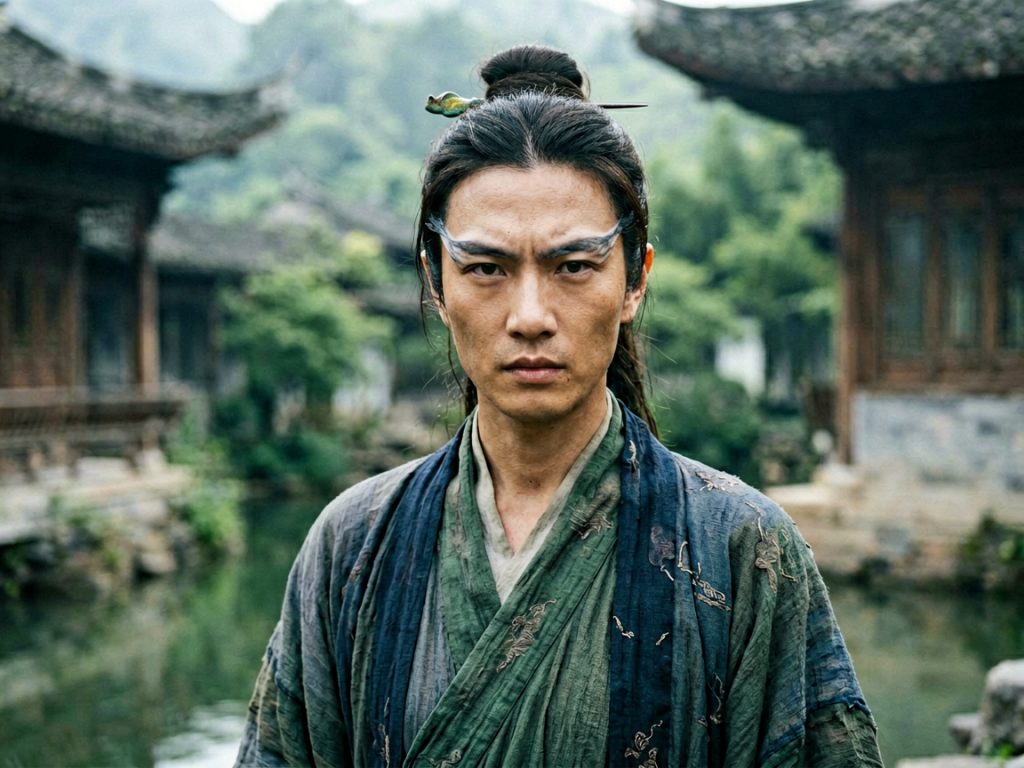
Here’s the thing about Chinese martial arts. You think you’ve seen the whole picture when you’ve watched a few old movies and maybe taken a beginner class at your local community center. Then you step into a dimly lit courtyard in Guangxi, and everything changes.
I’ll be honest. I wasn’t expecting to feel intimidated by an old man who couldn’t have weighed more than one hundred and twenty pounds soaking wet. But there he was, barefoot on cracked concrete, moving with a kind of heavy precision that made my ribs ache just watching him. That was my first real taste of Bak Mei.
The style doesn’t yell. It doesn’t need to. It just walks in and takes what it wants. People call it ruthless for a reason, and after spending weeks trying to wrap my head around its history and mechanics, I finally get why.
Where the White Eyebrows Actually Come From
You’ll hear a dozen different origin stories depending on which province you’re standing in. Most trace it back to the mid-Qing dynasty, right around the late seventeenth or early eighteenth century. The legend usually points to a wandering monk or a military deserter who developed a system built around devastating close-range strikes and unbreakable stances.
Ironically, the white eyebrow part of the name probably has nothing to do with actual facial hair. Back then, they named styles after historical figures, mythical animals, or even just poetic imagery. Some say it refers to an old master who literally grew white eyebrows during his retreat into the mountains. Others swear it’s just shorthand for something ancient and deeply rooted.
What I know for sure is that it took hold in southern China, especially around Guangxi and later Zhongshan in Guangdong. The terrain shaped it. Narrow valleys, steep hills, and dense bamboo forests don’t leave much room for flashy, sweeping kicks. You need compact power. You need structure. You need a way to end a fight before it even starts.
I remember asking a local instructor once if Bak Mei was really as old as people claim. He just handed me a heavy wooden mallet and told me to hit a rice bag for an hour. Time doesn’t matter. The bones do. I’m no expert, but that kind of blunt philosophy stuck with me.
Why Everyone Thinks It’s So Brutal
If you search Southern Chinese martial arts online, you’ll probably see Hung Gar for the sturdy stances, Wing Chun for the quick hands, and maybe Choy Li Fut for the dramatic extensions. Bak Mei sits quietly in the background, usually wrapped up in rumors of iron palms and breaking live coconuts with bare knuckles.
Is it true? Mostly. The conditioning work is intense, and yeah, they actually do strike hardened dough or sandbags until the skin thickens and the tendons adapt. It’s not about looking pretty. It’s about building a body that can absorb punishment while delivering devastating counterstrikes.
I tried basic stance drills myself under a very patient but strict sifu in a small community center outside Foshan. We stood in a low, wide horse stance for twenty minutes. My thighs burned. My knees clicked. The master didn’t yell. He just walked around tapping shins with a rattan cane. Solid. Not loose. He’d mutter.
The reputation for ruthlessness comes from how they train for combat. They don’t spar lightly. They drill pressure testing. You throw a punch, they block and immediately counter to a vulnerable spot. You step back, they slide forward and collapse the distance. It’s efficient, direct, and honestly a bit terrifying if you’re not prepared for it.
Sound interesting? Good. Because that’s exactly why outsiders either love it or avoid it completely. There’s no middle ground. You’re either buying into the grind or you’re walking away. I chose to stay.
What’s Behind the Closed Doors?
Secrecy runs deep in traditional Chinese martial arts. You’ve probably heard the stories about masters refusing to teach outsiders, or only passing techniques to blood relatives. Bak Mei definitely falls into that camp, at least historically.
I’ve sat in on a few private demonstrations where the master only spoke in hushed tones. He’d show you a hand position, tap it with two fingers, and stop right before explaining the power generation. It’s not some Hollywood conspiracy. It’s just practical. These guys spent decades building calluses, repairing injuries, and figuring out how to channel kinetic energy without blowing out their shoulders.
They don’t hand that over to someone who treats martial arts like a weekend hobby. To be fair, it makes sense. A lot of these systems were developed when violence was daily life, not a televised sport. The techniques were meant for survival, not for scoring points on a mat.
I had a conversation with an older practitioner in Nanning about how lineages survive today. He told me that families used to guard the manuals like state secrets. Books were handwritten, copied by candlelight, and passed down with strict warnings. Break the rules, and you lose your place in the lineage.
Those days are mostly gone, though you’ll still find old-school masters who operate like that. They’re not trying to be difficult. They’re protecting a framework that took them forty years to understand. It’s easier to keep it closed than to watch it get watered down into five-minute fitness classes. Right?
Can You Still Learn It Outside the Family?
The short answer is yes, but you gotta know where to look. Big commercial schools won’t have it. You’ll need to track down smaller family studios or regional associations that specialize in Southern systems. Guangxi, Zhongshan, and parts of Jiangmen still have active lineages.
I found one through a friend of a friend. The studio was above a noodle shop, smelled like star anise and sweat, and had a wooden dummy that looked like it survived the Cultural Revolution. The sifu there didn’t care about my accent or how long I’d been in China. He just handed me a pair of cloth wraps and pointed to the wall.
Stand. Breathe. Don’t rush. He said it three times before we even moved our feet.
We worked on foundation for weeks before I ever threw a proper strike. That’s the reality of Bak Mei. It’s slow by design. You build the base, then you add the weapons. The hands, the elbows, the shoulder crashes, the knee strikes. Everything comes from a low, rooted frame. It’s better than most alternatives because it forces you to actually understand your own structure instead of just swinging arms.
Will you become a hardened fighter overnight? Absolutely not. Will it change how you move through the world? Yeah, it does. You start paying attention to balance. You notice tension you didn’t know you were carrying. You learn to trust your hips instead of your biceps.
I could be wrong, but I think that’s what draws people to it. It’s not about looking tough. It’s about becoming immovable. In a country that moves so fast, there’s something deeply grounding about practicing a style that refuses to rush.
Why It Still Matters Today
Modern China is full of high-tech gyms, cross-training studios, and MMA facilities. And don’t get me wrong, those places are fantastic. But there’s a quiet space where older systems like Bak Mei still breathe, slowly and deliberately.
I’ve watched young college students in Guangxi show up after exams, sit on wooden stools, and practice hand forms for hours. I’ve seen retirees in Zhongshan use the same stances to manage arthritis and improve circulation. The art isn’t locked in the past. It adapts, even if it does so on its own terms.
To me, that’s the beauty of it. It doesn’t chase trends. It doesn’t reinvent itself every five years. It just keeps teaching what works. You step onto the mat, you learn to stand, you learn to strike, and you learn to respect the time it takes to get good.
I’m still working on my horse stance. My legs shake every time. But I wouldn’t trade it for anything else. If you ever get the chance to step into a Bak Mei school, do it. Leave your ego at the door. Listen to the sifu. Let the rhythm sink in.
You might walk away with sore muscles. Or you might walk away with something heavier, something quieter, and something you’ll carry for the rest of your life. Trust me, it’s worth the wait.