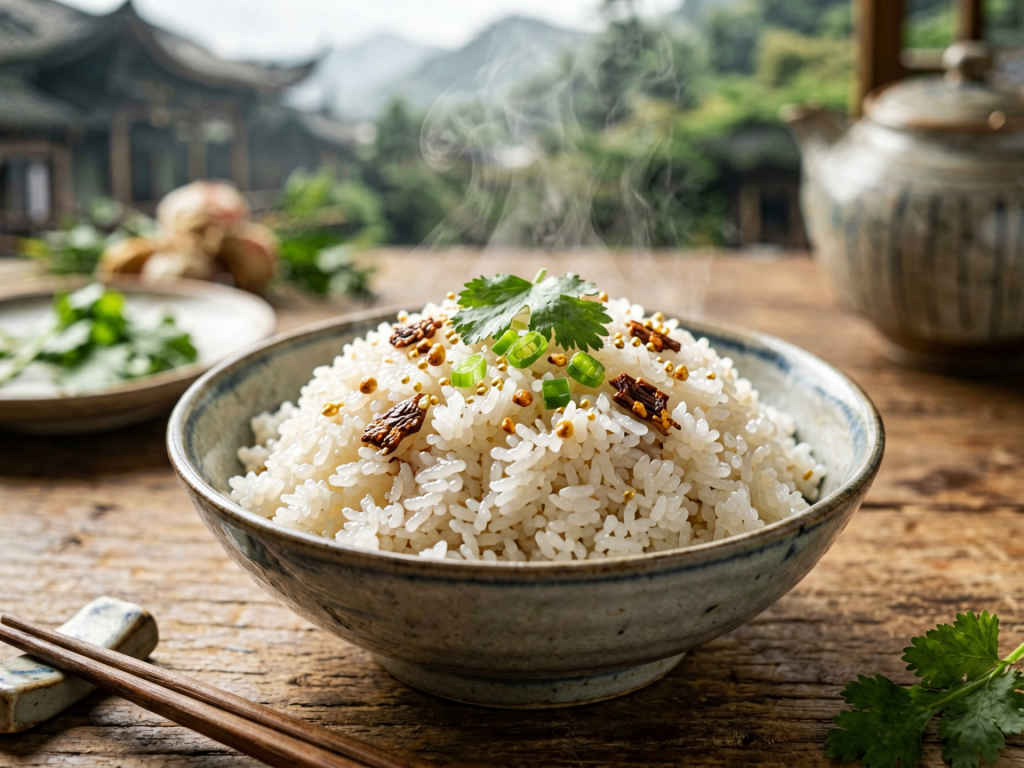
Here’s the thing. Most foreigners walking into a Chinese supermarket see a sea of white bags and panic.
You stand there holding a bag of rice, looking at three different brands, wondering if it actually matters.
I used to think so too. Back in my first year in Chengdu, I just grabbed whatever was on sale. It was fine. It was starch. It filled my stomach.
But then my landlord, Auntie Li, watched me cook. She shook her head. She pointed to the premium bag in the back and handed me a small plastic spoonful of what she called “fragrant grain.”
That night, I ate rice that didn’t just sit in my mouth. It had an aroma. It had texture. It changed the entire meal.
Chinese rice comes in more than 40 varieties, and picking the right one is the difference between a good dinner and a great one.
If you’ve ever wondered why your fried rice turns out mushy or your congee lacks that silky depth, you’re probably using the wrong starch. Let’s fix that.
It’s Not Just About Where It Grows
We often assume rice is rice. White rice, brown rice, basmati, jasmine.
In China, the distinction goes deeper than just geography. Yes, location matters. The climate in Heilongjiang in the north is totally different from Guangdong in the south.
But the real secret lies in the amylose content.
That’s a fancy chemistry term for how sticky the starch gets when cooked. High amylose means dry, separate grains. Low amylose means soft, clumpy, sticky stuff.
This chemical makeup determines everything about how the rice behaves in the pot.
I remember trying to make authentic Yangzhou fried rice using sticky northern rice. It was a disaster. A gluey mess that refused to separate.
The chef next door laughed. He pulled out a bag of Indica rice, cooked it, spread it out to cool, and then fried it. The grains popped individually. Perfect.
So, before you buy, you need to know two things: where the rice is from, and what you plan to cook with it.
Don’t just grab the biggest bag. Grab the right bag for the job.
Northern Giants: The Long-Grain Leaders
Let’s talk about the heavy hitters from the northeast. Specifically, Wuchang rice from Heilongjiang province.
This is the gold standard for many Chinese home cooks. It’s a Japonica variety, which means it’s short to medium grain, but it’s not mushy.
Wuchang rice has a perfect balance. It’s tender but holds its shape. It has a natural sweetness that doesn’t need sugar added.
I bought a vacuum-sealed block of Wuchang rice in Beijing last winter. It cost more than my regular brand, maybe fifty yuan a kilogram instead of ten.
Was it worth it? Absolutely.
When I steamed it plain, just with water and a pinch of salt, it smelled like nutty butter. It was shiny. It felt plush on the tongue.
It’s the best choice for simple steamed rice to go with heavy dishes like Kung Pao chicken or Mapo tofu.
The richness of the sauce needs a rice that can soak it up without falling apart.
Other northern varieties include Northeastern Black Soil rice and Miyadi.
They all share that short-grain charm. They’re slightly chewy. They’re comforting.
If you’re making sushi at home, or any dish that requires rice to stick together but stay distinct, look for these Japanese-style or northern Chinese grains.
Avoid these for fried rice though. You’ll end up with a brick, not a stir-fry.
Southern Stars: The Long-Grain Specialists
Travel down to Guangdong, Guangxi, and Yunnan, and the rice changes completely.
Here, they grow Indica rice. These are long, slender grains.
Indica rice is drier. It’s less sticky. It’s fluffy.
This is the engine behind Southern Chinese cuisine. It’s the backbone of dim sum, clay pot rice, and yes, fried rice.
I spent a month in Guangzhou eating my way through the teahouses. Every single time, the steamed rice served with the tea tasted different than the Wuchang I loved in Beijing.
It was lighter. The grains were distinct. They didn’t clump in my mouth.
This texture is crucial for Fried Rice.
When you stir-fry sticky rice, the heat releases more moisture. The grains stick to each other and to the wok. You lose the “wok hei” breath of fire flavor because the rice is soggy.
Long-grain Indica, specifically Thai Hom Mali or Chinese Guangxi Indica, gives you that separation.
It absorbs the soy sauce and oil without turning into paste.
There’s a specific type of Indica called “old-crop” rice that chefs swear by.
The grain has been stored for a year or more. It loses even more moisture. It becomes incredibly hard and dry before cooking.
I tried cooking with aged rice once. It took longer to boil, but the result was perfect. Each grain was separate, shiny, and had a slight snap.
If you want restaurant-quality fried rice at home, buy aged Indica rice. It’s a game-changer, really.
The Special Occasions: Glutinous and Black Rice
Now, let’s get weird. Or sweet.
Glutinous rice is confusing for beginners. Despite the name, it doesn’t contain gluten.
It’s also not always white. You’ll find it in sticky, opaque white balls or in black and purple hues.
This rice is nearly 100% amylopectin. That means it becomes extremely sticky when cooked. Like, super-glue sticky.
You never steam this for a main meal. You don’t eat it plain with chopsticks.
It’s for desserts, dumplings, and zongzi.
Zongzi are those pyramid-shaped sticky rice dumplings wrapped in bamboo leaves, eaten during the Dragon Boat Festival.
I tried making them myself. I used regular Indica rice by mistake. The filling fell out. The leaves weren’t even necessary because the rice disintegrated.
Glutinous rice needs to be soaked for hours before cooking. Then it steams until it’s a cohesive, chewy mass.
It’s wonderful in sweet soups with red beans, or fried with egg and sugar.
Then there’s black rice, also known as forbidden rice.
This isn’t just colored rice. It’s whole grain. The bran layer is purple-black.
It has a nutty, almost earthy flavor. It’s chewier than white rice.
I love it in congee. Traditional white rice congee can be bland. Black rice congee is rich and complex.
You can buy it mixed with white rice to add color and nutrition.
Just know that it takes longer to cook. If you mix it, cook it separately first or soak it for a full day.
How to Buy Without Losing Your Mind
So, how do you actually pick these up?
If you’re in China, look for the origin label.
For premium steamed rice, look for “Northeast” or “Heilongjiang.”
For frying, look for “Guangxi,” “Yunnan,” or “Thailand.”
If you’re online, read the product specs. Don’t trust the picture on the bag.
Many cheap brands sell Indica rice but label it generically as “premium white rice.”
Check the texture description. If it says “soft and sticky,” it’s likely Japonica or mixed. If it says “fluffy and separate,” it’s Indica.
I also recommend buying smaller quantities.
Rice goes rancid. The oils in the bran spoil over time, especially in hot, humid climates.
I keep my good Wuchang rice in the fridge. It stays fresh for months.
Your regular cooking rice? A cool, dark pantry is fine for a few weeks.
Don’t buy a fifty-kilo sack unless you have a warehouse.
The Cooking Ritual Matters Too
Picking the right grain is half the battle. The other half is how you treat it.
I used to wash rice until the water ran crystal clear.
My mother-in-law stopped me. She said I was washing away the flavor.
For Wuchang rice, a quick rinse is enough. Just swish it and drain. Don’t scrub.
For Indica rice, you might rinse a bit more to remove surface dust, but again, don’t overdo it.
And the water ratio?
It varies. Northern rice usually needs less water than southern rice.
A general rule of thumb for Wuchang is one cup of rice to one-and-a-quarter cups of water.
For Indica, it’s often one-to-one or even slightly less water.
Trust your eyes. The rice should look plump, not swollen to bursting.
Let it rest after cooking. Don’t open the lid immediately.
That steam needs to redistribute. If you dig in too early, you’ll get wet rice on top and hard rice on the bottom.
Wait five minutes. Fluff it gently with a paddle. Not a spoon. A paddle distributes the heat evenly.
Why This Effort Pays Off
I’m no expert chef. I’m just a guy who loves to eat.
But switching from generic bulk rice to specific regional varieties changed my relationship with food.
It’s not about being fancy.
It’s about respecting the ingredient.
When you eat good rice, you taste the soil. You taste the rain. You taste the care taken by the farmer.
That Wuchang rice from the black soil fields has a mineral sweetness that cheap imported rice can’t mimic.
That Guangxi Indica has a clean, neutral profile that lets the soy sauce sing.
Next time you’re in the aisle, pause.
Look past the bright packaging.
Read the origin. Think about what you’re cooking.
Your future self will thank you when you sit down to a bowl of rice that actually feels like a meal, not just a side.
Try it. You might be surprised how much better your simple stir-fries become.
It’s a small change. But in China, small changes make all the difference.