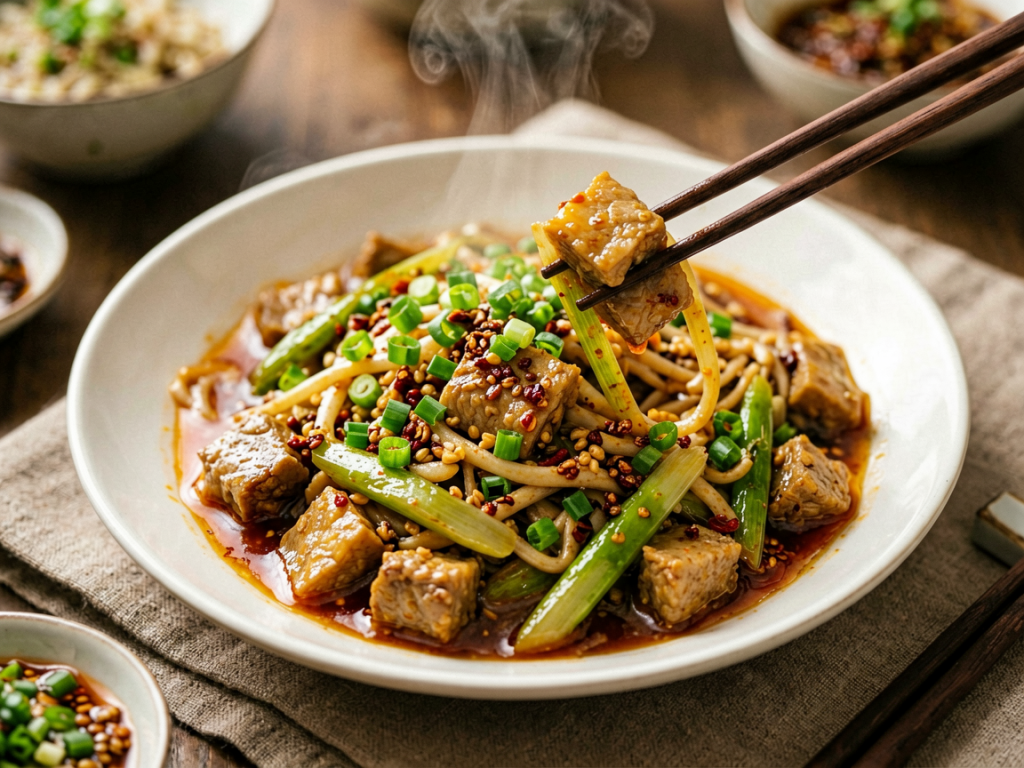
It’s 7 PM on a Tuesday. I’m sitting at my low plastic table in a small eatery in Chengdu, staring down a plate of Mapo Tofu that was cooked twelve hours ago. The tofu is still firm, but the spicy bean paste has done something magical. It hasn’t just stayed hot; it’s penetrated every micro-crack of the silken cubes. The numbing sensation of the Sichuan peppercorns is louder now, more assertive. It tastes richer, deeper, and infinitely more satisfying than it did when the chef first slid it across the counter.
Back home in America, leftover pizza is king. We accept cold slices as a Tuesday night luxury. But in China? Cold chicken is a crime. Yet, leftovers from a proper home-cooked meal or a dim sum feast? Those are often superior to the original serving. It’s a phenomenon I’ve chased for eight years here. It’s not just about convenience. It’s chemistry. It’s culture. And honestly, it changed how I eat.
If you’ve ever eaten a dish called “Braised Pork Belly” (Hong Shao Rou) on the second day, you know exactly what I’m talking about. The fat has congealed slightly, giving it a silky mouthfeel that fresh meat lacks. The soy sauce has sweetened the palette. The ginger has lost its sharp bite and become a warm, earthy background note. It’s weirdly profound.
The Chemistry of Patience
Let’s get the science out of the way quickly, because it’s not magic. It’s molecular diffusion. When you cook food, heat opens up the cellular structures of proteins and vegetables. As the dish cools, those structures relax and contract. This creates a vacuum effect, pulling the surrounding sauce and spices back into the ingredient itself.
I remember trying to explain this to a group of expats in Shanghai. We were eating Dumplings, but not just any dumplings–steamed pork and chive buns. On day one, the filling was juicy but distinct from the dough. The flavor sat *in* the bun. By day two, reheated gently in a steamer, the chive oil had migrated into the wrapper. The boundary between filling and skin vanished. Every bite was uniform in flavor intensity. It was like the ingredients finally held hands and decided to stay together forever.
This is why soups improve overnight. The gelatin from bones, the collagen from trotters–it all sets up in the fridge. When you reheat it, that gelatin melts again, coating your tongue in a way that fresh stock never can. Fresh stock is thin. Day-two stock is velvet. I once ordered a bowl of beef noodle soup in Xi’an that was so thick you could have spread it on toast. The next day, I reheated a portion at home. It was liquid gold. Pure umami bomb.
Vegetables behave differently, which is where people get scared. Leafy greens? Don’t bother. They turn to mush and lose their color. But root vegetables? Carrots, radishes, daikon? These are sponges. They drink up the broth like it’s oxygen. A simple stewed radish dish, bland on Monday, becomes a savory masterpiece by Wednesday. The radish stops being a vegetable and starts being a vessel for the soy, star anise, and rock sugar glaze.
The Cultural Mandate of “Zero Waste”
You can’t talk about Chinese leftovers without talking about history. For centuries, food scarcity was a real threat for most families. Wasting food wasn’t just rude; it was dangerous. That generational trauma is baked into our DNA. If you have half a chicken, you don’t throw it away. You make soup. Or you make congee. Or you slice it thin and stir-fry it with garlic and chili the next day.
This mindset creates a culinary ecosystem that rewards experimentation with leftovers. In the West, we tend to cook a meal, eat it, and clean the pan. In China, cooking is often a multi-day process. You start a braise on Sunday. You finish it Tuesday. You stretch it through Thursday.
I learned this the hard way when I tried to invite a Chinese friend over for dinner. I cooked a fresh, complex stir-fry of beef and broccoli. She looked at the empty plates afterwards and said, “You cooked so much! Why didn’t you save some for tomorrow?” I told her I wanted to enjoy a fresh meal every night. She laughed. Not meanly, but pityingly. “Tomorrow,” she said, “that beef will be better.”
She was right. Stir-fries are fast, yes. But the high heat of a wok can sometimes leave the meat tough if not handled perfectly. Overnight, the residual moisture and the marinade continue to work on the muscle fibers. The next day, when you reheat it gently, the texture softens. It becomes tender in a way that high-heat searing doesn’t always allow. It’s a different kind of tender. Less chewy, more yielding.
This respect for leftovers also dictates menu design. Many classic dishes are actually designed to be reheated. Braised dishes, stews, curries–these are the pillars of Chinese home cooking. They aren’t accidents. They are intentional creations for the second-day experience. If a dish doesn’t hold up, it’s rarely a staple. It’s a novelty. And novelties are for tourists. Staples are for locals.
The Reheating Ritual
Here’s the thing most foreigners miss: reheating is an art form in itself. You can’t just throw a plate of Peking Duck leftovers into the microwave and expect miracles. The skin turns rubbery. The meat dries out. It’s tragic.
In a proper Chinese kitchen, reheating requires strategy. For braised meats, you add a splash of water or broth before heating. You cover it tightly. You let it steam back to life. The goal is to restore the emulsion of fat and sauce. For fried foods, you might use an air fryer or a dry pan to crisp them up again, avoiding the soggy disaster of microwaved wontons.
I have a favorite ritual for leftover Kung Pao Chicken. I take the chicken, the peanuts, and the dried chilies. I add a tiny bit of vinegar and sugar. I toss it in a hot wok with a fresh splash of oil. The result? The peanuts are still crunchy. The chicken is moist. The sauce has thickened further, clinging to every piece. It tastes like someone perfected the original recipe while I was asleep. It’s eerie how good it is.
There’s also the social aspect of sharing leftovers. In Western culture, taking a doggy bag home can feel slightly awkward. Like you’re poor. Like you couldn’t afford enough. In China, taking leftovers home is standard etiquette. It shows you enjoyed the food enough to want to keep it. It honors the chef’s effort. Leaving food behind is the real insult, unless you’re extremely wealthy or eating at a very formal banquet where excess is the point.
I’ve seen business deals sealed over shared Tupperware containers. I’ve seen couples argue over who gets the last piece of red braised pork from the previous night. It’s intimate. It’s practical. It’s deeply human. Food isn’t just fuel. It’s memory. And memories get stronger with time, both emotionally and literally in the case of marinated meats.
Why Your Kitchen Needs More Leftovers
I’m no chef, but I’ve eaten my way through four seasons in three different provinces. My conclusion is simple: stop cooking for one. Start cooking for two days. Make bigger batches. Embrace the braise. The first night is about comfort. The second night is about discovery.
Think about it. What’s your favorite dish? Is it something quick? Or is it something slow? If it’s slow, make extra. Put it in the fridge. Trust me, your future self will thank you when you wake up to a meal that tastes like it took all day to prepare, even though you made it in six hours. It’s efficient cooking for lazy eaters, but sophisticated cooking for curious minds.
Next time you’re in a Chinese restaurant and you see a dish that looks like it needs time–like a dark, glossy stew or a clay pot rice–order it. Eat half. Save half. Ask the waiter for a container. Go home. Heat it up properly. Take that first bite.
That moment when the flavors converge? When the spice settles into the meat and the sauce thickens? That’s the secret. That’s the strange, beautiful reason Chinese food tastes better the next day. It’s not just about hunger. It’s about patience. And honestly, in a world that moves too fast, maybe we need more of that patience on our plates.