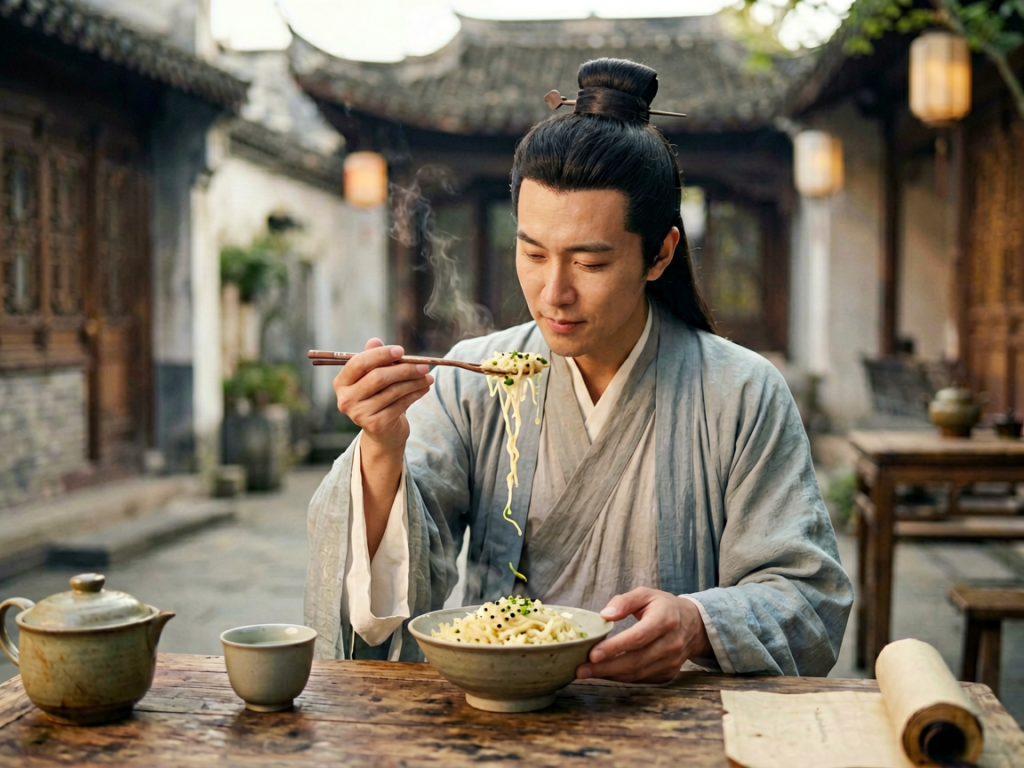
I remember sitting in a damp, cramped apartment in Chongqing back in 2016. The air was thick enough to chew. Outside, the humidity hung over the city like a wet wool blanket. Inside, my Chinese friend Lao Li was eating noodles from a bowl that had seen better days. He was sweating profusely, his face flushed red from the spice, but he was smiling.
“This is good bitterness,” he told me, pointing at his bowl. “It wakes you up.”
I didn’t get it then. Not really. To an American raised on the gospel of self-care and comfort, “bitterness” sounded like something you avoided, not consumed. But over the last eight years living here, I’ve realized that Eating Bitterness (chī kǔ) isn’t just a metaphor for spicy food or hard labor. It’s the operating system of Chinese culture.
And I’m going to tell you why everyone, foreigners and young Chinese people alike, is misinterpreting it.
It’s Not About Suffering for Suffering’s Sake
If you translate chī kǔ directly, it literally means “eating bitterness.” In the West, we associate bitterness with pain, loss, or resentment. We try to sweeten our lives, buffer our blows, and optimize our comfort. So, when Chinese elders tell us to chi ku, it sounds like they’re advocating for masochism.
They aren’t.
Think of it more like “swallowing the pill” or “toughening up.” It’s about accepting discomfort as a necessary precursor to growth. It’s the understanding that if you want the result, you have to endure the process. There’s a profound dignity in that. It’s not sadistic. It’s pragmatic.
I saw this clearly when I tried to start a small business selling imported coffee beans in Chengdu. I wanted everything perfect from day one. Nice signage, smooth app, zero friction. My partner, Wei, laughed at me. He suggested we start in a tiny stall with plastic chairs. He said, “You need to eat some bitterness first. You can’t fly until you crawl.”
He was right. Starting small forced me to deal with suppliers directly, handle complaints in person, and learn the gritty realities of the market. That discomfort built a foundation that my polished, frictionless plan never could have achieved. The bitterness wasn’t the goal; it was the tuition fee.
The Generation Gap: Old School vs. New Rules
Here’s where it gets complicated. Your average Chinese parent believes in chi ku the way a farmer believes in rain. They grew up in times of scarcity. For them, enduring hardship was a survival skill. If you complained, you were weak. If you sought ease, you were lazy.
But the kids? The Gen Z and Millennial crowd? They’re pushing back. Hard.
You’ve probably seen the memes. “Lying flat” (tang ping) is the counter-movement. It’s a refusal to play the rat race. Young people are asking, “If eating bitterness doesn’t guarantee happiness or wealth anymore, why bother?”
I had dinner with a group of university students in Shanghai last month. One guy, Jin, told me he works part-time as a freelance graphic designer because he hates the corporate grind. He earns less than his parents expected, but he has time to read, hike, and actually live.
“My dad says I’m wasting my youth,” Jin said, stirring his tea. “He thinks I should suffer now so I can enjoy later. But I’m already enjoying my youth. I’m just doing it differently.”
This tension is fascinating. The older generation sees chi ku as a moral imperative. The younger generation sees it as an outdated contract that the economy has broken. They’re not rejecting hard work. They’re rejecting pointless suffering. There’s a big difference.
To be fair, I’m no expert on Chinese sociology. But it feels like the definition is shifting. It’s moving from endurance to efficiency. Why suffer for three years if you can solve the problem in three weeks?
Spicy Food and Social Bonding
We can’t talk about bitterness without talking about food. Specifically, Sichuan and Hunan cuisine. If you’ve never eaten at a hotpot place in Chongqing, you haven’t truly experienced chi ku.
The first time I went, I ordered a “medium spicy” broth. Big mistake. By the third bite, my mouth felt like it was on fire. My eyes were watering. I looked around the table. Everyone else was eating calmly, dipping meat into the red oil, chatting about their day.
“Why do you guys like this?” I wheezed.
Lao Li, who was there again, handed me a glass of sweet bean milk. “Because it brings us together,” he said. “When you suffer together, you bond. It breaks down barriers. No one pretends to be sophisticated when their face is turning purple.”
There’s truth to that. In many Western cultures, we eat to relax. In parts of China, communal meals are often intense. They’re loud, spicy, and messy. The shared experience of “eating bitterness” creates a sense of camaraderie. It’s equalizer.
It’s easier than you’d expect to join in once you get the hang of it. You start slow. You sip the milk. You laugh at your own pain. And eventually, you find a strange joy in the heat. It’s better than most alternatives because it’s real. It’s visceral.
The Hidden Cost of Constant Grind
However, I’ll be honest. The culture of chi ku has a dark side. When taken to extremes, it becomes toxic.
We’ve all heard the horror stories of factory workers in Dongguan or tech employees in Shenzhen working 996 hours (9 am to 9 pm, six days a week). They are literally eating bitterness for survival. But is it worth it? Many argue no.
I visited a friend in Shenzhen who worked in tech. She looked exhausted. Her skin was pale, her eyes dull. She told me she hadn’t taken a proper vacation in two years. “My boss says if I can’t handle the pressure, I should leave,” she said. “So I stay. Because leaving means admitting I couldn’t eat enough bitterness.”
That’s the trap. The virtue becomes a shackle. It’s supposed to build character, but instead, it burns out potential. It’s crucial to distinguish between productive struggle and exploitative drudgery.
Productive struggle teaches you skills, resilience, and empathy. Exploitative drudgery just breaks you. The Chinese are getting better at making this distinction. The rise of mental health awareness in urban centers is proof. People are finally saying, “Enough is enough.”
How to Embrace It Without Losing Yourself
So, what do we take away from this? How can we apply chi ku in a healthy way, whether you’re living in China or just appreciating the culture?
First, reframe discomfort. Don’t see it as punishment. See it as feedback. If something is hard, it means you’re growing. If it’s easy, you’re stagnating.
Second, set boundaries. This is the hardest part for outsiders to grasp, but also the most important. You can eat bitterness, but you don’t have to let it poison your soul. Rest is not laziness. Rest is preparation.
I learned this the hard way. Last year, I tried to climb Huangshan mountain during a storm. I thought proving my toughness would earn respect. I slipped, twisted my ankle, and ended up waiting for rescue in the rain. I wasn’t brave. I was stupid.
A local guide shook his head at me. “Climbing is about respecting the mountain,” he said. “Not fighting it. That’s not eating bitterness. That’s just being foolish.”
He was right. True chi ku requires wisdom. It requires knowing when to push and when to pause.
The Sweet Aftertaste
After eight years, I’ve come to love the concept. Not the suffering part. But the resilience behind it.
When I look back at my journey in China, the moments that defined me weren’t the easy ones. They were the times I struggled to learn characters, the times I got lost in the subway system, the times I ate food that made my stomach churn. Those experiences shaped me.
They taught me patience. Humility. Adaptability.
The Chinese saying goes, “No pain, no gain.” But it’s deeper than that. It’s about finding meaning in the process. It’s about understanding that bitterness is often the seasoning that makes the sweetness worthwhile.
You might think this is a quaint folk belief. But in a world that’s increasingly fast, digital, and comfortable, there’s something grounding about embracing the grit. It reminds us that we’re alive. That we’re trying.
Next time you face a challenge, don’t run from the bitterness. Lean into it. Ask yourself: What is this teaching me? Who am I becoming?
You might surprise yourself. Trust me.
And if you’re feeling brave, go order a bowl of extra-spicy noodles. Sit with a local. Watch them eat. Smile through the burn. That’s where the real magic happens.
It’s not just about food. It’s about life. And honestly? It’s the best kind of life to live.