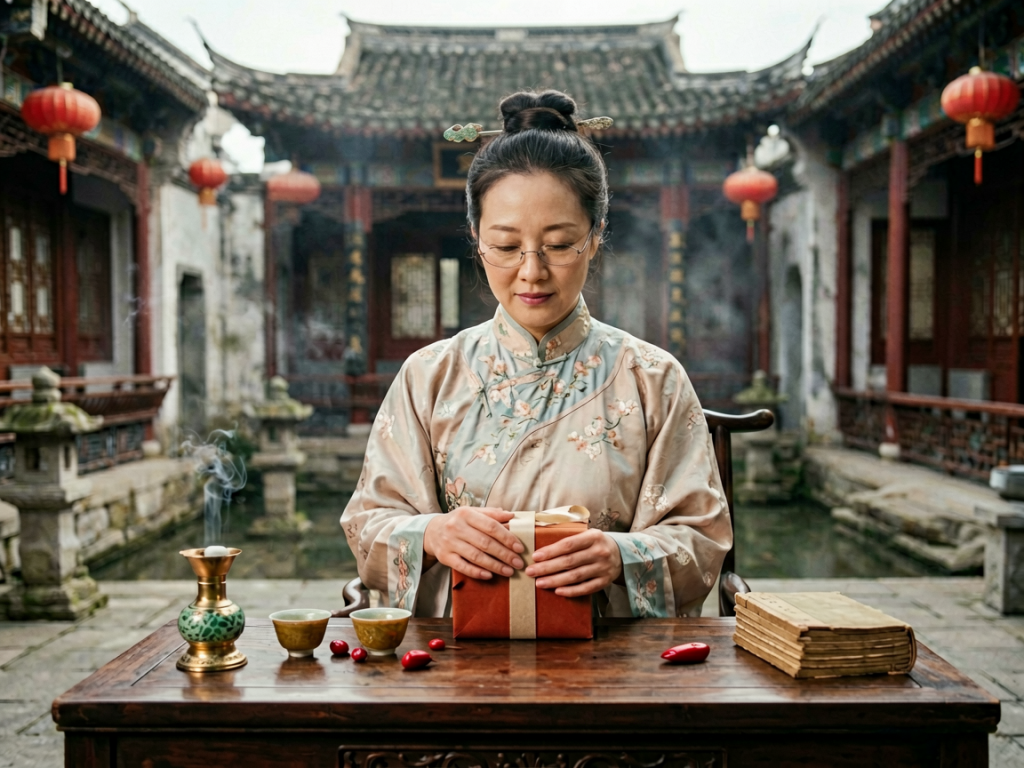
It was my third month in Beijing, and I thought I had finally cracked the code of Chinese hospitality. I’d survived the spicy hotpot, navigated the subway at rush hour, and even ordered milk tea without pointing at the menu. I felt confident. Then, my colleague Li Wei handed me a beautifully wrapped box. It looked heavy. It looked expensive. My heart did a little jump of excitement.
I tore into the ribbon before Li Wei could even finish saying, “Please, accept this.” I ripped off the paper. I opened the lid. I stared at the item inside while Li Wei stood there, smiling politely but looking slightly uncomfortable. I looked up, grinning, ready to thank him profusely. That’s when I noticed his eyes darting away. The vibe shifted from warm to awkward in about three seconds.
Later, over tea, Li Wei gently explained what I’d just done wrong. In my culture, opening a gift immediately is a sign of gratitude and excitement. In China, it can come across as greedy, impolite, or even insulting. I wasn’t rejecting the gift; I was rejecting the relationship, at least in that moment. Sound interesting? Or maybe just confusing? Stick with me, because this one rule alone will save you from a lot of social embarrassment.
The Face Factor and Hidden Value
To understand why we keep our eyes on our hands and not the box, you have to understand the concept of mianzi, or “face.” Face is a complex mix of reputation, dignity, and social standing. When someone gives you a gift, they aren’t just handing you an object. They’re offering a piece of their social capital.
If you open it right away and the item isn’t what you expected, or if you don’t react with the precise level of enthusiasm required, you risk causing them to lose face. Worse, you might look like you’re judging the value of their generosity. I remember visiting a friend’s apartment in Shanghai for New Year’s. Her husband brought a box of premium tea leaves. He placed it on the table, hugged me, and said, “This is for you.”
I reached for it. She gently put her hand on my wrist. “Later,” she whispered. “After dinner. At home.” I was confused, sure, but I respected her wish. When we finally got back to my hotel room later that night, I opened it. It was indeed good tea. But the point wasn’t the tea. The point was the trust. By delaying the opening, we acknowledged that the relationship mattered more than the transaction.
There’s also the issue of price tags. I’ve seen gifts with tags still attached when received. It’s not because the giver forgot to remove them. It’s sometimes intentional. It allows the receiver to know the value without being rude enough to ask. If you open it and see a tag, don’t comment on the price. Just say it’s beautiful. Keep it vague. Keep it respectful.
The Art of the Polite Refusal
Before we even get to the wrapping paper, there’s the dance of refusal. This part trips up almost every expat I’ve met. When you offer a gift to a Chinese person, they will likely refuse it once, maybe twice. You need to insist. They will refuse again. You must insist firmly.
I used to think they were just being shy. Now I realize it’s a ritualized test of sincerity. If you give up after the first refusal, you’re signaling that your gift isn’t worth the effort. You’re being lazy. To be fair, it feels exhausting at first. I remember trying to buy a souvenir for my boss, Mr. Chen. I handed him a bottle of wine. He pushed it back. “No, no, too much trouble,” he said.
I said, “Please, take it. It’s from my hometown.” He pushed it back again, shaking his head. “Really, I cannot accept.” So I held onto it for another ten minutes, chatting about his garden, until he finally sighed and took it, saying, “Well, since you insisted so strongly, I suppose I must.” That sigh? That was relief. He felt valued. I felt like I’d passed a test.
This refusal phase is crucial because it sets the tone for the rest of the interaction. It establishes hierarchy and mutual respect. If you skip the insistence and just shove the gift into their hands, you’re skipping the emotional labor that binds the two of you together. You’re treating it like a commercial exchange. In China, gifts are about relationships, not stuff.
What to Give and How to Wrap It
So, what should you actually put in that box? And how should you wrap it? Let’s talk colors first. Red is lucky. Gold is prosperous. These are safe bets. Avoid white, black, or blue wrapping paper unless you know the recipient very well and understand their specific aesthetic preferences. White is often associated with funerals. Giving someone white-wrapped gifts in a joyous context can feel like cursing them. Not cool.
As for the items themselves, there are taboos. Don’t give clocks. The phrase for giving a clock sounds exactly like the phrase for attending a funeral. It’s a homophonic trap that catches everyone eventually. Don’t give sharp objects like knives or scissors. It symbolizes cutting ties. I made that mistake early on when I gave a colleague a nice set of kitchen knives. He thanked me politely but didn’t use them. I found out months later he kept them in the drawer, unwrapped, untouched. It was a silent rejection of the symbolism.
Pears are another tricky one. Sharing a pear sounds like separating. So don’t cut a pear to share with someone as a gift. Keep the fruit whole. Also, think about the number of items. Even numbers are generally lucky. Odd numbers are associated with funerals. So give four apples, not five. Four might seem unlucky in some contexts (sounds like death), but in gifts, pairs are standard. Two bottles of wine, a pair of gloves. It shows balance.
Wrapping matters immensely. The package should be neat, secure, and preferably tied with a ribbon. I once received a gift that was just shoved in a plastic bag from the supermarket. It hurt my feelings more than I expected. In China, the effort you put into the presentation reflects the respect you have for the person. A flimsy wrapper says, “I didn’t care enough to try.” A beautiful box says, “You are important.”
Receiving and Responding
Back to the original sin: opening the gift. Once you’ve accepted it, what now? You don’t open it. You thank them. You praise their thoughtfulness. You might say, “Oh, you shouldn’t have!” which is the universal code for “I am honored by your gesture.” Then you carry the gift to another room. Or you place it on a shelf where it can be admired without being inspected.
I tried to follow this rule religiously after my first awkward encounter. The next time Li Wei gave me a book on Chinese history, I tucked it under my arm. I told him how kind he was. I didn’t look at the cover. I walked him to the door, thanked him again, and then, once I was in the elevator alone, I flipped through the pages. It was a great book. But the moment of connection had already happened. The opening of the box was secondary.
There is an exception to this rule, though. If you are in a very close, informal friendship group, things might relax. But even then, I prefer to wait. It’s safer. And frankly, it builds anticipation. Imagine the surprise of discovering what it is later, alone, with no audience pressure. You can really appreciate the gift without worrying about performing gratitude in real-time.
Also, consider the setting. If you’re at a large banquet with twenty people, and one person gives you a gift publicly, opening it might draw unwanted attention or make others jealous. It’s a power move, albeit a subtle one. Keeping it closed maintains harmony. It prevents comparison. Everyone wins if the focus stays on the group, not the individual exchange.
Reciprocity Is a Long Game
Giving and receiving gifts in China isn’t a one-off event. It’s a cycle. If someone gives you something, you will eventually give something back. It doesn’t have to be immediate, but it has to happen. I call it the “gift debt.” It’s not a burden, really. It’s a way of keeping the relationship active.
When I left my last job in Guangzhou, my team gave me a farewell dinner. One colleague gave me a custom-made pen engraved with my name. I was touched. I couldn’t open it in front of everyone, so I held it tightly and thanked him. Weeks later, I invited him to dinner. I brought him a bottle of whiskey from Scotland. We drank it quietly at his place, far from the office gossip.
That’s the beauty of it. The gift facilitates a memory. It creates a story. If you tear into the paper and move on, you miss the narrative. You miss the chance to deepen the bond. I’ve found that my friendships in China are stronger because of these rituals. They force us to slow down. They make us pay attention. They remind us that people matter more than things.
So, the next time you’re handed a wrapped box in China, resist the urge. Smile. Thank them. Hold onto it. Let it sit on your desk or shelf for a few days. Then, open it in private. Appreciate it fully. And when you give your next gift, wrap it beautifully, refuse it politely, and mean every word of your thanks. It’s not just etiquette. It’s the logic of connection.
I’m no expert, obviously. I’m still learning every day. But I can tell you this: following these rules hasn’t just helped me avoid embarrassment. It’s helped me make friends. Real ones. Not just colleagues, but people who understand me. And that’s worth more than any gift, opened or unopened.