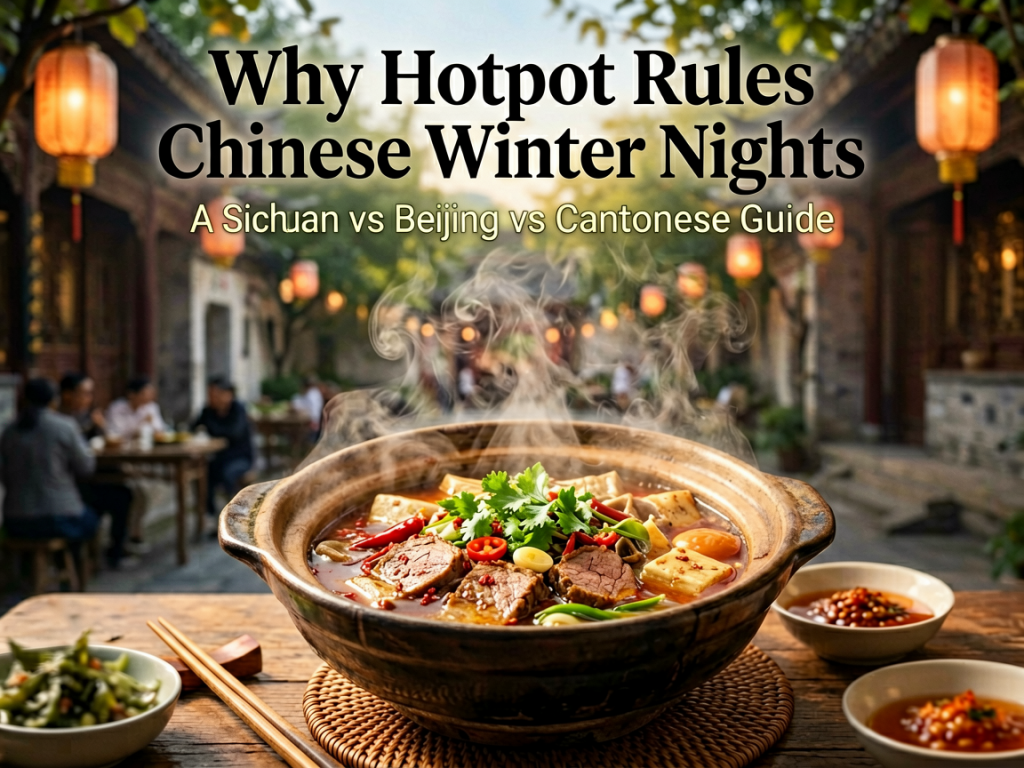
The air outside my window in Chengdu is biting cold, the kind of damp chill that seeps straight into your bones. But inside? Inside, it’s a sauna of steam and laughter. The table is vibrating slightly from the clatter of plates, and the aroma of chili oil and star anise hangs thick in the air. This is what Chinese winter feels like. It’s not about shivering under blankets; it’s about gathering around a bubbling pot of liquid fire.
I’ve lived in China for eight years now, and if there’s one dish that defines our relationship with the cold, it’s hotpot. It’s not just food. It’s a social contract. You don’t eat hotpot alone. You don’t even eat it quickly. You eat it until your lips are numb, your hair is matted to your forehead, and you’ve forgotten your own name.
But here’s the thing. Not all hotpot is created equal. If you think every version looks like a volcano of red peppers, you’re in for a rude awakening. The regional differences are stark, cultural, and deeply personal. Let’s talk about how the three big players–Sichuan, Beijing, and Cantonese–approach this communal meal differently.
The Sichuan Approach: Fire, Numbness, and Chaos
If you ask a local in Chengdu or Chongqing what hotpot is, they will look at you like you just asked if water is dry. For them, it’s spicy, oily, and aggressively flavorful. The broth is a deep, dark crimson, swimming with dried chilies, Sichuan peppercorns, and beef tallow. It’s basically a flavor bomb designed to wake up your palate and then shut it down.
I remember my first time trying authentic Chongqing-style hotpot. I ordered the “micro-spicy” level, thinking I knew what I was doing. That was a mistake. Within twenty minutes, my face felt like it was peeling off. My tongue felt like it had been stitched to the roof of my mouth. But I couldn’t stop eating. It’s addictive in a way I still don’t fully understand.
The key here is the texture. You’re dipping raw beef, duck intestines, lotus root, and wood ear mushrooms into boiling fat. The ingredients are chosen to soak up that spice. Beef tripe gets cooked for exactly seven seconds–no more, no less–or it turns to rubber. There’s a rhythm to it that takes practice. You watch the clock, you watch the boil, and you try not to burn your mouth while laughing at your friend who just dropped their chopsticks.
We always end the meal with a bowl of sweet bean paste or a cooling soda. It’s a necessary survival tactic. The Sichuan style isn’t for the faint of heart, but it’s the most intense experience you’ll have in Chinese cuisine. It’s bold, unapologetic, and loud.
Beijing’s Traditional Choice: Copper Pots and Sesame Sauce
Head north to Beijing, and the game changes completely. You won’t find massive pots of red oil here. Instead, you’ll see these beautiful, traditional copper pots with a chimney running right down the center. It’s an ancient design, originally built to hold charcoal, though most places use gas or electricity now. The metal gets incredibly hot, and the visual is striking.
The broth is simple. Clear water, maybe some ginger, scallions, and dried shrimp. That’s it. The focus isn’t on the soup; it’s on the meat. And when I say meat, I mean hand-cut lamb. Not the thin, processed slices you get in supermarkets. I’m talking about blocks of frozen lamb leg that chefs shave right in front of you. The cuts are uniform, translucent, and melt in your mouth.
The dipping sauce is the soul of Beijing hotpot. It’s a mix of sesame paste, fermented tofu, chili oil, and cilantro. Some people add vinegar. I prefer mine just rich and creamy. When you dip that tender lamb into the sesame paste, it’s pure comfort. It tastes like history. It tastes like old Beijing winters.
I spent a night at a famous spot near Houhai Lake during a snowstorm. The wind was howling outside, but inside, the copper pots were glowing. We ate nothing but lamb and cabbage for an hour. It was quiet, dignified, and deeply satisfying. Unlike the chaotic energy of Sichuan, Beijing hotpot feels structured. It’s about precision and quality. If the meat is fresh, the dish works. If it’s not, you know immediately.
Don’t underestimate the simplicity. It’s easy to dismiss clear broth as boring, but it highlights the natural sweetness of the lamb. It’s a restraint that shows confidence in the ingredients. Trust me, once you try proper hand-cut lamb, you’ll never go back to the pre-sliced stuff again.
Cantonese Style: Delicate Broths and Fresh Seafood
Now, fly down to Guangzhou or Shenzhen, and you’re in a different universe entirely. Here, hotpot is about health, freshness, and subtlety. The idea of drowning food in grease seems almost offensive to them. Instead, they start with a clear, savory broth. Often, it’s a bone broth simmered for hours, sometimes with goji berries, yam, or even bird’s nest.
The ingredients are where it gets interesting. Sure, you have sliced beef and pork, but you also have shrimp, fish balls, squid, and various types of seafood. Vegetables are often blanched lightly to keep their crunch. And then there’s the rice noodles, which soak up the delicious, clean broth.
I went with a group of colleagues in Guangzhou last winter. We ordered a “seafood hotpot” base. The moment the shrimp hit the boiling water, they turned pink and curled up. It took forty-five seconds. We dipped them in a light soy-ginger sauce. It was sweet, briny, and incredibly fresh. It felt like eating the ocean.
What I love about Cantonese hotpot is the pacing. It’s not a race to see who can eat the spiciest thing. It’s a leisurely affair. We talked for hours. We laughed. The food was secondary to the conversation, or at least, equal to it. The broth is meant to be drunk too. At the end of the meal, many places will let you cook congee (rice porridge) in the remaining broth. It’s the perfect, creamy finish.
This style is easier on the stomach, which is probably why it’s so popular in the humid south. It doesn’t leave you feeling weighed down or sweaty in an uncomfortable way. It leaves you feeling nourished. It’s gentle, refined, and surprisingly complex if you pay attention to the layers of flavor.
How to Actually Survive the Meal
Whether you choose the fiery west, the traditional north, or the delicate south, there are rules. Or rather, unwritten codes of conduct. Ignoring them might make you look like a tourist, and nobody wants that. First, don’t crowd the pot. Everyone is grabbing at the same piece of meat. It’s a mild competition, but stay calm. Second, use two pairs of chopsticks if provided. One for cooking, one for eating. Cross-contamination is bad news.
Also, pace yourself. Hotpot meals can last two hours. If you stuff yourself in the first twenty minutes, you’re going to regret it. Start with vegetables to line your stomach, then move to meats, and save the dense carbs like potatoes or noodles for last. They’ll soak up all that good flavor anyway.
And finally, drink responsibly. In Sichuan, beer or sweet soy milk is essential. In Beijing, sorghum wine is traditional. In Canton, tea is always served. Hydrate. Your body will thank you the next morning when you realize you’ve gained three pounds of water weight and pure joy.
Hotpot is more than dinner. It’s a reminder that in China, life is better shared. The steam rising from the pot blurs the lines between strangers and friends. For a few hours, you’re all connected by the same broth, the same fire, and the same desire for warmth. So, grab your chopsticks. Pick your style. And let the boiling begin.