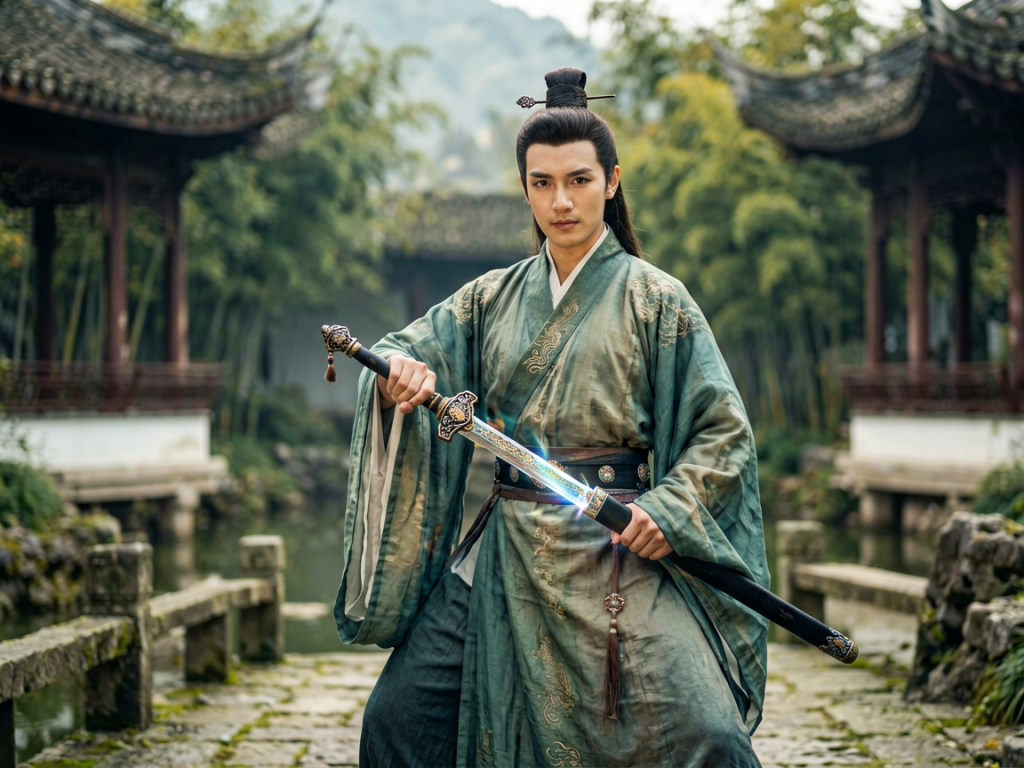
I’ll be honest, when I first picked up a jian in Chengdu, my hands were shaking. Not from fear, exactly, but from the sheer weight of expectation. I’d watched enough wuxia movies to know that sword fights were supposed to look like ballets made of steel. I expected to feel powerful, like some ancient warrior reborn.
Instead, I felt clumsy. The blade was light, almost too light, and it wanted to dance rather than chop. My instructor, a retired Shaolin monk with kind eyes and a permanent smirk, just laughed. He told me I was trying to fight the sword instead of listening to it.
That moment stuck with me. It changed how I looked at the jian, or straight sword, and why Chinese culture calls it the “gentleman of all weapons.” It’s not just a tool for killing. It’s a mirror for your own discipline, grace, and temperament. Let’s talk about why this specific piece of metal holds such a special place in the heart of China.
The Difference Between Sword and Saber
If you’ve ever seen a video of a samurai duel, you’ve probably noticed the curve of the katana. That curve isn’t just for style. It’s designed for slicing through armor and flesh in one smooth motion. It’s a weapon of war, brutal and efficient.
The jian is different. It’s straight. Double-edged. Balanced perfectly down the center. This design demands precision over power. You can’t hack and slash with a jian. You have to thrust, cut, and parry with exactitude.
I remember spending weeks just learning how to hold the handle properly. Most beginners grip it too tight. They think force equals control. My teacher kept tapping my wrist with a bamboo stick until I loosened up. He said, “The sword is an extension of your spirit, not your muscle.”
Sound interesting? It’s frustrating at first. But once you get it, the movement becomes fluid. You stop thinking about where the tip is going and start feeling where it needs to be. It’s easier than you’d expect once your body gets used to the rhythm.
Why the Gentleman Label Fits So Well
In ancient China, warriors had different weapons for different roles. The dao, or saber, was the soldier’s choice. It was heavy, single-edged, and great for chopping. It was practical, rugged, and a bit rough around the edges.
The jian, however, was reserved for officers, scholars, and nobles. Think of it as the difference between a work truck and a luxury sedan. Both get you to your destination, but one does it with more class.
This distinction comes from Confucian ideals. The gentleman, or junzi, was supposed to be virtuous, restrained, and refined. He didn’t need to shout to be heard. He didn’t need to crush his enemies to prove his strength.
The jian reflects this philosophy. Its double edge represents balance. It can strike and defend simultaneously. It doesn’t rely on brute force. Instead, it uses leverage and timing. To wield it well, you need patience and mental clarity.
I love this aspect of it. In a world that often celebrates noise and aggression, the jian whispers. It invites you to slow down and find your center. It’s a peaceful weapon, even though it’s deadly.
A History Woven in Steel
The origins of the jian go back thousands of years. Archaeologists have found bronze swords from the Zhou Dynasty, dating back over two thousand years. But the real golden age of the jian was during the Han Dynasty.
During this time, metallurgy improved drastically. Blacksmiths figured out how to fold steel repeatedly, creating blades that were sharp yet flexible. The famous Goujian Sword, discovered in a tomb in Hubei province, is still razor-sharp today after 2,500 years buried underground.
I visited that museum last year. Standing in front of that ancient blade, I felt a chill. It wasn’t just the cold air conditioning. It was the realization that someone held that sword, practiced with it, maybe even bled from it. And now, here it is, pristine and silent.
Over the centuries, the jian evolved from a battlefield weapon to a symbol of status. By the Tang Dynasty, poets and painters often depicted themselves carrying jians. It became part of their identity. Li Bai, the famous poet, was known for his love of wine and swords.
He wrote poems that blended martial arts with mysticism. His verses aren’t just about fighting; they’re about freedom, nature, and the human condition. When you read his work, you understand why the jian is more than just steel.
The Philosophy of Movement
Practicing jianfu, or sword forms, is like meditation in motion. Each movement has a name and a meaning. There’s the “Swallow Skimming Water,” which requires low stances and quick footwork. Then there’s “White Horse Steps Through the Gap,” which is more direct and aggressive.
I spent a morning in a park in Hangzhou watching an old man practice tai chi with a jian. He moved so slowly, yet every step was deliberate. The sword seemed to flow like water, circling his body in endless patterns.
People walked by, ignoring him. Tourists took selfies with the West Lake in the background. But for those few minutes, he was in his own world. The sword connected him to his breath, his balance, and his history.
To be fair, I couldn’t replicate his elegance. My movements were jerky, and I nearly took off my own shoe during a pivot. But I got the gist of it. The goal isn’t perfection. It’s presence.
The jian teaches you to be aware of your surroundings. You can’t focus only on the blade. You have to sense the air, the ground, and your opponent’s intent. It’s a holistic experience that engages your whole being.
Modern Relevance and Misconceptions
Today, the jian isn’t used in actual combat. Modern warfare doesn’t leave much room for edged weapons. But that doesn’t mean it’s obsolete. Far from it. The jian is alive in martial arts schools, cultural performances, and even literature.
Wuxia novels and movies keep the image of the swordsman alive. Characters like Zhang Wuji or Qiao Feng capture our imagination because they embody the ideals associated with the jian. They are heroes who use their skills to protect the weak and uphold justice.
I’m no expert on martial arts lore, but I’ve read enough to know that these stories resonate with readers because they tap into universal values. We all want to be the hero who stands up for what’s right, even when it’s hard.
Sometimes, people ask me if the jian is better than the dao. It’s a tricky question. The dao is more practical for self-defense. It’s easier to learn basic cuts. But the jian offers deeper artistic expression.
If you’re looking to learn a martial art for fitness, either works. If you’re looking for a way to connect with Chinese philosophy, the jian might be the better path. It challenges you intellectually as much as physically.
Where to Find Your Own Journey
If you’re visiting China, don’t miss the chance to try a jian. Many temples and martial arts centers offer introductory classes. In Beijing, there are clubs near the Olympic Park. In Shanghai, you can find instructors in public squares early in the morning.
Prices vary, but you can usually get a decent lesson for under 200 yuan. Some places provide equipment, while others bring your own. I recommend bringing loose clothing that allows for movement. You don’t need to look cool; you just need to be comfortable.
I’ll admit, I was skeptical at first. I thought it would be a tourist trap, all flash and no substance. I was wrong. The teachers I met were passionate and knowledgeable. They treated the art with respect, not as a gimmick.
One instructor in Xi’an told me, “The sword teaches you humility. You cannot lie to a jian. If your mind is distracted, the blade will show you.” That line has stayed with me ever since.
Final Thoughts on the Gentleman of Weapons
The jian is more than a weapon. It’s a piece of living history. It carries the wisdom of centuries, encoded in its shape and movement. When you hold it, you’re touching the hands of poets, warriors, and philosophers who came before you.
It reminds us that strength doesn’t always mean force. Sometimes, it means flexibility. Sometimes, it means restraint. The gentleman of weapons teaches us to be precise, balanced, and mindful.
I still suck at swordplay. I still trip over my own feet. But I love it. There’s something magical about swinging a piece of steel in the sunlight and feeling a connection to the past.
So next time you see a video of a swordsman, don’t just watch the action. Look at the grace. Look at the control. See the gentleman behind the blade. You might find that the lesson applies to your life too.
Trust me, it’s worth exploring. You never know what you might discover about yourself along the way.