Forget the Fairy Tale Gown
I’ll be honest, I was expecting sequins. You know the kind. Massive tulle, lace imported from Belgium, maybe a train that required a dedicated assistant just to keep it off the floor. That’s the Western ideal we’ve all seen on Instagram for decades.
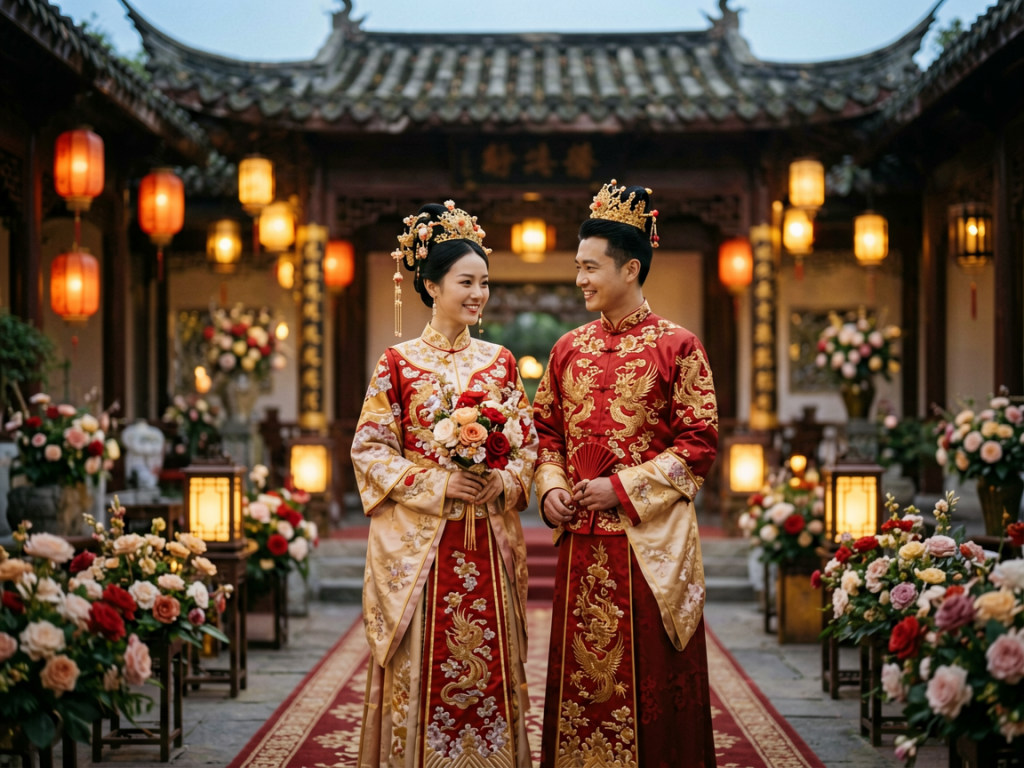
But when I arrived at the banquet hall in Hangzhou last month, the bride looked nothing like Cinderella. She wore a qipao so intricate it took her seamstress three months to finish. It was silk, obviously, but the embroidery featured cranes and peonies stitched in gold thread that caught every light from the chandeliers.
She looked regal. She looked expensive. Most importantly, she looked ready to move.
The modern Chinese wedding in 2026 isn’t about posing. It’s about performance. The couple isn’t just walking down an aisle; they’re hosting an event where family hierarchy, face (mianzi), and tradition collide with Gen-Z individualism.
If you think you know how these go, check yourself. The rules have shifted. Not drastically, but enough to confuse the uninitiated.
The Tea Ceremony Is Still the Heartbeat
Here’s the thing about the tea ceremony. In rural areas or very traditional families, this happens in the morning before the bride even leaves her home. But in cities like Shenzhen or Chengdu? It’s moved to the reception.
Why? Because everyone wants to see the money.
Okay, let’s call it what it is. It’s about the red envelopes. But the ritual itself is surprisingly intimate. I watched a young groom kneel before his parents, who were seated in armchairs that cost more than my car. He poured the tea with both hands. He held the cup steady. His hands didn’t shake.
His father took a sip, nodded once, and handed him a red envelope. The amount inside wasn’t just pocket change. It was usually 10,000 to 50,000 yuan ($1,400 to $7,000). It’s a transfer of wealth, sure. But it’s also a public affirmation that the son is now an adult man who can support a family.
I asked the groom later why he still did it. He shrugged and said, “My mom cried. If I skip it, I’m a bad son.”
That’s the glue. No matter how much TikTok dancing happens later, this moment grounds everything. The bride does the same with her parents. Then they do it together for the grandparents. It’s a lot of kneeling. Your knees will ache just watching it.
And yes, the tea is hot. Strong. Sweet. Usually osmanthus or jasmine blend. You don’t drink it quickly. You sip. You show respect.
Red Envelopes Are Getting Weird
We need to talk about the money. Specifically, how guests give it.
In 2026, cash is still king at Chinese weddings. But the way people carry it has changed. Gone are the days of handing over a crumpled bill from your wallet. Now? Everyone brings fresh bills, preferably with even numbers. Four is bad luck because it sounds like death. Eight is gold. Six is smooth sailing.
I saw a guy in a suit pulling out a stack of new 100-yuan notes, neatly aligned. He didn’t just hand them to the table host. He placed them in a specialized envelope provided by the couple. These envelopes aren’t store-bought. They’re custom-designed.
Last year, one couple in Shanghai had envelopes printed with their cat’s face. It was cute. It was also a logistical nightmare for the aunties trying to figure out whose name went inside.
But here’s the twist. Some couples are moving toward digital red envelopes. Wechat Pay is seamless. You scan a QR code on the screen, type in your amount, and hit send. It shows up instantly on the big LED wall behind the stage.
I’m split on this. On one hand, it’s efficient. No one loses track of who gave what. On the other hand, it feels less personal. Where’s the warmth of handing cash to an uncle while he checks your height and weight?
Most families still prefer the physical envelope. It’s tactile. It’s real. And frankly, it’s harder to accidentally donate $5 when you meant to donate $50.
The Banquet: A Test of Endurance
Let’s talk food. The actual meal.
People joke that Chinese weddings are just excuses to eat free pork. There’s truth to it. The menu is massive. Twelve to sixteen courses per table. You won’t leave hungry. You might leave in a food coma.
The dishes aren’t random. They’re coded. Whole fish means surplus. Glutinous rice balls mean reunion. Chicken means longevity. If you see a dish with a dragon shape, it’s probably meat molded into a sculpture. It looks amazing. It tastes like chicken and regret if you wait too long to cut it.
I sat at Table 8. The menu included abalone, sea cucumber, and duck tongue. Yes, duck tongue. Don’t ask me why it’s there. It’s a delicacy in some provinces. In others, it’s just weird. I tried it. It was crunchy. Like eating a chicken foot.
The pacing is frantic. The bride and groom change outfits three times. Once for the toast in the traditional qipao. Once for the Western dress during the cake cutting (which is mostly symbolic). And once for the final bow in a modified hanfu outfit.
This last one is new. Hanfu, the ancient clothing style, is having a huge moment. Young couples want to look historical. They want to look like they’re from the Tang Dynasty. The gowns are heavy. The headpieces are terrifyingly ornate.
But the energy shifts. The music gets louder. The MC, who is always a professional hired actor-type, starts joking. He roasts the groom. He asks the bride if she’s ready to clean the house. It’s performative chaos.
And yet, you’re crying. You’re laughing. You’re shoving another dumpling into your mouth because there’s still plenty left on the table.
When Tradition Meets TikTok
I’m no expert on algorithm trends, but I’ve noticed the wedding industry is obsessed with “aesthetic.”
Every detail is photographed for Xiaohongshu (Little Red Book) or Douyin (TikTok). The lighting in the venue isn’t just for visibility. It’s for filters. Couples spend weeks planning the “golden hour” photo op in the lobby.
This creates a strange disconnect. The ceremony is sacred. The photoshoot is content.
At one wedding I attended, the bride stopped mid-prayer to fix her ring light. It wasn’t malicious. It was just… necessary. If you don’t post it, did it happen?
I used to hate this. I thought it was shallow. But I’ve come around. Life is fleeting. If capturing a memory requires good lighting and a tripod, who am I to judge?
The key is balance. The best weddings I’ve seen in China recently respect the ritual but embrace the modern medium. They use technology to enhance the experience, not replace it.
For example, live streaming. If your grandma lives in another province and can’t travel, she watches via WeChat. The couple acknowledges her on camera. She sends a virtual red envelope. It’s practical. It’s inclusive.
So, what does a traditional wedding look like in 2026?
It looks like a qipao. It looks like fresh hundred-yuan notes. It looks like a whole fish with its head facing the elders. It looks like a mix of ancient respect and modern flair.
It’s loud. It’s colorful. It’s exhausting.
I loved every minute of it.
Next time you’re invited to a Chinese wedding, don’t just bring cash. Bring comfortable shoes. Leave room for dessert. And prepare to be immersed in one of the most vibrant cultural celebrations on earth.
Trust me, you won’t forget it.